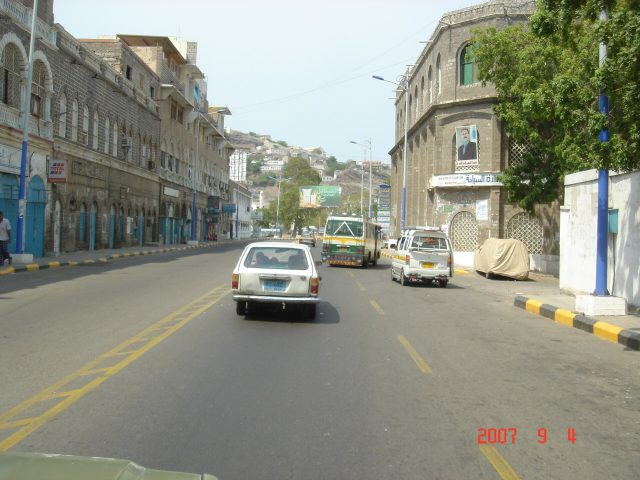
Al-Ashraf Mosque in Aden is one of those rare places that seem untouched by time, preserving not just the prayers of the faithful but the quiet echoes of centuries past. This city on Yemen’s southern coast has always been a crossroads—of trade, cultures, and histories—and the mosque stands as a silent witness to it all. Built in the 15th century, it bears the name of Sultan Al-Ashraf Ismail ibn Abbas, a ruler from the Rasulid dynasty, which governed much of Yemen during its golden age. The Rasulids were known for their military prowess, but their true legacy lay in their patronage of learning and architecture, and Al-Ashraf Mosque is a testament to that tradition.
The mosque’s architecture doesn’t overwhelm with grandeur, but there’s a quiet elegance to it, a restraint that feels distinctly Yemeni. Constructed from local stone, its modest minaret rises with understated grace, while the inner courtyard is framed by arched galleries supported by slender columns—a classic feature of Islamic design, executed here with simplicity. Inside, the walls are adorned with traditional patterns, and the mihrab, pointing toward Mecca, is unadorned, its lines clean and purposeful. There’s no excess, just a sense of harmony that has endured for centuries.
Aden itself has always been a city of contrasts, a place where the scent of spices mingled with the salt of the sea. In the Middle Ages, it was a vital port on the trade routes between India and the Mediterranean, a hub where merchants, scholars, and travelers from distant lands converged. Al-Ashraf Mosque, though not the largest or most opulent in the city, played its part in this vibrant tapestry. It was a place where traders might pause to pray before setting sail, where scholars could find respite between journeys, and where the rhythms of daily life unfolded against the backdrop of the harbor. Even now, amid the city’s modern struggles, the mosque remains a pocket of tranquility, a reminder of Aden’s layered past.
Time has not been kind to many of Aden’s historic buildings, but Al-Ashraf Mosque has endured, though not without scars. In the 19th century, when the British took control of the city, much of its architectural heritage was altered or lost. Yet this mosque retained its original character, perhaps because it was never a monument to power but a sanctuary for ordinary people—fishermen, craftsmen, sailors. It wasn’t a place for grand declarations, but for quiet reflection, a refuge for those seeking solace in the midst of life’s uncertainties.
Today, Al-Ashraf Mosque is more than just an active place of worship; it’s a living piece of Yemen’s cultural heritage. In a country where the past and present often collide with painful force, such places serve as a bridge to what came before. Aden, despite its challenges, still carries the weight of its history, and the mosque is one of the few threads connecting the present to the centuries that shaped it. There are no crowds here, no tourist hustle—just the murmur of prayers and the ever-present whisper of the coastal wind, a sound that has remained unchanged for generations.
Visiting the mosque isn’t just about admiring its architecture; it’s about stepping into the soul of Aden. This city, once a gateway to Arabia, now moves at its own unhurried pace, and Al-Ashraf Mosque is one of the places where that rhythm feels most tangible. The surrounding old quarter is a maze of narrow streets where the scent of spices and fresh fish still lingers in the air, and the distant silhouettes of ships on the horizon serve as a reminder that Aden’s ties to the sea run deep. The mosque won’t offer dramatic tales of conquest or wealth, but it will show you that even in the most unassuming corners, there is depth—history, faith, and the quiet resilience of a city that has seen it all.