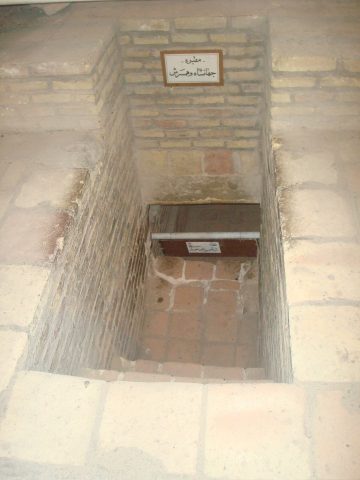
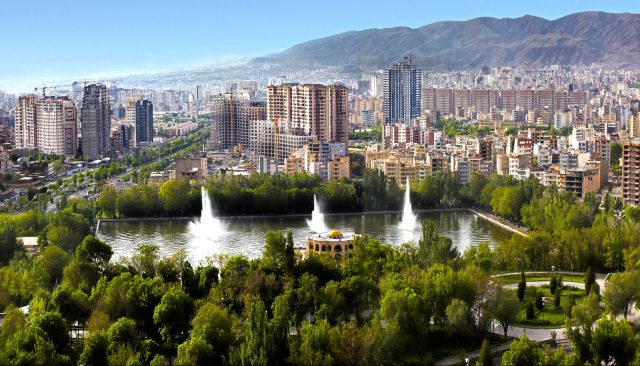
The Poets’ Mausoleum in Tabriz is one of those rare places where time seems to pause, not to forget, but to remember. Tucked away on the edge of the city, it stands quietly among the old neighborhoods where the echoes of voices long gone still linger in the air. Here, beneath simple stone markers, lie dozens of Persian and Azerbaijani poets, philosophers, and scholars whose words shaped the culture of Iran and the broader Turkic world for centuries. Among them is Shahriar, whose verses are still taught in schools, and Khaghani Shirvani, whose reflections on love and the fleeting nature of life have outlasted empires.
The architecture of the mausoleum is understated yet striking. Built in the mid-20th century, the modern structure blends traditional Iranian motifs with the clean lines of mid-century design. Its blue-tiled dome nods to classical Persian mausoleums, though its form is more restrained, almost austere. Inside, the spacious hall is bathed in soft light filtering through narrow windows, while the walls are adorned with calligraphic inscriptions—lines from the very poets buried here. Each stone, each carefully carved word, invites reflection on how fragile fame can be, and how enduring a single line of poetry.
The history of this place stretches back to the 12th century, when Tabriz was a thriving cultural hub under the Seljuk Sultanate. Situated along the Silk Road, the city drew scholars, poets, and merchants, many of whom found their final resting place here. Over time, the cemetery evolved into a kind of literary pantheon, a place where those who dedicated their lives to words could be honored. Earthquakes and wars have repeatedly damaged the site, yet each time it was rebuilt, as if the land itself refused to let the memory of its poets fade.
Today, the Poets’ Mausoleum is more than a pilgrimage site for literature lovers—it’s a quiet refuge from the bustle of modern Tabriz. Visitors rarely crowd the grounds, and that only adds to its charm. People come not just for a tour, but to sit on a bench under the trees, flip through a book of poetry, or simply be still. A small park surrounds the mausoleum, where locals often gather for picnics or to read. On hot summer days, the cool shade of the trees and the murmur of fountains create a sense of peace that feels almost timeless.
For Tabriz, the mausoleum is more than a landmark—it’s part of the city’s identity. Literary gatherings, poetry recitals, and even weddings are held here, with couples paying their respects to the great poets before beginning their own stories. In Iran, poetry is more than an art form; it’s woven into daily life, a way to express what ordinary words cannot. That’s why the mausoleum remains a living place, not just an open-air museum.
Many of the poets buried here were wanderers, traveling across the Middle East, serving at royal courts, falling in and out of favor. Their lives intertwined with the region’s history, and now, with their names carved side by side, it feels as though they’re still engaged in an unspoken conversation. Perhaps that’s why the atmosphere here is so unique—it doesn’t just preserve the past, it makes it feel present.
Tabriz has always been a city where cultures met. Persian, Turkic, Armenian, and even European influences converged here, shaping the work of the poets now resting in the mausoleum. Their verses, written in Farsi and Azerbaijani, explore themes that transcend language: love, mortality, faith, the search for meaning. Maybe that’s why their words still resonate, even with those far from Iran.
Visiting the Poets’ Mausoleum, you can’t help but reflect on the power of words in a culture where they were never just a means of communication, but a way to preserve memory. There are no grand tombs or gilded decorations here—just names and lines etched into stone. And that’s enough. True legacy isn’t measured in marble or bronze, but in what lingers in the hearts of those who come after. In that sense, the mausoleum is more than a resting place—it’s a reminder that immortality isn’t found in wealth, but in the ability to speak to the soul.