Standing on a gentle rise at the edge of Nakhchivan, the Mausoleum of Noah feels like a place where time has settled differently. Its slender silhouette is visible from a distance, rising above the surrounding low hills, and though the structure itself is modest in scale, it carries a weight that goes beyond its physical presence. For centuries, this site has drawn pilgrims, historians, and curious travelers, each drawn by the layers of meaning woven into its brick and mortar.
Local tradition holds that this is where Noah’s Ark came to rest after the Great Flood, though the mountain where the vessel is said to have landed—Mount Ararat—lies just beyond the horizon, visible on clear days. The mausoleum itself is sometimes claimed to mark Noah’s burial place, though scholars remain divided on the exact origins of the site. What is certain is that for many, it has become a symbol of renewal, a place where myth and history blur. The connection to one of humanity’s oldest stories gives the mausoleum a quiet power, one that lingers long after the visit.
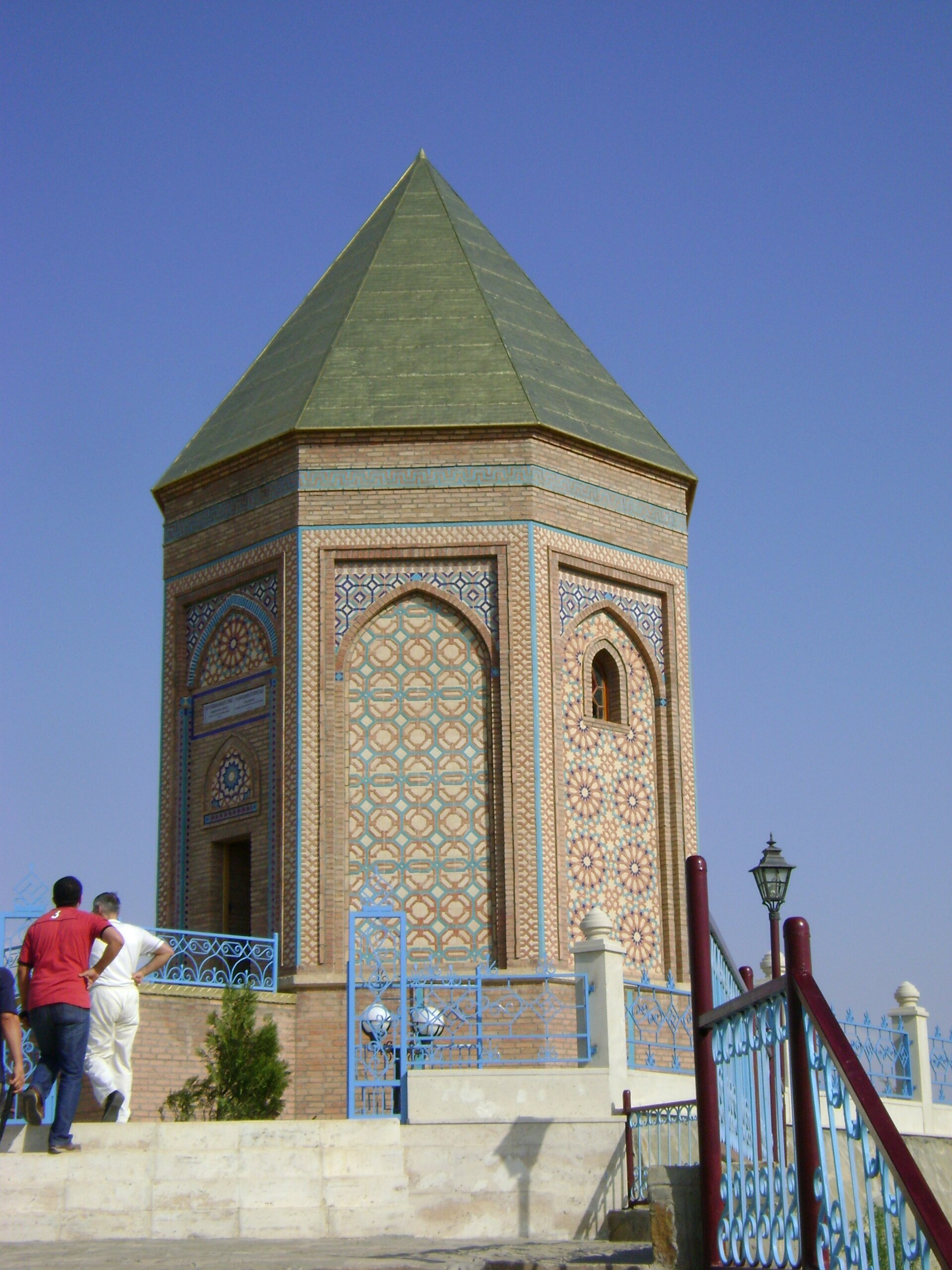
The architecture is deceptively simple. Built from fired brick, the mausoleum takes the form of an octagonal tower crowned with a dome, its once-turquoise glazing now faded but still hinting at its former brilliance. The entrance is framed by a shallow arched portal, and the walls bear only the slightest geometric ornamentation, a hallmark of the region’s medieval design. Despite its solidity, the structure feels light, almost weightless, its proportions carefully balanced to harmonize with the landscape. Inside, the space is airy and bright, with high windows filtering soft, diffuse light that fills the chamber without harshness.
Most historians date the mausoleum to the 12th century, a period when Nakhchivan flourished under the Ildegizid dynasty. This was a time of architectural innovation in the region, particularly in the construction of mausoleums and mosques, and the style here reflects that era’s emphasis on structural integrity and restraint. The building has undergone restorations over the centuries, yet its essential character remains intact, a testament to the skill of its original builders.
For the people of Nakhchivan, the mausoleum is more than an ancient monument. It is a place of quiet reflection, where families come to honor their ancestors, where travelers pause to sit beneath the trees in the small adjoining park, and where the past feels tangibly close. The atmosphere is one of reverence, though not solemnity—there is a sense of continuity here, as if the stories whispered within these walls are still being told. During religious festivals, the site comes alive with visitors from across Azerbaijan and beyond, their presence adding another layer to the mausoleum’s long history.
Nakhchivan itself is a region rich in historical sites, from medieval fortresses to intricately decorated mosques, but the Mausoleum of Noah stands apart. Its connection to a story known across cultures gives it a unique resonance, one that transcends its physical boundaries. There is something about the way the light falls on its walls, or the way the wind moves through the surrounding trees, that makes the past feel immediate. It is not just a relic to be observed, but a place that invites participation, whether through prayer, contemplation, or simply the act of being present.
Visiting the mausoleum requires no special preparation. It is open to all, with no admission fee, and the site is easily accessible from the city center. The best time to come is in the early morning, when the sun is gentle and the shadows cast by the brickwork reveal its texture in sharp relief. If you’re fortunate, you might encounter locals who will share their own stories about the site—tales passed down through generations, or personal reflections on what this place has meant to them over the years.
What makes the Mausoleum of Noah remarkable is not just its age or its architecture, but the way it seems to exist outside of time. There is no need to imagine the past here; it is already present in the stillness, in the way the light moves across the walls, in the quiet conversations of those who come to pay their respects. It is a place that draws not only those interested in history, but anyone seeking a moment of connection—to something larger, to a story that has endured for millennia, or simply to the quiet certainty that some places, like some stories, are meant to be revisited.