The Momine Khatun Mausoleum stands on the edge of Nakhchivan, a quiet witness to an era when this land was part of vast empires rising and falling at the crossroads of East and West. Built in the twelfth century, it is one of those rare monuments that has preserved not just its physical form but the spirit of its time—a period when architecture was more than art, it was a language of power, faith, and remembrance. The mausoleum was erected in honor of Momine Khatun, the wife of a ruler from the Ildegizid dynasty, which governed these lands during the decline of the Seljuk Empire. Little is known about the woman herself, her name nearly erased from history, yet the building she inspired has become her enduring legacy.
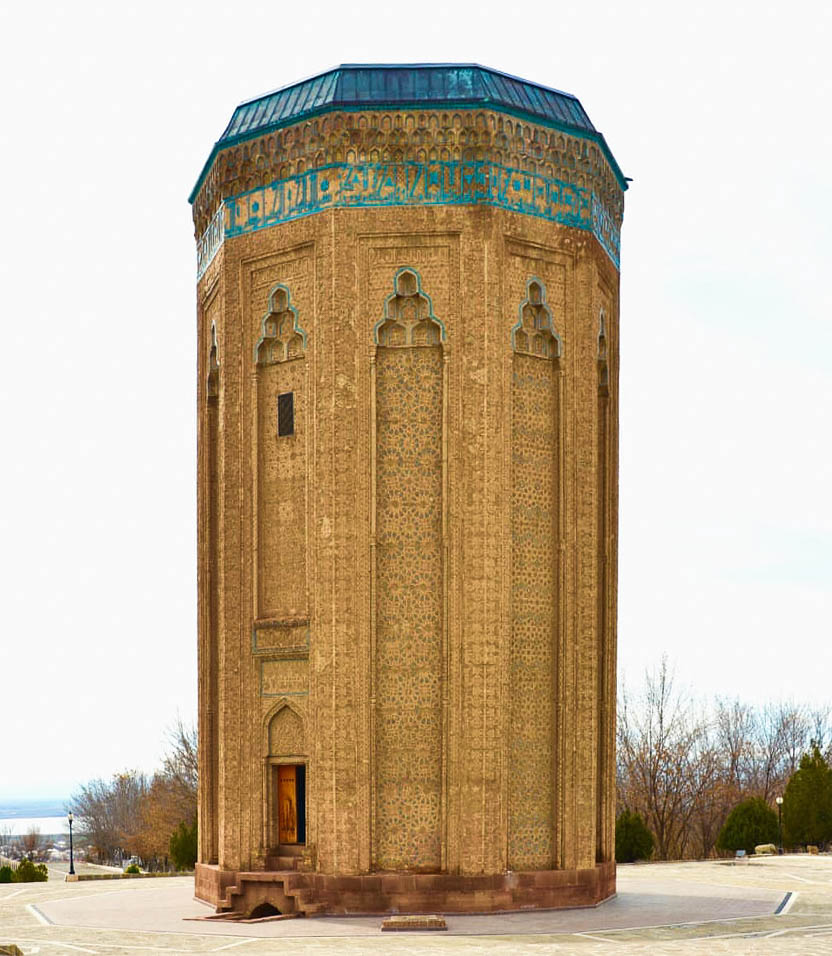
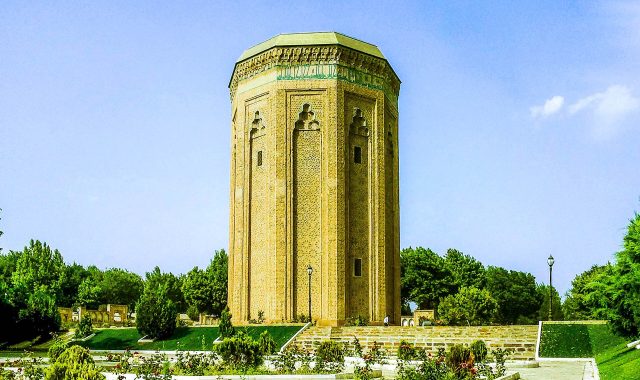
The architecture of the mausoleum is striking, even for those familiar with the grand structures of the East. Its ten-sided base, crowned with a dome, appears almost weightless despite being constructed from fired brick. The facades are adorned with intricate geometric carvings and Arabic inscriptions that serve both as decoration and as messages to future generations. The most captivating feature is the interlacing pattern of lines, a motif common in the art of the time but executed here with exceptional elegance. Inside, the mausoleum is more modest—a small chamber with a mihrab pointing toward Mecca and a few tombstones, one of which is believed to belong to Momine Khatun herself.
Time has not been kind to the mausoleum, yet it has not destroyed it. Earthquakes, wars, and the passage of centuries have left their marks on its walls, but restorers have managed to return the structure to its original appearance as much as possible. In the Middle Ages, the mausoleum served not only as a burial site but also as a landmark for travelers crossing the Nakhchivan Khanate. Its dome was visible from afar, rising above the flat plains and guiding people toward the city. Today, surrounded by modern buildings, it no longer dominates the landscape as it once did, but it remains a distinctive feature of Nakhchivan’s skyline.
The history of the mausoleum is deeply intertwined with the history of the region. In the twelfth century, Nakhchivan was one of the cultural centers of the South Caucasus, and the Ildegizids, who ruled here, were patrons of science and the arts. Under their rule, madrasas, caravanserais, and mausoleums were constructed, many of which have not survived to the present day. The Momine Khatun Mausoleum is one of the few buildings from that era that has remained largely intact. It has withstood Mongol invasions, local conflicts, and even the Soviet era, when many religious monuments were destroyed or repurposed.
Today, the mausoleum is more than just a historical monument; it is a place where the atmosphere of the medieval East can still be felt. Unlike more famous landmarks, it is not crowded with tourists, which makes a visit here all the more special. You can take your time walking around the building, examining the patterns on the walls, or simply sitting on a nearby bench, watching how the light changes on the brickwork throughout the day. Inside, the mausoleum is quiet, disturbed only by the occasional visitor, and it feels as though time has stood still.
The Momine Khatun Mausoleum is not just an architectural masterpiece but also a symbol of cultural continuity. Its design reflects elements of both Seljuk and earlier Khorasan architecture, while the ornate patterns on its walls hint at the influence of Persian art. Yet there is something distinctly local about it, something unique to this corner of the South Caucasus. Perhaps that is why the mausoleum draws the eye—it embodies the spirit of a place where traditions from different peoples have blended over centuries.
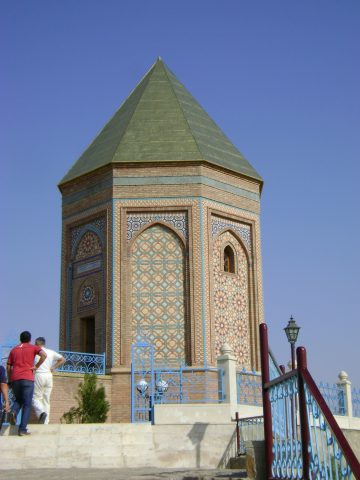
For those interested in history, the mausoleum can serve as a starting point for exploring Nakhchivan. The city and its surroundings are home to many other monuments from the same era, including the Yusif ibn Kuseyir Mausoleum, the Alinja Fortress, and ancient caravanserais. Each tells its own part of the region’s story, but the Momine Khatun Mausoleum is perhaps the most expressive. It does not demand attention with grandeur but simply stands, a reminder that even in turbulent times, people sought to create something beautiful and lasting.
Visiting the mausoleum requires no special preparation. It is open to everyone, and there is no entrance fee. The best time to come is in the morning, when the sunlight falls at an angle that makes the patterns on the walls appear three-dimensional. If you’re lucky, you might encounter locals paying their respects to their ancestors, which adds a layer of authenticity to the experience. In any case, the Momine Khatun Mausoleum is a place that lingers in the memory, leaving visitors with a quiet desire to return.