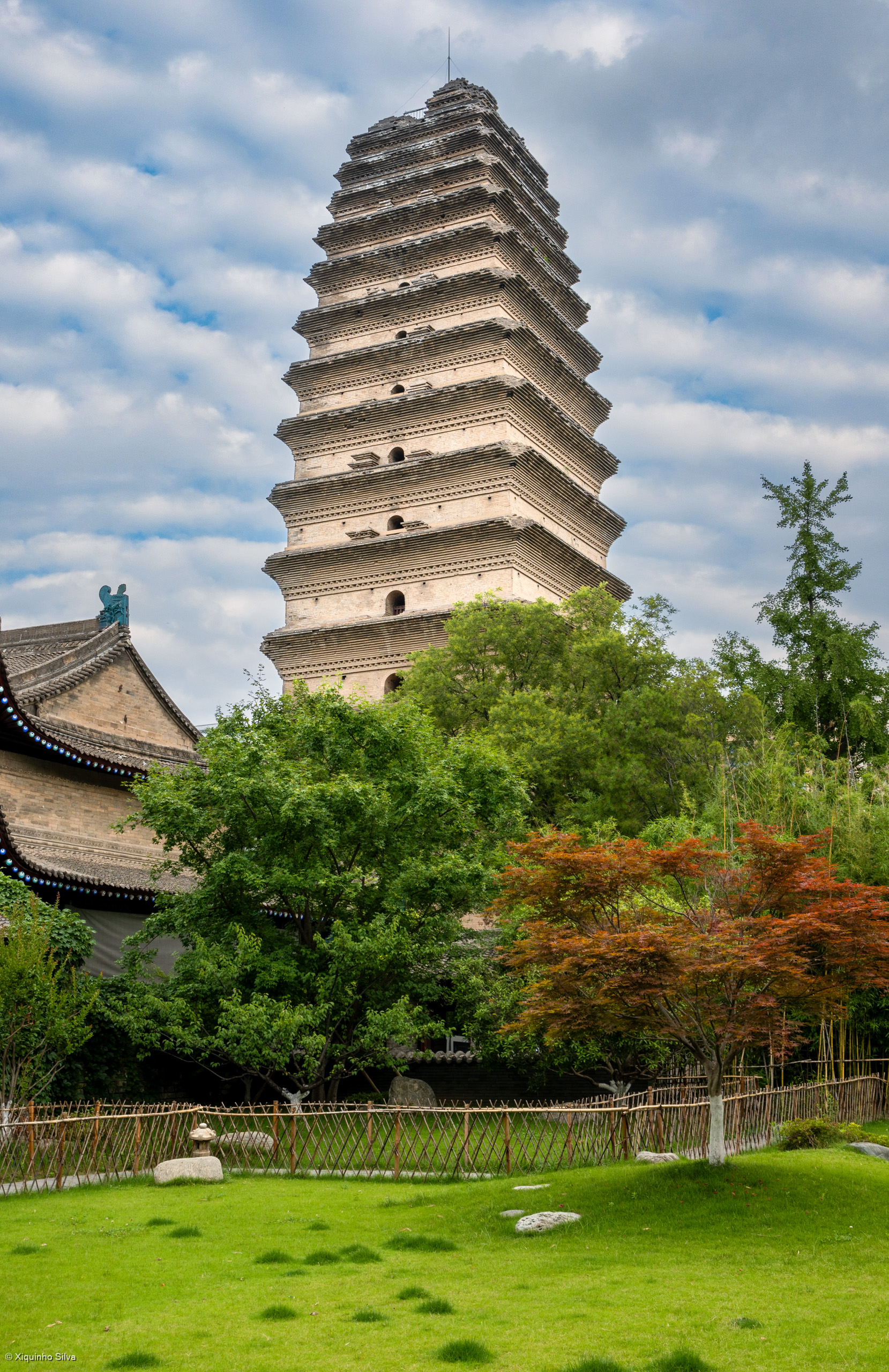
The Small Wild Goose Pagoda is one of those quiet corners of Xi’an that carries the weight of a city once far more than just another Chinese metropolis—it was the beating heart of an empire. Built during the Tang Dynasty, it stands as a silent witness to the golden age of the Silk Road, when caravans laden with silk, spices, and ideas passed through Xi’an, weaving connections between East and West. Unlike its grander counterpart, the Big Wild Goose Pagoda, this one feels more intimate, almost unassuming. It doesn’t demand admiration so much as invite reflection on the centuries of history that have unfolded around it.
The pagoda’s story begins in 707, when Emperor Zhongzong ordered its construction in memory of his late mother. In those days, pagodas served not only as religious sites but also as repositories for Buddhist texts and relics brought from India and Central Asia. Monks are said to have worked here, translating sacred sutras into Chinese, adapting foreign wisdom for local minds. The name itself—Wild Goose—comes from a legend in which a flock of geese guided wandering monks, who later built the pagoda in gratitude. Today, the tale feels like a metaphor: the pagoda truly stands at a crossroads of cultures, where different traditions and beliefs once converged.
Architecturally, the Small Wild Goose Pagoda is a classic example of Tang-era design: a square base tapering upward in seven gradually diminishing tiers. Unlike later pagodas adorned with intricate carvings and vibrant colors, this one is austere, its weathered brick walls bearing the muted gray tones typical of Xi’an’s ancient structures. Inside, little remains—just a narrow staircase spiraling upward and empty niches where Buddha statues once stood. Yet this simplicity draws attention to the details: the way sunlight filters through slender windows, the echo of footsteps on stone steps, the rustle of wind through the surrounding trees.
Over the centuries, the pagoda has endured its share of upheavals. Earthquakes, wars, and dynastic shifts have all left their marks. The most damaging was a 16th-century quake that destroyed its top two tiers. Though restored, they were never rebuilt to their original height, leaving the pagoda slightly shorter than it once was. But these scars only add to its character, each one a chapter in its long history.
Today, the pagoda is nestled within a small park, a peaceful retreat from the city’s hustle. Locals come here to unwind—elderly men playing mahjong under the shade of old trees, children darting along pathways, and tourists trying to see beyond the stone structure to the stories it holds. The park is modest but well-tended, with manicured lawns, flowerbeds, and benches beneath the dappled shade of plane trees. On sweltering summer days, a cool breeze from the Wei River offers relief, and the pagoda’s shadow provides a respite from the heat.
The area around the pagoda has developed its own quiet rhythm. In the mornings, a small market springs to life, selling souvenirs, tea, and traditional sweets. Local artisans display hand-carved wooden Buddhas, painted fans, and calligraphy scrolls. Prices here are more reasonable than in the tourist-heavy districts, and the atmosphere is far more relaxed. You might linger in one of the teahouses, sipping a cup of pu’er or jasmine tea while listening to the murmur of conversation among old-timers. Occasionally, impromptu performances take place—soft melodies from traditional instruments like the erhu, pipa, or guqin, their music blending seamlessly with the park’s tranquility.
This isn’t a place for flashy photos or loud entertainment. The Small Wild Goose Pagoda appeals to those willing to slow down, to listen to the silence, and to imagine what life was like here centuries ago. In that sense, it’s like many of China’s ancient monuments: it doesn’t shout its importance but simply exists, allowing each visitor to find their own meaning in it. For some, it’s a symbol of faith; for others, a reminder of impermanence; for a few, just a beautiful spot to sit and think.
In recent years, restoration work has been carried out with great care, ensuring the pagoda’s historical character remains intact. Xi’an’s authorities recognize that such places are more than just attractions—they’re part of the city’s cultural DNA, its living memory. While fewer tourists visit here compared to the Terracotta Army or the city walls, those who do often leave with the sense of having encountered something authentic. Perhaps because the pagoda doesn’t try to be anything more than it is: humble yet enduring, much like the history that shaped it.