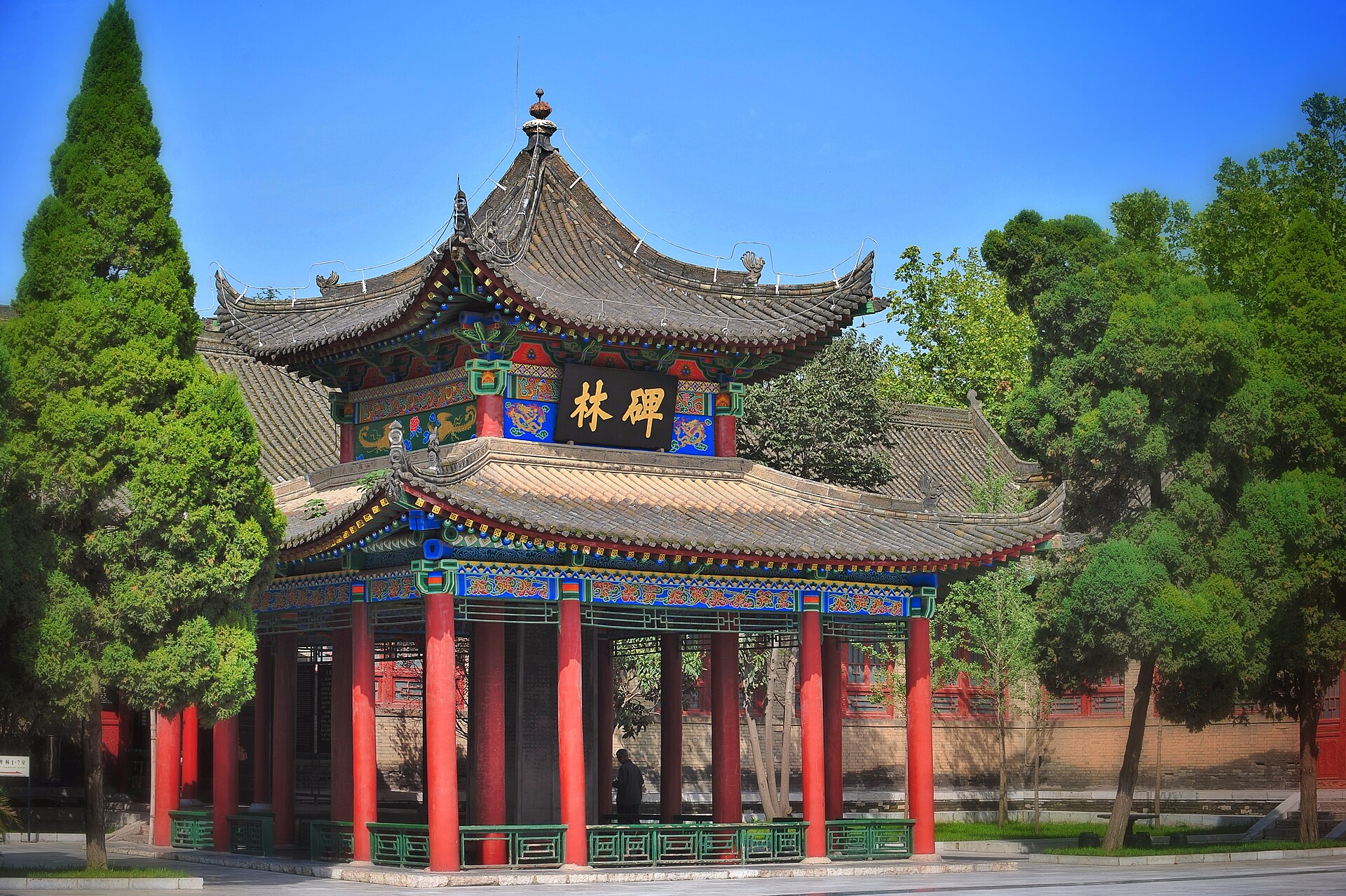
Xi’an’s Forest of Steles is one of those rare places where history feels tangible, as if time itself has been carved into stone. Nestled in the heart of the city, this open-air museum holds thousands of ancient tablets, each inscribed with characters that tell a story—of emperors and scholars, of laws and poetry, of a civilization that sought to preserve its wisdom for future generations. Xi’an, once the capital of China, was the natural home for such a collection. For centuries, it was the political and cultural center of the empire, where the most important texts were gathered, copied, and immortalized in stone.
The tradition of inscribing texts on steles dates back to the Han Dynasty, but the majority of the collection here comes from the Tang and Song eras. In those times, literacy was a privilege, and books were a luxury few could afford. To ensure that decrees, philosophical works, and literary masterpieces endured, they were etched into stone, turning fleeting words into permanent records. Some of these steles are monumental, towering several meters high and weighing tons, while others are modest in size but no less significant. Each one is a fragment of the past, a silent witness to the ideas that shaped a nation.
The museum’s architecture is unassuming, designed to serve its purpose without distraction. Long galleries with tiled roofs shelter the steles from the elements while keeping them visible to visitors. Inside, the light is soft, filtering through narrow windows to illuminate the carved lines. There are no grand decorations or vibrant colors—just wood, stone, and the quiet that allows you to focus on what truly matters. The simplicity of the space makes the inscriptions feel even more profound, as if the weight of history is pressing gently against the silence.
Among the most famous steles is the Nestorian Stele, erected in 781. Its bilingual inscription in Syriac and Chinese documents the arrival of Christianity in China during the Tang Dynasty, offering a rare glimpse into the cultural exchanges that took place long before the modern era. Nearby, other steles bear Buddhist sutras, Confucian classics, and even medical texts that once guided healers in their practice. Together, they form a mosaic of beliefs, knowledge, and traditions that coexisted in ancient China.
Walking through the rows of steles, it’s impossible not to wonder about the hands that shaped them. The artisans who carved the characters likely never imagined their work would outlast dynasties. The scholars who copied texts for posterity probably didn’t foresee a day when their language would be foreign to those reading it. And the emperors who issued decrees could never have known their words would become part of a vast stone archive, preserving the memory of an entire civilization. The steles are more than artifacts; they are a bridge between past and present, a reminder of how fleeting human life is compared to the enduring power of ideas.
For those interested in Chinese history, the Forest of Steles is an essential stop. It’s not just a collection of ancient objects but a living chronicle of the country, where each stele is a chapter and the entire museum is a book written in stone. Here, you can trace the evolution of calligraphy—from the rigid, angular characters of the Han Dynasty to the more fluid, graceful scripts of the Tang. Some steles are weathered, their surfaces cracked and moss-covered, while others remain remarkably intact. Yet all of them bear the marks of time, telling stories of change, resilience, and continuity.
In recent decades, the Forest of Steles has become a popular destination for travelers, though it has managed to retain its serene atmosphere. Unlike the crowded pits of the Terracotta Army or the bustling streets of central Xi’an, this place offers quiet reflection. The only sounds are the soft footsteps of visitors and the occasional rustle of a guidebook’s pages. It’s a space where you can pause, away from the noise of the modern world, and consider what endures when everything else fades.
To visit the Forest of Steles is to step into a conversation with history. It’s a place where you can spend hours examining the details, deciphering the inscriptions, and imagining the lives of those who created these monuments. Even if you don’t read Chinese, the presence of these ancient stones is enough to evoke a sense of connection—to the people who came before, to the ideas they valued, and to the legacy they left behind. In a world that moves too quickly, this museum offers a rare chance to slow down and listen to the voices of the past.