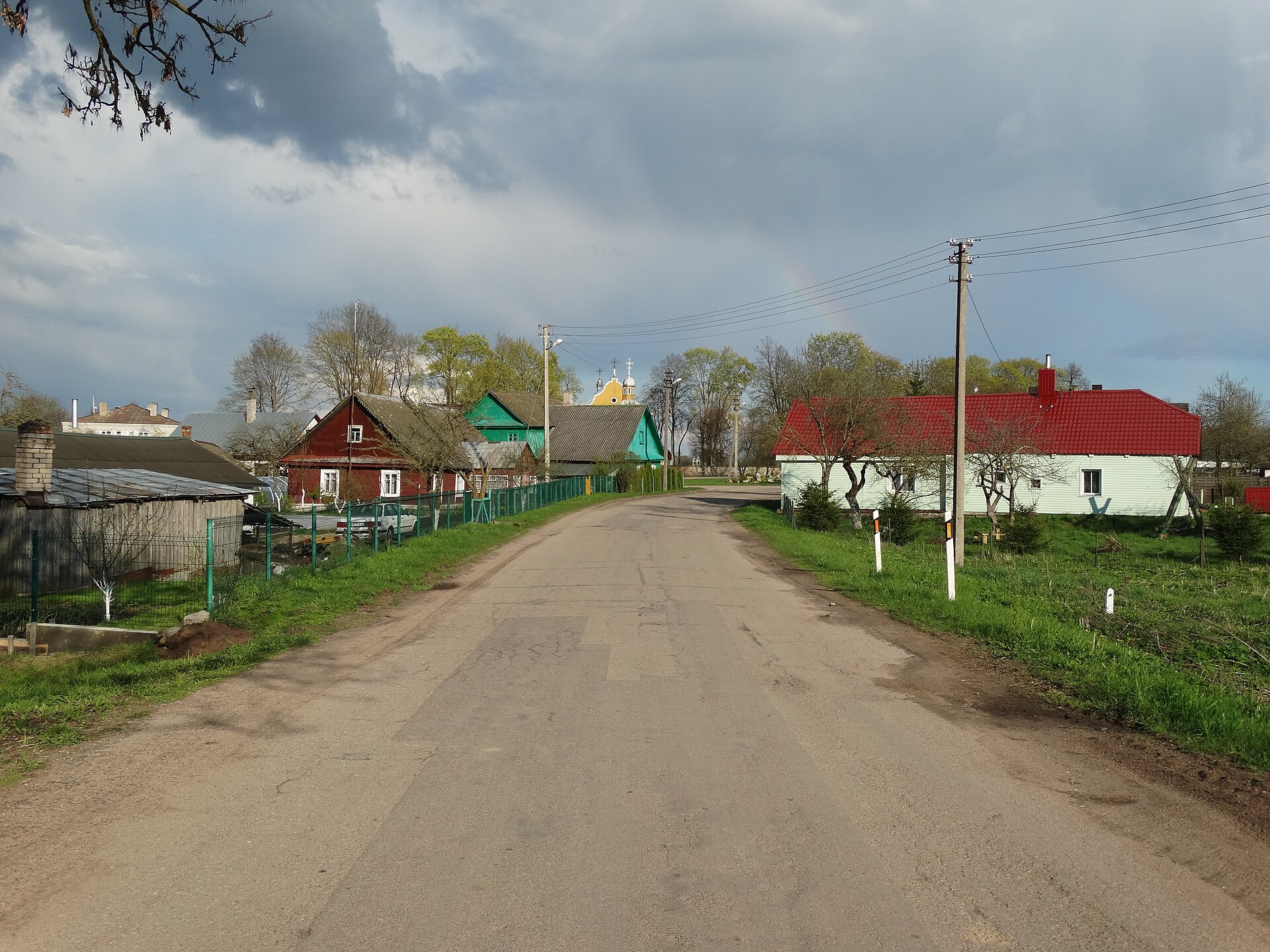
Ivye is one of those quiet Belarusian towns that rarely makes it onto tourist maps. There are no grand boulevards or crowds of visitors here, just narrow streets lined with old wooden houses and an atmosphere that feels suspended in time. The town sits in the western part of the country, far from the usual routes, yet it holds a certain unassuming charm. Among its few notable landmarks, the Church of St. Michael the Archangel stands out—not for its size or grandeur, but for the way it quietly anchors the town’s history and identity.
The church’s story begins in the early 17th century, when the first wooden structure was built with the support of a local nobleman. That building didn’t last long, destroyed by fire before the century was out. A second wooden church followed, but it, too, was short-lived. The current stone building took shape in 1909, when Ivye was under Russian imperial rule. Designed by an architect from Vilnius, it reflects the architectural tastes of the time, blending neo-Gothic elements with other early 20th-century influences. The result is a structure that feels both familiar and distinct within Belarus’s religious landscape.
From the outside, the church doesn’t conform to the typical image of a Belarusian temple. Instead of a simple rectangular shape with a towering spire, it presents a more complex silhouette, with multiple volumes and details that draw the eye. The main facade is adorned with pointed arch windows and decorative stonework, while a modest clock tower rises above the entrance. The proportions are carefully balanced, giving the building a sense of harmony despite its relatively small size.
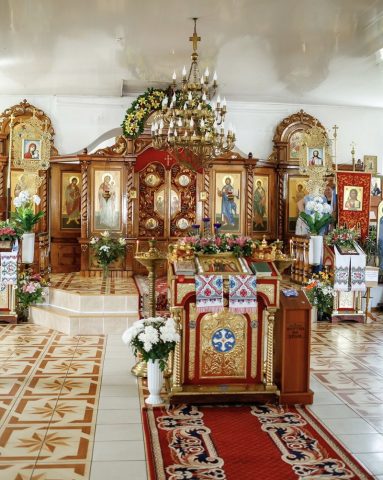
Inside, the church is spacious and filled with light. High vaulted ceilings rest on slender columns, and large windows allow natural light to filter through, illuminating the space without overwhelming it. The altar, with its classical design, features statues of saints and gilded accents, though the overall interior avoids excessive ornamentation. The stained glass, wooden pews, and subtle details create an atmosphere that is reverent without being oppressive.
For centuries, the church has been more than just a place of worship—it has been a part of the town’s daily life. Generations of locals were baptized here, married under its vaulted ceilings, and mourned within its walls. Even during periods when Catholicism faced restrictions, the church remained a spiritual refuge for the community. Today, it continues to serve its original purpose, with parishioners from Ivye and the surrounding villages attending Sunday services.
The church is set slightly apart from the town center, surrounded by an old park that was once part of a noble estate. The trees here are ancient, their branches forming a canopy over winding paths and benches. The park isn’t meticulously maintained like those in larger cities, but that only adds to its appeal. It feels like a place where time moves slower, where the past lingers in the rustling leaves and the quiet rustle of footsteps on gravel.
Ivye itself is a town where history isn’t just preserved in museums or monuments—it’s woven into the fabric of everyday life. There’s no rush here, no sense of urgency. Instead, there’s a quiet persistence, a feeling that things have been this way for a long time and will continue to be. The Church of St. Michael the Archangel embodies that sense of continuity. It’s not just an architectural landmark; it’s a living connection to the generations who have passed through its doors, a testament to the enduring role of faith and culture in a small town’s life.
If you ever find yourself in this part of Belarus, it’s worth stopping by. Not just to admire the building or take a photograph, but to step into a place where the weight of history is palpable. There’s something about the stillness here, the way the light falls through the windows or the sound of footsteps on the stone floor, that makes the past feel a little closer. It’s the kind of place that stays with you long after you’ve left.