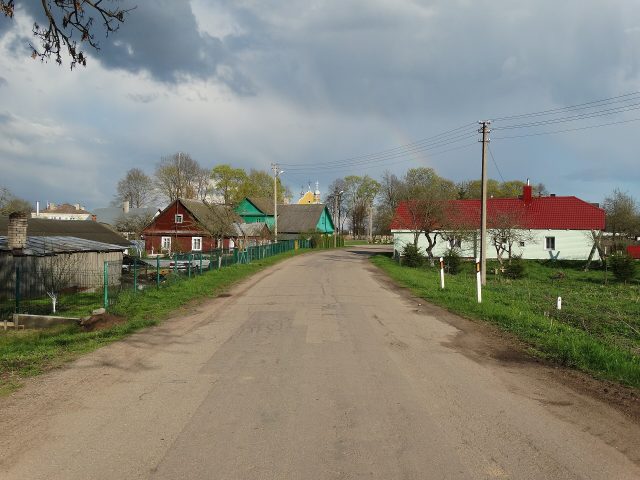
The Church of Saints Peter and Paul in Ivye is one of those quiet places where time seems to stand still, preserving the unhurried charm of provincial Belarus. Perched on a gentle hill in the center of town, it overlooks a landscape of low wooden houses, crooked fences, and old trees that have witnessed generations come and go. From the outside, the church appears modest—whitewashed walls, a neat pediment, a small bell tower with a shingled roof—but there’s a quiet harmony to its proportions, as if the building itself was designed to blend seamlessly into the slow rhythm of life here.
Ivye has always been a place where different cultures and faiths intersected. In the 18th and 19th centuries, Poles, Belarusians, Jews, and Tatars lived side by side, each community leaving its mark on the town’s character. The Church of Saints Peter and Paul was built in 1806 with funds from local parishioners, becoming not just a spiritual center for Orthodox Christians but also a defining feature of Ivye’s skyline. Like many religious sites in the region, it endured turbulent times during the Soviet era—closed, repurposed as a warehouse, and nearly forgotten—before being returned to the faithful. Today, it stands as a living piece of history, its doors open to anyone who wishes to step inside.
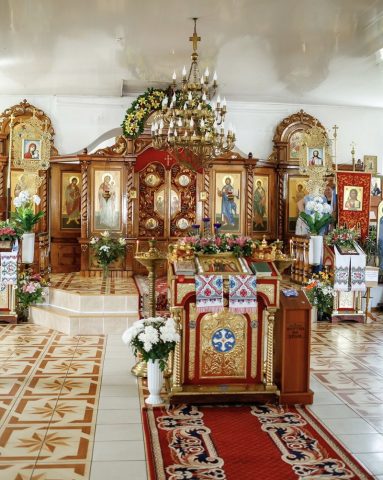
The church’s architecture reflects the restrained elegance of neoclassicism, tempered by the practical simplicity of Belarusian provincial design. The building is small but carefully proportioned, with tall arched windows that let in soft, diffused light. A modest portico with slender columns supports a triangular pediment, while the interior feels surprisingly spacious despite its lack of ornate decoration. The 19th-century iconostasis has survived largely intact, its understated craftsmanship carrying a quiet dignity. The frescoes on the walls, once vibrant, have faded with time, their muted tones adding to the sense of age and reverence.
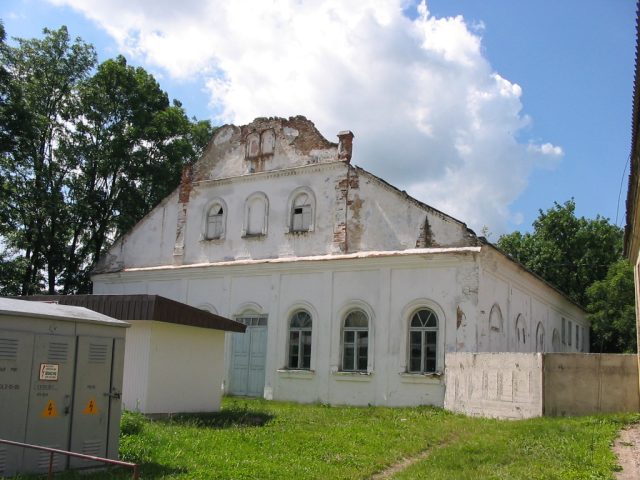
What makes Ivye unusual is the way its religious landmarks coexist. Just steps from the church stands an old synagogue, and a short walk away is one of the few mosques in Belarus. This proximity isn’t accidental—Ivye has long been a place where people of different faiths lived alongside one another, maintaining their traditions while sharing the same streets and markets. The church sits on a small square where locals gather on weekends, chatting over cups of tea or browsing stalls of fresh produce. The surrounding streets are lined with traditional wooden houses, their carved window frames hinting at the craftsmanship of a bygone era. Beyond the town, fields stretch toward the horizon, completing the picture of rural Belarus.
Visiting the Church of Saints Peter and Paul isn’t just about admiring its architecture or history; it’s about experiencing the unhurried pace of life in a place untouched by mass tourism. In summer, the air is filled with the scent of cut grass and linden blossoms, while winter transforms the town into a quiet, snow-dusted retreat. The church, like Ivye itself, moves to its own rhythm, and those who visit soon find themselves slowing down to match it.
Inside, the church is cool and still, even on the warmest days. Sunlight filters through the tall windows, casting gentle patterns on the wooden pews and aged icons. There are no crowds here, no hurried footsteps—just the occasional creak of a floorboard or the soft rustle of a prayer book’s pages. Locals sometimes stop by to light a candle or offer a quiet prayer, but more often than not, the space is empty, save for the weight of its own history. Some might find it too plain, but that’s precisely where its appeal lies.
This church is more than just a historical monument; it’s a testament to resilience. It has weathered wars, political upheavals, and decades of neglect, yet it remains standing, a quiet witness to the passage of time. If you ever find yourself in Ivye, take a moment to climb the hill and step inside. You might just catch a glimpse of the same quiet magic that has drawn people here for over two centuries—a sense that, in this small corner of the world, time moves differently.