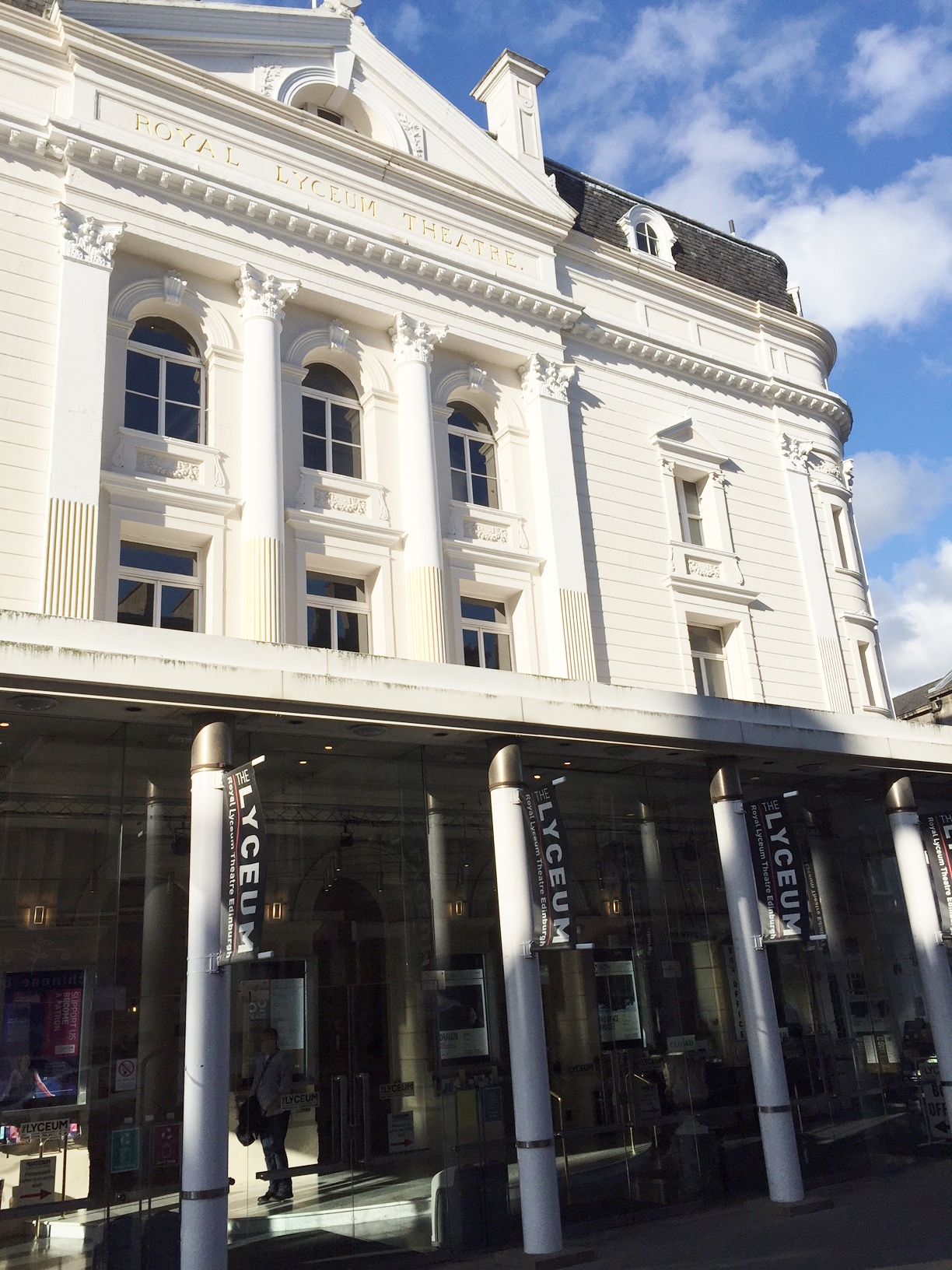
The Royal Lyceum Theatre in Edinburgh is one of those rare places where history isn’t just preserved—it’s alive, breathing through every performance, every creak of the stage floor, every murmur of the audience settling into their seats. Tucked away on Grindlay Street, it doesn’t demand attention like the grander landmarks of the city. Its unassuming façade, built from dark stone with tall, narrow windows, gives little hint of the magic inside. But step through its doors, and you enter a world where the past and present coexist, where the air hums with the echoes of a century’s worth of stories.
The theatre opened in 1891, and though its appearance has evolved over the decades, its essence has remained unchanged. The exterior may be understated, but the interior is a lavish celebration of Victorian opulence. The auditorium is a jewel box of gilded plasterwork, intricate carvings, and a vast crystal chandelier that casts a warm glow over the stalls. The balconies, with their delicate balustrades, curve gently around the space, creating an intimate atmosphere despite the theatre’s capacity. In the 1990s, the building underwent extensive renovations, but the restoration was careful to preserve its historic character, blending modern technical advancements with the original grandeur. The result is a stage that can accommodate everything from classical drama to cutting-edge contemporary performances.
The Royal Lyceum has never been just a venue for plays. It has been a cultural hub, a place where art and identity intersect. In the early 20th century, it became the home of the Scottish Opera and the Scottish Ballet, and later, a key stage for the National Theatre of Scotland. The repertoire has always been diverse, spanning Shakespearean classics, experimental works, and plays rooted in Scottish history and language. The theatre has never shied away from politics, either. Over the years, its stage has hosted voices of protest, satire, and deep reflection on what it means to be Scottish. It’s a place where art isn’t just entertainment—it’s a conversation.
There’s a particular kind of energy in the Royal Lyceum, a blend of reverence and warmth that makes every visit feel special. Before a show, the foyer buzzes with anticipation. People sip wine, chat about the evening ahead, or simply soak in the atmosphere. During intermission, you might wander up to the upper levels, where the view of the auditorium is even more striking, or, if you’re lucky, join a backstage tour to see the inner workings of the theatre. The sound of the orchestra tuning up, the rustle of the curtain, the collective hush as the lights dim—it’s all part of the ritual, one that keeps audiences coming back.
For Edinburgh, the Royal Lyceum is more than a landmark. It’s a living piece of the city’s soul. It has weathered wars, economic downturns, and shifting tastes, yet it remains a place where art and life intertwine. Here, you might catch a performance by a world-renowned actor or discover a rising star. Sometimes, the magic spills beyond the stage—improvised performances in the foyer, impromptu discussions with the cast, or the quiet thrill of watching a rehearsal. The theatre doesn’t exist in isolation. It’s deeply connected to the community, collaborating with schools, universities, and local artists, hosting festivals, and opening its doors to those who might not otherwise step inside.
What makes the Royal Lyceum truly special is its imperfections. The worn banisters, the squeaky floorboards, the faint cracks in the ceiling—these aren’t flaws but reminders that the theatre is alive, not a museum. Even the occasional technical hiccup or a missed cue becomes part of the experience, a testament to the unpredictability of live performance. The audience understands this. They come not for flawless execution, but for the raw, unfiltered connection between the actors and the story being told.
Today, the Royal Lyceum continues to be a cornerstone of Scotland’s cultural landscape. It’s a place where tradition and innovation coexist, where classic works share the stage with bold new voices. Whether you’re here for a ballet, a drama, or a musical, the theatre offers more than just a show—it offers an experience. And if you’re not in the mood for a performance, you can always stop by the café, grab a coffee, and watch the behind-the-scenes bustle. Either way, the Royal Lyceum leaves an impression, not just because of what happens on stage, but because of the way it makes you feel—like you’ve been part of something timeless.