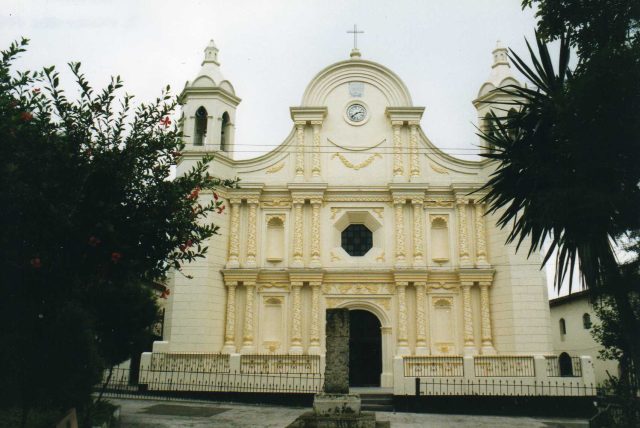
Nestled in the lush valleys of western Honduras, near the quiet colonial town of Santa Rosa de Copán, the ancient Maya city of Copán feels like a place where time has softened but never truly faded. Unlike the more famous Maya sites that dominate travel brochures, Copán doesn’t overwhelm with sheer scale or towering pyramids. Instead, it draws you in with something far more intimate—the quiet persistence of human craftsmanship, the stories etched into stone, and the sense that this was once a city where art, power, and daily life intertwined in ways we’re still trying to understand.
What sets Copán apart is its extraordinary attention to detail. While other Maya cities relied on monumental architecture to assert their grandeur, Copán’s rulers and artisans poured their energy into intricate carvings. The stelae—tall, sculpted slabs of stone—stand like silent sentinels, their surfaces alive with the faces of long-dead kings, mythological creatures, and the precise symbols of the Maya calendar. The most remarkable of these is the Hieroglyphic Stairway, a 63-step monument covered in over 2,000 glyphs, the longest known Maya inscription. Scholars have deciphered fragments of its text, revealing dynastic histories and political alliances, but much of it remains a mystery, a reminder that some stories resist easy interpretation.
Copán’s golden age unfolded between the 5th and 9th centuries, a period when the city flourished as a hub of trade, scholarship, and artistic innovation. Its rulers maintained ties with other major Maya centers like Tikal and Calakmul, as well as with distant cities in what is now Mexico. The city’s influence extended beyond politics—its astronomers tracked celestial movements with remarkable precision, its scribes developed one of the most sophisticated writing systems in the pre-Columbian Americas, and its artisans perfected techniques that still astonish today. Yet by the 9th century, Copán, like many of its contemporaries, began to decline. The reasons remain debated: overpopulation, environmental strain, or internal strife may have played a role. Whatever the cause, the city didn’t vanish entirely. People continued to live among its ruins, adapting to new realities long after the collapse of the classical Maya world.
Walking through the archaeological site today, you encounter more than just temples and plazas. The remnants of residential neighborhoods, workshops, and ball courts offer glimpses into everyday life. The ball game, a ritual with deep religious significance, was played on a long, narrow court where teams competed in a contest that may have symbolized the struggle between life and death. Nearby, the remains of an advanced water management system reveal how the Maya engineered solutions to the challenges of their tropical environment. These details paint a picture of Copán as a living, breathing city, not just a ceremonial center but a place where people worked, played, and worshipped.
The surrounding landscape adds to the sense of timelessness. The ruins sit in a valley framed by rolling green hills, where the air is thick with the scent of tropical vegetation. Howler monkeys call from the treetops in the early morning, and vibrant butterflies drift between the ancient stones. Unlike the crowded ruins of Chichén Itzá or Tikal, Copán remains relatively peaceful, its atmosphere unhurried. The lack of mass tourism allows visitors to wander at their own pace, to sit quietly in the shade of a ceiba tree, or to trace the carvings with their fingers and imagine the hands that shaped them centuries ago.
A short walk from the main ruins, the Sculpture Museum offers a deeper understanding of Copán’s artistic legacy. Here, original stelae and altars are displayed in climate-controlled galleries, protected from the elements that have worn them down over time. One of the most striking pieces is Stela B, depicting the ruler Waxaklajuun Ub’aah K’awiil, his elaborate headdress and regal posture a testament to the power he once wielded. The museum also houses a reconstruction of the Rosalila Temple, a stunning structure discovered beneath later constructions. Its vibrant red and green stucco, once hidden from view, hints at how the city might have looked in its prime—bright, vivid, and alive with color.
Copán isn’t just a relic of the past; it’s a place where history and modern life intersect. In the villages surrounding the ruins, descendants of the Maya continue to practice traditional crafts, weaving textiles and carving wood in styles that echo their ancestors’ work. Many locals work as guides, sharing their knowledge of the site with visitors, while others sell handmade souvenirs in the nearby town of Santa Rosa de Copán. The town itself is a charming place, with cobblestone streets, pastel-colored buildings, and a relaxed pace that makes it easy to linger. The food here is simple but flavorful—try a baleada, a thick tortilla stuffed with beans, cheese, and cream, or a hearty bowl of sopa de caracol, a coconut-based soup with conch.
What makes Copán so compelling is the way it resists easy answers. Why did such a refined artistic tradition emerge here, far from the major Maya power centers? How did the people who lived in this valley perceive their place in the world? The ruins don’t offer clear explanations, but they invite speculation. They remind us that civilizations rise and fall, that human ingenuity can create beauty that outlasts its creators, and that some questions are meant to linger. In the end, Copán’s magic lies not just in what it reveals, but in what it leaves unsaid—the quiet spaces between the stones where the past still breathes.