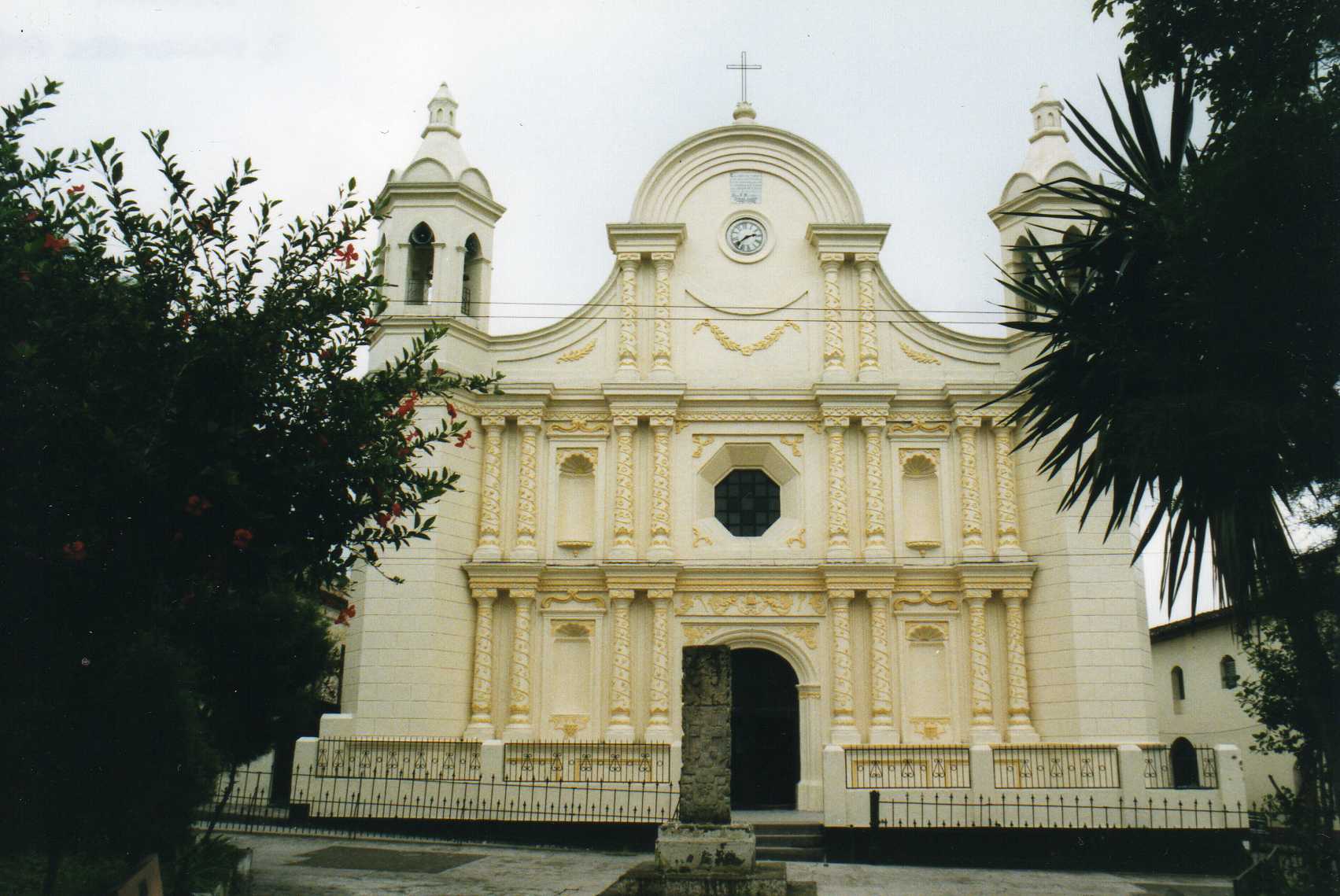
Santa Rosa de Copán moves at its own pace. At its center is Central Park, a square that has stood here for centuries. It’s small—you can cross it in minutes—but it holds enough to fill an afternoon if you look closely.
The park is surrounded by colonial buildings, their whitewashed walls and red-tiled roofs worn by time. Some date to the 18th century, when Santa Rosa was a stop on the royal road between Guatemala and the Honduran coast. The architecture is simple: thick adobe, wooden balconies with peeling paint, ironwork softened by rust. The parish church, with its twin bell towers, dominates the skyline. Inside, the air is cool, scented with candle wax and old wood. The church has been rebuilt after earthquakes, but its core remains unchanged.
The park itself is uncluttered. A few benches sit under ceiba and mango trees. A fountain trickles in the dry season. Vendors sell fruit and homemade sweets. In the mornings, older men play dominoes under the trees. By midday, schoolchildren in uniforms fill the square, their laughter mixing with the calls of street vendors. Evenings bring families strolling, stopping for *atol*—a warm corn drink with cinnamon.
What makes this place special isn’t any single monument. It’s the way the town’s life unfolds here. Santa Rosa has always been a crossroads—for Spanish merchants, coffee traders, and now travelers heading to the Mayan ruins of Copán or the highlands. The park has seen political rallies, religious processions, even cattle fairs when livestock drove the economy. Today, colonial buildings stand beside modern storefronts selling phone cards and soda, while church bells ring over the hum of motorcycles.
The town’s history is tied to tobacco. For decades, Santa Rosa was a major cigar producer in Central America. Some of the old warehouses now house shops or cafes, their high ceilings and thick walls hinting at a time when this was a place of industry. On certain days, the scent of cured tobacco drifts from the factories on the outskirts.
Small rituals shape the park. During Holy Week, processions carry statues of saints on flower-covered platforms. On ordinary days, shopkeepers sweep the sidewalks, the ice cream vendor sets up under the same tree, and an old man feeds pigeons at the same time each afternoon. These details give the place its rhythm.
For visitors, the park isn’t about sightseeing. There’s no museum or guided tour. It’s a place to sit and watch. The best moments often come when nothing is happening—a dog napping in the sun, the light on the church facade in the late afternoon, the sound of a guitar from an open window. It doesn’t demand attention, but it rewards those who pause.
Santa Rosa de Copán isn’t for those seeking spectacle. It’s a town where highlands meet lowlands, where colonial history meets rural life. The Central Park reflects that. It hasn’t been polished for tourists. It’s simply there, as it has been for generations.