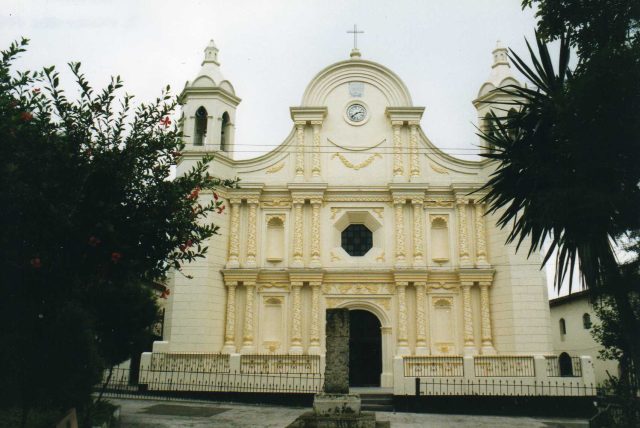
Santa Rosa de Copán sits quietly in the western highlands of Honduras, a place where the past lingers in the misty hills and the scent of coffee drifting from nearby plantations. This small city is often seen as a gateway to the world of the ancient Maya, a civilization that once thrived in these lands when the region was part of the powerful kingdom of Xukpi. Among the remnants of that era, the Hieroglyphic Stairway stands as one of the most remarkable testaments to a society that left behind more than just ruins—it left stories carved in stone.
The stairway is not merely a set of steps; it is a monumental text, a chronicle etched by the hands of Maya artisans over a thousand years ago. With sixty-three steps, each covered in intricate glyphs, it holds the longest known inscription of the Maya world. The symbols tell of rulers and dynasties, of battles fought and alliances forged, of rituals performed under the watchful eyes of the gods. Scholars continue to decipher these markings, and with each breakthrough, another layer of Maya history unfolds. The stairway is a puzzle that has yet to be fully solved, a silent witness to a civilization that valued knowledge, power, and the written word.
Built in the 8th century AD, during the height of Copán’s influence, the stairway was more than an architectural feature—it was a statement. It led to a temple dedicated to the sun god, serving as both a ceremonial entrance and a record of the city’s achievements. What makes it particularly fascinating is that some of the glyphs were added later, after the stairway had already been constructed. This suggests that it was not just a static monument but a living document, updated to reflect new events or correct earlier inaccuracies. Even centuries after its creation, it remained a symbol of continuity, a way for rulers to connect themselves to the legacy of their predecessors.
The design of the stairway reveals the sophistication of Maya engineering. The steps are angled in such a way that sunlight falls evenly across the surface, highlighting the details of the carvings. The stones, quarried from nearby hills, were shaped with precision, some weighing several tons. How these massive blocks were transported and assembled without the use of wheels remains a mystery. Some theories suggest the use of wooden rollers or earthen ramps, but no definitive answer has been found. The craftsmanship speaks to a deep understanding of both aesthetics and functionality, a balance that defined much of Maya architecture.
Today, the Hieroglyphic Stairway is one of the most visited sites in the Copán archaeological park, drawing researchers and travelers alike. Yet time has not been kind to it. The elements have worn away many of the glyphs, and parts of the structure have crumbled. To preserve what remains, archaeologists have undertaken restoration efforts, reinforcing the stones and shielding them from further damage. Protective coverings now shelter some sections from the rain and sun, though the challenge of conservation is ongoing. The stairway, once a vibrant record of a living culture, now stands as a fragile relic, its survival dependent on careful stewardship.
Visiting the stairway is like stepping into another era. The surrounding ruins—temples, plazas, and the remains of a ball court where ritual games were played—paint a picture of a city that was once a hub of activity. Walking through the site, it’s easy to imagine the sounds of ceremonies, the rhythm of drums, and the voices of priests invoking the gods. The view from the top of the stairway is particularly striking, offering a sweeping perspective of the entire complex and the jungle beyond. It’s a reminder that Copán was not just a collection of buildings but a thriving center of culture, politics, and spirituality.
Copán is often called the Athens of the Maya world, and for good reason. No other Maya city has yielded as many inscriptions or sculptures, each one a piece of a larger narrative. The Hieroglyphic Stairway is just one part of that story, but it is perhaps the most eloquent. Unlike many other ancient sites that have been lost to time or looting, the stairway has endured, though not without scars. It serves as both a historical document and a cautionary tale about the fragility of human achievement. What remains is a testament to the Maya’s desire to leave a mark, to ensure that their legacy would not be forgotten.
For those who make the journey to Santa Rosa de Copán, the stairway offers more than just a glimpse into the past. The city itself moves at a slower pace, where modern life coexists with tradition. Visitors can sample locally grown coffee, its beans nurtured on the slopes of the surrounding mountains, or browse handcrafted goods that echo Maya motifs. But the real takeaway is something less tangible—a sense of connection to a civilization that, despite centuries of silence, still speaks through its art and architecture. The stones may be weathered, but the stories they tell are as vivid as ever.