Kolomyia’s town hall is one of those rare places that feels suspended in time, yet remains deeply woven into the city’s living history. Built in the early 20th century, it was never just an administrative building—it became a symbol of the town’s identity, reflecting the architectural tastes and cultural currents of its era. Standing in the heart of Kolomyia on Market Square, where merchants once haggled, craftsmen displayed their wares, and townspeople gathered to share news, the hall still draws people today. Locals arrange meetings here, tourists wander past, and the building itself continues to serve its original purpose, untouched by the passage of decades.
The architecture tells its own story, one of stone and brick shaped by shifting influences. Unlike the more traditional town halls found elsewhere in Ukraine, Kolomyia’s stands out with its blend of Neo-Renaissance and Art Nouveau elements. The facade is rich with decorative details—pilasters, cornices, and intricate stucco work—crowned by a clock tower that once guided the rhythm of daily life. The main entrance, with its wrought-iron doors and tall windows, invites soft light into the interior. While much of the original decor inside has been lost, the spacious halls and corridors still hint at the weight of decisions once made within these walls.
The history of the town hall mirrors that of Kolomyia itself. Founded in the 13th century, the city has long been a crossroads of trade and culture in the Carpathian foothills. Over the centuries, it changed hands between Poland, Austria-Hungary, the short-lived West Ukrainian People’s Republic, and later the Soviet Union. Each era left its mark, and the town hall became a physical record of these transformations. Damaged during World War I, it was restored in the 1920s, then repurposed under Soviet rule before reclaiming its role as a civic hub after Ukraine’s independence.
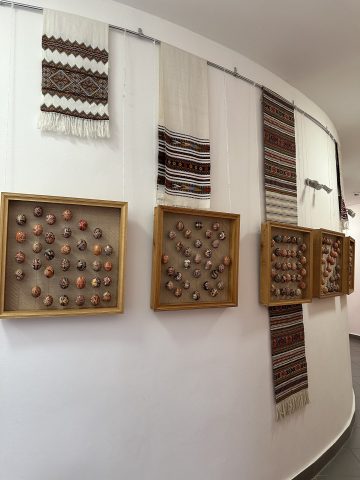
Today, the town hall is more than just a government building—it’s a cultural landmark. Its halls frequently host exhibitions, concerts, and talks, offering a glimpse into the city’s past and present. One of the most intriguing spaces is the small museum of Kolomyia’s history, tucked away inside. The displays trace the city’s evolution from medieval times to the modern day, featuring everyday objects, photographs, documents, and works by local artisans. For anyone curious about the region’s heritage, it’s a quiet treasure.
The square surrounding the town hall has a charm of its own. Market Square, with its colorful facades and carved balconies, feels like a step back in time. Small cafes and shops line the edges, selling handmade crafts and local specialties. In summer, the square buzzes with life—elderly residents chat on benches, children play, and visitors pause to photograph the town hall. Come winter, a festive tree appears, and the air fills with the scent of mulled wine and pine. It’s in these moments that the building truly feels like the heart of the city.
Kolomyia has a way of surprising visitors. Here, tradition and modernity coexist effortlessly, and the town hall embodies that balance. It’s a place that honors the past while remaining firmly rooted in the present. Walking through its halls or simply admiring its facade, it’s impossible not to wonder about the countless lives that have passed through its doors—the decisions made, the stories shared, and the history yet to unfold. Time seems to slow here, offering a chance to pause and connect with something enduring. That’s why Kolomyia’s town hall isn’t just a landmark—it’s a symbol of the city itself, one worth experiencing firsthand.