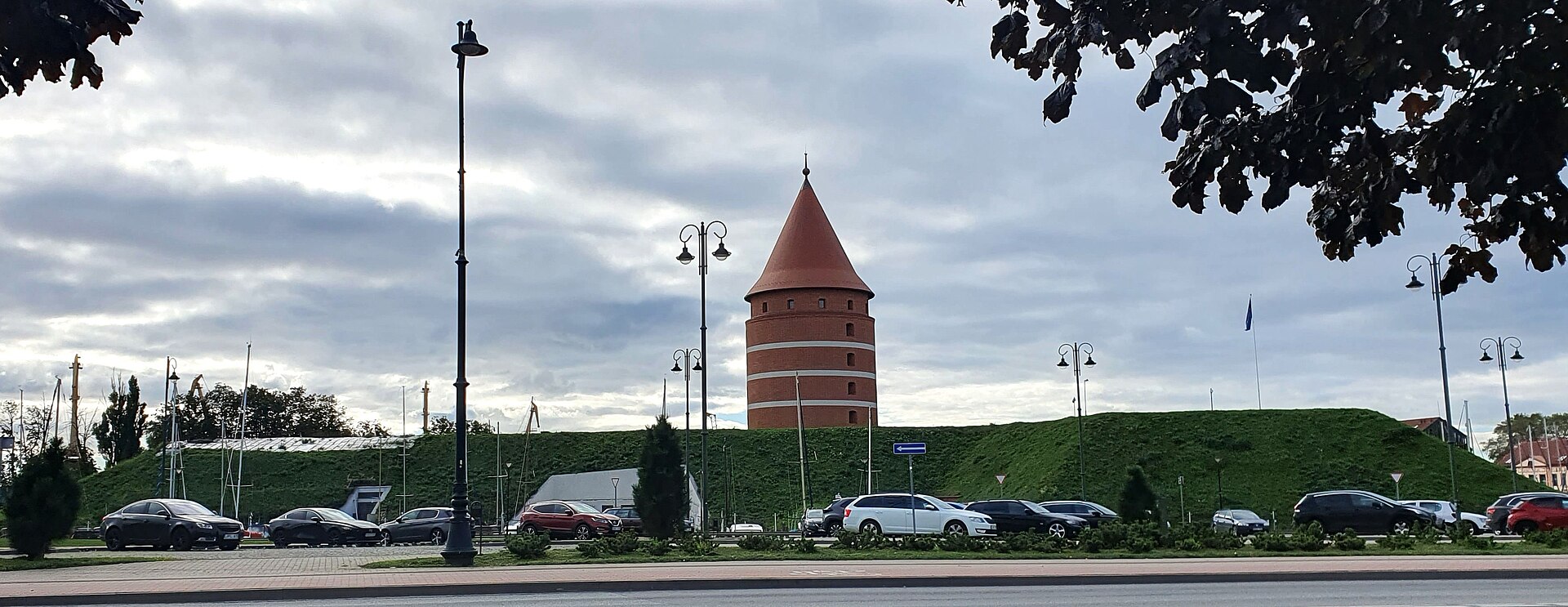
Klaipėda Castle is one of those rare places where history isn’t just something you read about—it’s something you can almost touch. Perched where the Danė River meets the Curonian Lagoon, its weathered ruins stand as a quiet witness to centuries of shifting power, conflict, and everyday life. Founded by the Teutonic Knights in the 13th century, the fortress was never just a military stronghold; it was a prize passed between empires, a silent observer to the rise and fall of kingdoms. Today, the site feels more like a forgotten corner of the city than a grand monument, but that’s precisely what makes it compelling. There are no crowds here, no guided tours rushing through the past—just the sound of gulls overhead and the occasional footsteps of visitors wandering among the stones.
What remains of the castle is modest, even understated. Unlike the fairy-tale fortresses of Trakai or the imposing citadels of Gdańsk, Klaipėda’s ruins don’t overwhelm with scale or grandeur. Instead, they offer fragments: crumbling walls, underground casemates, and the skeletal outlines of towers. The site has been partially restored in recent years, with wooden walkways and informational signs guiding visitors, but the focus remains on authenticity. Walking through the grounds, you can trace the evolution of medieval construction—from the rough-hewn boulders of the early fortress to the later brickwork that hints at more refined engineering. It’s less a museum and more an open-air archive, where the layers of history are visible in the very stones.
The castle’s past is one of constant upheaval. In the 16th century, it became a battleground in the struggle between the Grand Duchy of Lithuania and the Teutonic Order, later changing hands between Sweden and the Polish-Lithuanian Commonwealth. The 17th century brought devastation during the Swedish wars, and though the fortress was rebuilt, it never regained its former strategic importance. By the 19th century, it had outlived its military purpose, serving first as a warehouse before being abandoned entirely. The ruins that stand today are a reminder of how quickly borders and allegiances shifted in this corner of Europe, where Lithuanian, German, and Slavic influences have long intertwined.
Nowadays, the castle grounds feel more like a public park than a historical site. Locals come here to walk their dogs, let their children play, or simply sit by the water with a book. In summer, the grass is dotted with picnickers; in winter, the bare trees and misty air give the place a melancholic beauty. There are no souvenir stalls or tourist traps—just the quiet rhythm of the city carrying on around it. Occasionally, the underground chambers host small exhibitions or concerts, but these events are low-key, more about atmosphere than spectacle. The real draw is the sense of stepping into a different time, where the past isn’t polished for visitors but left to speak for itself.
For Klaipėda, the castle is more than just a relic—it’s a symbol of resilience and change. The city itself has a complicated identity, having been known as Memel under German rule before returning to Lithuania in the 20th century. The fortress embodies that duality, a place where no single narrative dominates. The Teutonic Knights, Lithuanian dukes, Swedish kings, and Russian emperors all left their mark here, and their stories coexist in the same stones. It’s a reminder that history isn’t always about clear heroes and villains, but about the messy, overlapping layers of human experience.
A visit to the castle doesn’t take long, but it offers a chance to reflect on how Lithuania—and this region in particular—has evolved over the centuries. From the ruins, you can see the port, once a vital hub for trade and now a gateway for ferries and cargo ships. Nearby, the Old Town’s narrow streets and German-influenced architecture contrast with the modern buildings beyond. The castle sits at the intersection of these eras, a quiet anchor in a city that has reinvented itself time and again. It’s a place where the past isn’t just remembered; it’s still present, woven into the fabric of daily life.
If you find yourself in Klaipėda, the castle is worth an hour of your time—not for the sake of impressive photos or dramatic stories, but for the chance to simply be there. There are no grand halls or ornate decorations, just the raw, unfiltered weight of history. The stones, worn smooth by time and weather, hold the memories of those who defended these walls, fought over them, or passed through without a second thought. That’s the real value of Klaipėda Castle: it doesn’t just tell a story—it lets you feel it. And in a world where so much of history is sanitized for tourists, that kind of authenticity is rare.