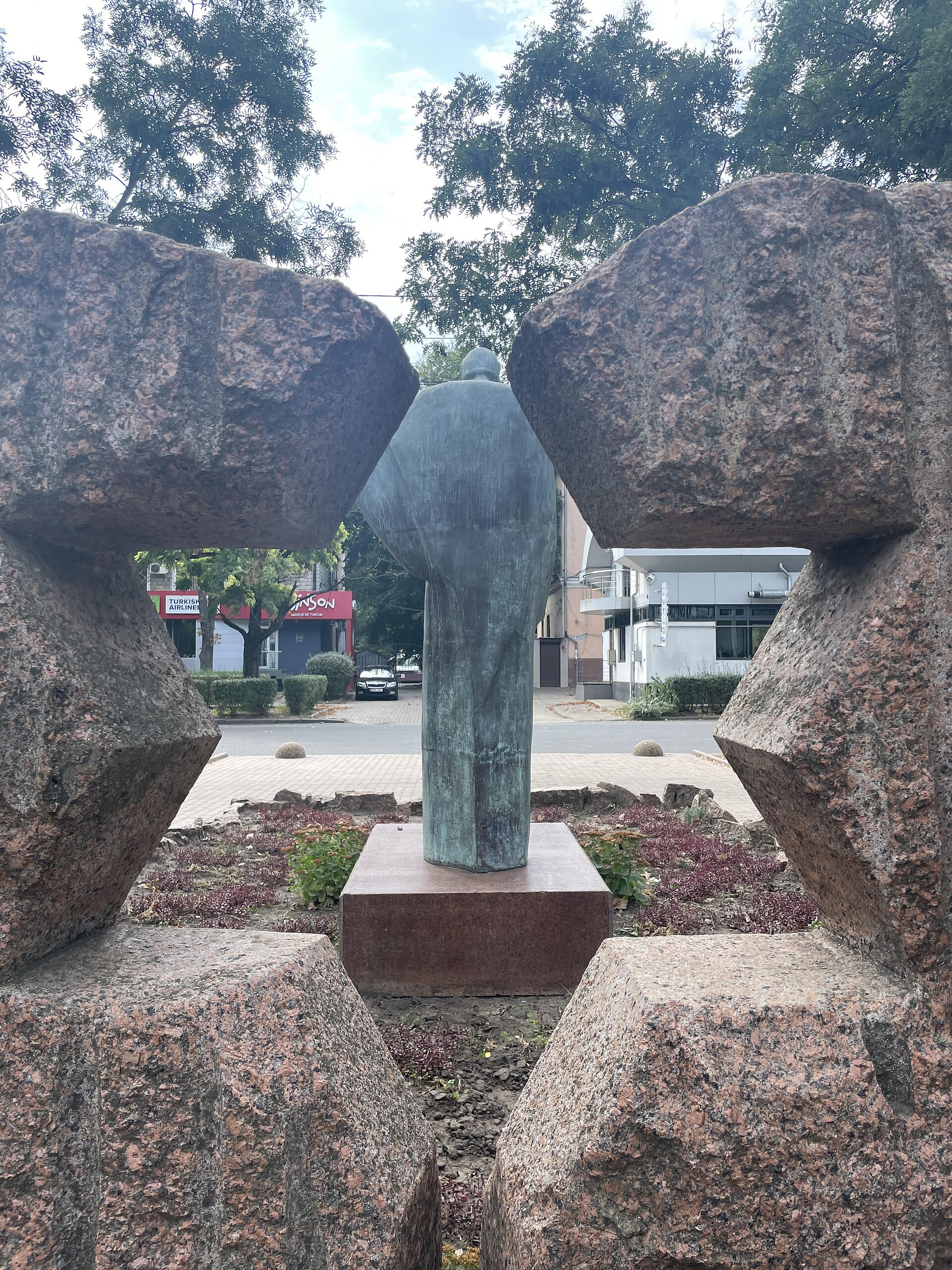
The area around what is now Malaya Malina Street in Chișinău holds a quiet, often overlooked chapter of the city’s history. During World War II, this was the site of the Chișinău Ghetto, established by Romanian authorities allied with Nazi Germany. For a brief but devastating period, it became a place of confinement for thousands of Jews from Chișinău and surrounding villages, as well as those forcibly relocated from Bessarabia and Bukovina. The ghetto existed for just over a year, yet its impact on the lives of those who passed through it was profound. Today, there are no grand memorials or museums here, but the past lingers in subtle ways for those who know where to look.
The ghetto occupied what was then the outskirts of Chișinău, in a district called Râșcani. The boundaries were roughly marked by what are now Izmail Street, Albișoara Street, and the railway lines. In the early 1940s, this was a marginal area of the city, filled with dilapidated houses, makeshift barracks, and small workshops where people struggled to survive under brutal conditions. The entire perimeter was enclosed with barbed wire, and any attempt to leave was punishable by death. Overcrowding was extreme, with families crammed into whatever shelter they could find, often sharing space with strangers in spaces never meant for human habitation.
Life inside the ghetto was marked by deprivation. Food was scarce, distributed in meager rations or traded for whatever possessions people had left. Water had to be drawn from a limited number of wells, and disease spread rapidly in the unsanitary conditions. Despite the hardships, some semblance of community persisted. Underground schools operated in secret, makeshift hospitals treated the sick, and small prayer groups gathered in hidden spaces. These acts of resilience were small but vital, offering a fragile sense of normalcy in a world that had been upended.
The Chișinău Ghetto existed from July 1941 until October 1942. In that short time, tens of thousands of people passed through its gates. Many died from starvation, illness, or execution within its confines. Others were deported to camps in Transnistria, where survival rates were even lower. By the time Soviet forces liberated Chișinău in 1944, the ghetto had long been dismantled, its inhabitants either murdered or transported elsewhere. The few who remained were left to rebuild their lives in a city that had been irrevocably changed.
Today, the former ghetto site bears little resemblance to its wartime self. The Râșcani district has been transformed by decades of development, with modern apartment blocks, shops, and cafes replacing the old structures. Yet traces of the past remain if you know where to look. Some of the narrow streets still follow the same layout they did eighty years ago, and a handful of pre-war buildings have survived, their weathered facades bearing silent witness to the lives that once filled them. These remnants are easy to miss, blending into the everyday fabric of the neighborhood, but they offer a connection to a history that is too often forgotten.
The memory of the Chișinău Ghetto has been preserved through the accounts of survivors and the work of historians. After the war, many of those who escaped emigrated to Israel, the United States, or other countries, leaving behind written testimonies, diaries, and letters that document their experiences. For decades, this history was rarely discussed in Moldova, but in recent years, there has been a growing effort to acknowledge and study it. Books, documentaries, and exhibitions have begun to shed light on the Holocaust in the region, though much of the public awareness remains limited.
For those interested in learning more, there are a few places in Chișinău that offer glimpses into this history. A memorial plaque marks the site of a former synagogue on Ierusalim Street, once a gathering place for the city’s Jewish community. The Holocaust Museum in Moldova houses documents and photographs from the era, providing context for the events that unfolded. But perhaps the most powerful way to engage with this history is through the stories of those who lived it. While survivors are few and far between today, their words—when they can be found—offer a perspective that no monument or museum can fully capture.
The Chișinău Ghetto is not just a relic of the past; it is part of the city’s identity, a reminder of the fragility of life and the importance of remembrance. Chișinău today has a small Jewish population, but the history of those who once lived here is woven into the streets and buildings of the city. Walking through Râșcani, it’s difficult to imagine the suffering that once took place in these very spaces. Yet for those who take the time to look, the past is still present—in the quiet courtyards, the aging walls, and the stories that refuse to be forgotten.