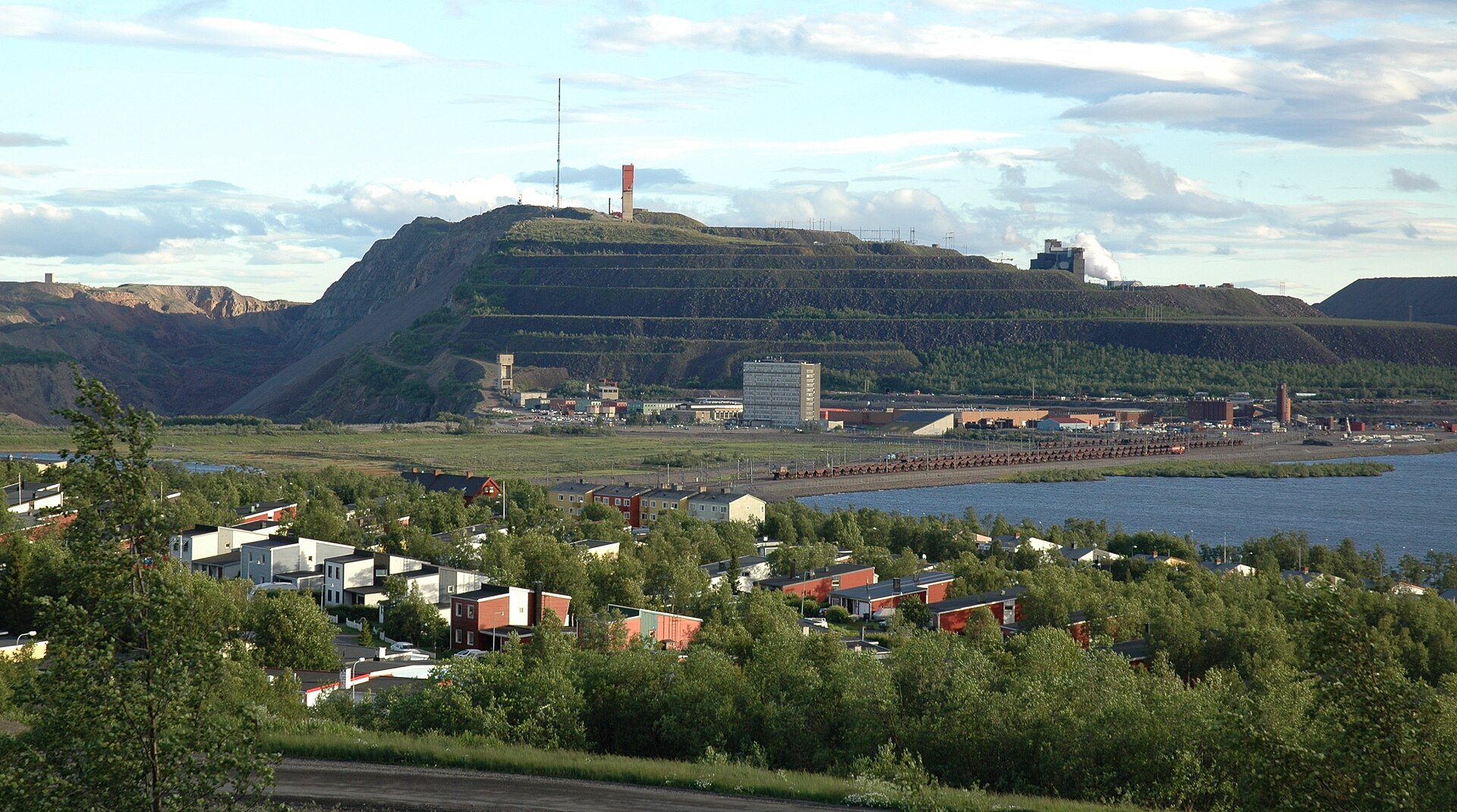
Kirunavaara is one of those rare places where industry and wilderness exist side by side, not in opposition, but in a kind of uneasy harmony. Tucked away in Sweden’s far north, near the town of Kiruna, this unassuming mountain has shaped the region’s identity for over a century. It’s not the kind of peak that dominates the skyline—its slopes are gentle, covered in forests and tundra—but beneath its surface lies one of the world’s richest deposits of iron ore. For generations, Kirunavaara has been the economic heartbeat of Swedish Lapland, a place where the rhythm of mining machinery blends with the quiet vastness of the Arctic landscape.
The story of Kirunavaara begins in the late 19th century, when Sweden was pushing into its northern territories with a mix of ambition and necessity. Geologists discovered vast seams of magnetite here, a particularly pure form of iron ore, and the find transformed the region almost overnight. By 1898, construction had begun on a railway linking Kiruna to the Norwegian port of Narvik, a crucial artery for transporting ore to markets across Europe. The first mine opened soon after, and since then, extraction has never stopped. What started as a modest operation grew into one of the largest open-pit mines in the world, a gaping wound in the earth that’s visible from space.
Standing near the edge of the pit today, it’s hard not to feel a sense of scale. The mine stretches over a kilometer deep, a vast terraced crater where trucks and excavators look like toys from a distance. Every year, millions of tons of ore are hauled out, processed, and shipped off to steel mills across the continent. The sheer volume of material moved is staggering, a testament to the industrial might that has defined this corner of Sweden. Yet despite the constant activity, the surrounding landscape retains a wild, untouched quality. Reindeer graze on the slopes, and in winter, the northern lights dance overhead, undimmed by the glow of the nearby town.
Kirunavaara’s impact extends far beyond the mine itself. The ground beneath Kiruna has been slowly sinking for decades due to the underground excavations, and in 2004, authorities made the unprecedented decision to relocate parts of the town. Entire neighborhoods have been dismantled, moved, or rebuilt elsewhere, a process that’s still ongoing. Some historic buildings have been carefully preserved, while others have been left behind, a ghostly reminder of the town’s shifting foundations. It’s one of the most ambitious urban relocation projects in modern Europe, driven by the same forces that built Kiruna in the first place.
For all its industrial might, Kirunavaara is still very much a part of the Arctic wilderness. The forests and fells around the mine are crisscrossed with hiking trails, and in summer, the area draws visitors looking to escape into the quiet of Lapland. The air is crisp, the silence broken only by the occasional call of a bird or the distant hum of machinery. It’s a place where you can stand on the edge of a massive open-pit mine one moment and, just a short walk away, find yourself surrounded by nothing but trees and sky. The contrast is striking, a reminder that even in the most industrialized landscapes, nature persists.
Those curious about the mine’s history can visit the local mining museum in Kiruna. It’s not a glossy, sanitized exhibit—there are no attempts to romanticize the work that goes on here. Instead, the museum offers a straightforward look at the industry’s evolution, from early hand tools to modern machinery. Visitors can even descend into a replica underground mine, a dimly lit tunnel that gives a small taste of what it’s like to work hundreds of meters below the surface. The stories of the miners, their struggles, and the way the industry has shaped the region are told without embellishment, a nod to the gritty reality behind Kirunavaara’s economic importance.
In many ways, Kirunavaara embodies the tension between progress and preservation. The mine continues to operate, its methods refined over decades, but the region is also looking toward the future. Tourism is growing, with visitors drawn to the stark beauty of the Arctic landscape and the unique story of the mine. Nearby, the Esrange Space Center has put Kiruna on the map for another reason—its rocket launches and satellite operations hint at a future where the town’s identity might expand beyond mining. Yet even as new industries take root, the mine remains central, a symbol of the region’s past and a reminder of the challenges ahead.
A visit to Kirunavaara leaves you with a sense of contradiction. Here is a place where humans have reshaped the earth on an almost unimaginable scale, carving out a pit so large it alters the landscape itself. And yet, just beyond the mine’s edge, the wilderness remains, vast and untamed. The northern lights still flicker overhead, the reindeer still roam the hills, and the silence of the Arctic is broken only by the wind. It’s a place that forces you to confront the balance between human ambition and the natural world, a reminder that even in the most industrialized corners of the planet, there’s still room for something wild.