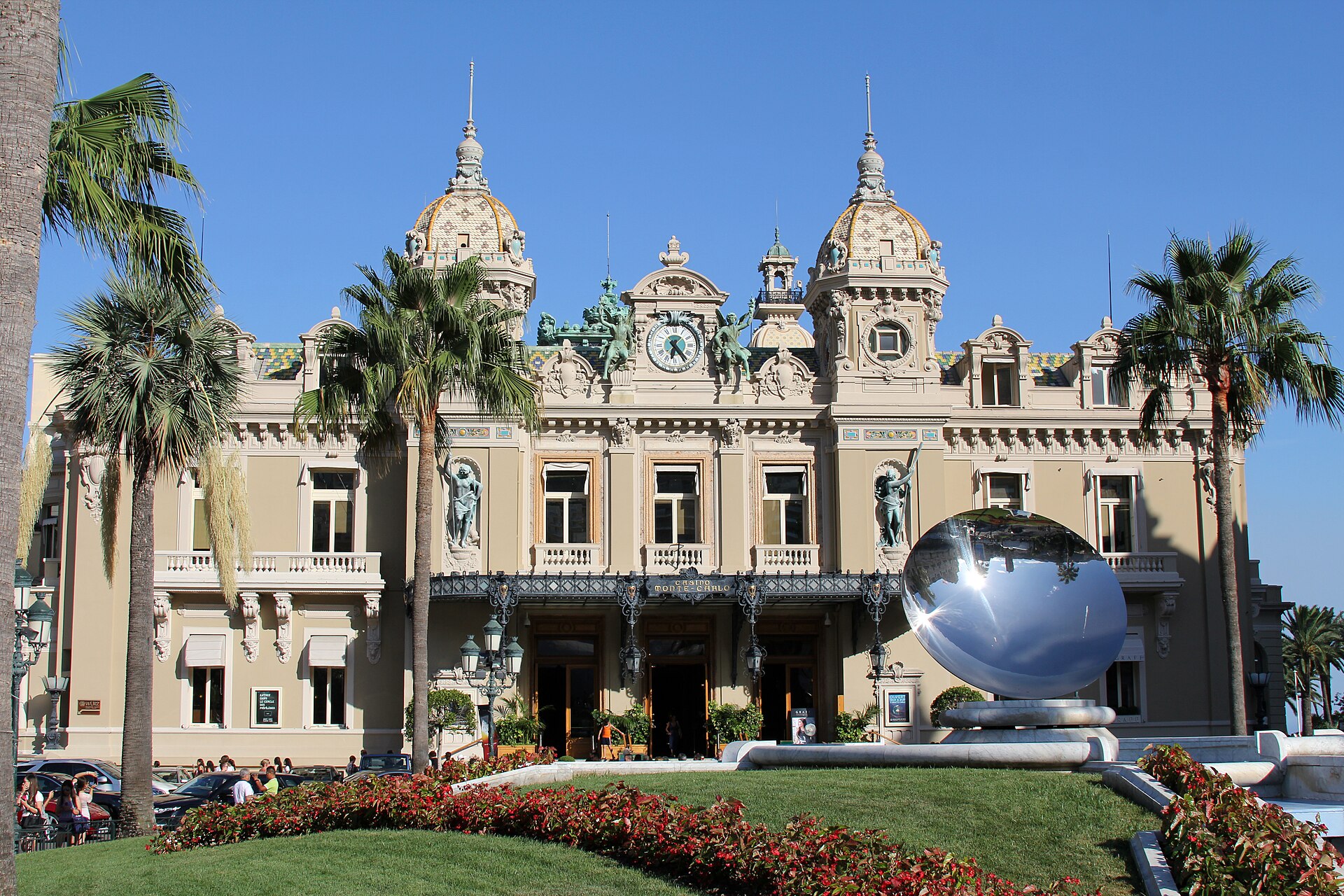
Monte Carlo Casino isn’t just a place to gamble—it’s a monument to an era when Monaco transformed from a quiet principality into a playground for the world’s elite. The story begins in the mid-19th century, when Prince Charles III, facing financial struggles, took a gamble of his own by legalizing gambling. Few expected it to work, but within decades, Monte Carlo became synonymous with luxury, chance, and high society. The building we see today, completed in 1878, was designed by Charles Garnier, the same architect behind the Paris Opera. His vision blended Baroque grandeur with Renaissance elegance, creating a structure that feels both opulent and timeless, perfectly suited to a city where every corner whispers history.
The architecture alone is worth the visit, even for those indifferent to gambling. The façade is a spectacle of columns, sculptures, and intricate stonework, while the interiors drip with marble, gold, and crystal. The main gaming hall feels like a palace ballroom, with soaring ceilings and chandeliers that cast a warm, almost theatrical glow. Every detail—from the arrangement of the tables to the lighting—is designed to immerse visitors in an atmosphere of mystery and indulgence. Walking through the halls, you don’t just see a casino; you step into a world where gambling was once a refined social ritual, not just a pastime.
Monte Carlo has always been a crossroads for the powerful and the glamorous. In the early 20th century, European royalty, Russian aristocrats, American tycoons, and literary figures like Dostoevsky—who found inspiration here for *The Gambler*—all passed through its doors. The casino’s allure even spilled into pop culture, most famously through James Bond, who turned its tables into a stage for cinematic legend. Today, the crowd is a mix of wealthy tourists, celebrities, and curious visitors, all drawn by the promise of rubbing shoulders with fortune. That said, don’t expect instant glamour; entry requires a passport, and the dress code is strictly enforced.
Beyond its role as a gambling hub, the casino has shaped Monaco itself. The revenue it generates allowed the principality to abolish income taxes for its citizens, turning it into a tax haven. But the casino is just one part of a larger complex that includes an opera house, luxury hotels, and fine dining. Nearby, the manicured gardens and waterfront promenade offer a quiet contrast to the casino’s buzz, with the Mediterranean Sea just a short walk away. The whole area is designed to keep visitors lingering—whether they’re placing bets or simply soaking in the views.
Despite its reputation as an exclusive enclave, the casino is open to anyone who wants to experience it. There’s just one catch: residents of Monaco aren’t allowed to gamble here, a rule dating back to the 19th century to protect locals from the temptations of chance. For everyone else, a visit is a glimpse into a world where money moves differently. Even if you don’t play, the casino offers something rare—a sense of history and spectacle that goes beyond the tables. After all, Monte Carlo isn’t just about gambling; it’s about the idea of a place where the past and present collide, and where luxury isn’t just an experience, but a way of life.