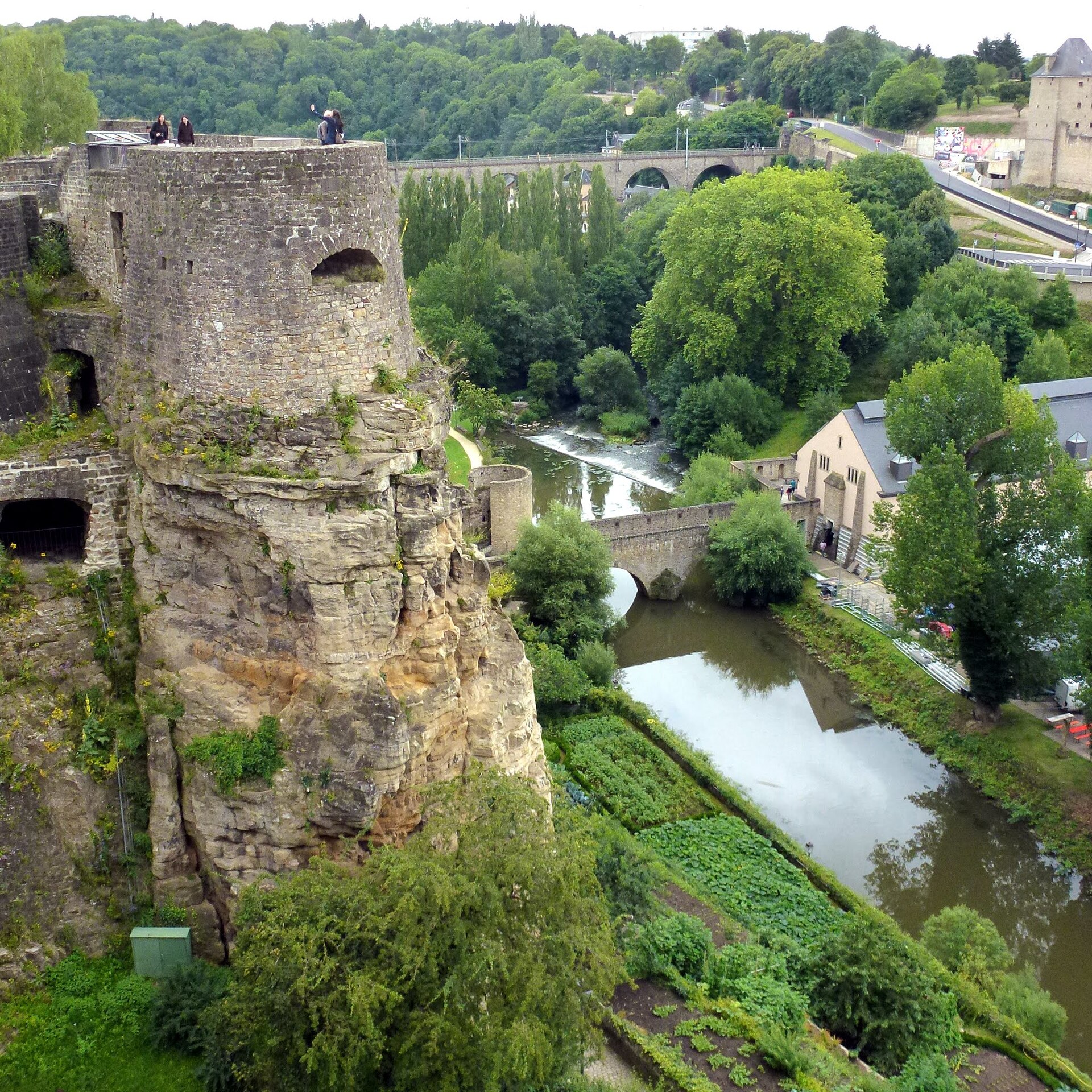
The Bock Casemates aren’t just a network of underground tunnels—they’re one of Luxembourg’s most striking historical sites, where the country’s past is literally carved into the rock. Perched on a steep cliff overlooking the Alzette River, these tunnels were once part of a formidable fortress that guarded the city for centuries. Today, they offer a rare chance to step into history, walking the same dimly lit corridors where soldiers once marched and peering through narrow embrasures for a breathtaking view of the valley below.
Their origins trace back to Luxembourg’s turbulent history, a city that changed hands countless times over the centuries. The first fortifications were built in the 17th century under Spanish rule, but it was the Austrians in the 18th century who expanded them into the vast underground complex we see today. Engineers transformed the rocky plateau into an impregnable stronghold, cutting miles of tunnels, galleries, and chambers into the limestone. These weren’t just shelters for troops—they were a strategic nerve center, allowing defenders to monitor and control access to the city from within the mountain itself.
Walking through the casemates feels like moving through time. The narrow passages, hewn from solid rock, wind past empty alcoves where ammunition was once stored and vast halls that served as barracks. Some walls bear faint inscriptions left by soldiers from different eras, their messages worn but still legible. The air is cool and damp, and the occasional shafts of light filtering through the openings cast long shadows, adding to the sense of mystery. The most striking moments come when you reach the lookout points—windows carved into the cliffside that frame the Alzette River winding through the valley, with the old city’s bridges and rooftops stretching out below like a miniature landscape.
The casemates are deeply tied to Luxembourg’s identity as a fortress city. By the 19th century, after the Congress of Vienna, the city was considered one of Europe’s most unassailable strongholds, and its underground defenses were hailed as an engineering marvel. But in 1867, the Treaty of London ordered the partial demolition of the fortifications, and the casemates were sealed off. Fortunately, enough of the tunnels survived to be reopened to the public, offering a rare glimpse into how military architecture once merged with the natural landscape to create something both functional and awe-inspiring.
What makes the Bock Casemates special today is their unpolished authenticity. Unlike more crowded tourist sites, they retain a quiet, almost meditative atmosphere. You can wander the corridors alone, the sound of your footsteps echoing off the stone, or join a guided tour to learn about the daily lives of the soldiers who once lived and fought here. Either way, the experience feels raw and real—far removed from the glossy, commercialized versions of history found elsewhere.
The best time to visit is in spring or autumn, when the city is less crowded and the weather is mild enough to fully appreciate the views from the cliffside. Summer brings welcome coolness to the tunnels, making the visit pleasant even on hot days. Winter, though, is when the casemates take on a different character. The silence is almost tangible, broken only by the wind whistling through the empty passageways. It’s a time when the weight of history feels especially present, a reminder of the countless lives that passed through these tunnels—each with their own stories of duty, fear, and resilience.
More than just a tourist attraction, the Bock Casemates are a symbol of Luxembourg’s enduring spirit. They stand as proof of how a small country repeatedly found itself at the center of European conflicts yet managed to preserve its independence. Today, these tunnels represent adaptability and strength—qualities that have defined Luxembourg for centuries. Walking through them offers a deeper understanding of why this modestly sized city holds such a significant place in Europe’s past.
For anyone drawn to military history, architecture, or simply places with a strong sense of character, the Bock Casemates are a must-see. There are no flashy exhibits or interactive displays here, and that’s precisely what makes them so compelling. The history speaks for itself—through the rough-hewn stone, the play of light and shadow, and the silence that lingers in the air. It’s the kind of place that stays with you long after you’ve left, a quiet testament to the layers of time that shape a city.