The Canal de Chambord is one of those quiet, unassuming places that carries more history than its modest appearance might suggest. Winding through the forests and fields of central France, it was never meant to be a bustling trade route or a grand engineering marvel. Instead, it was conceived as a practical solution with a touch of royal ambition—a waterway designed to connect the Château de Chambord to the wider world, reflecting the aspirations of the kings who once ruled these lands.
Construction began in 1642 under the orders of Gaston, Duke of Orléans, the brother of King Louis XIII, who owned Chambord at the time. The idea was straightforward: link the château to the Loire River, allowing goods, materials, and even the occasional royal entourage to reach its gates without relying on overland transport. The project took decades to complete, and while the canal never became the busy commercial artery its planners might have envisioned, it served its purpose. Stone, timber, and provisions for the château’s construction arrived by water, as did the finer things demanded by the royal court—spices, wines, and other luxuries that traveled from distant ports.
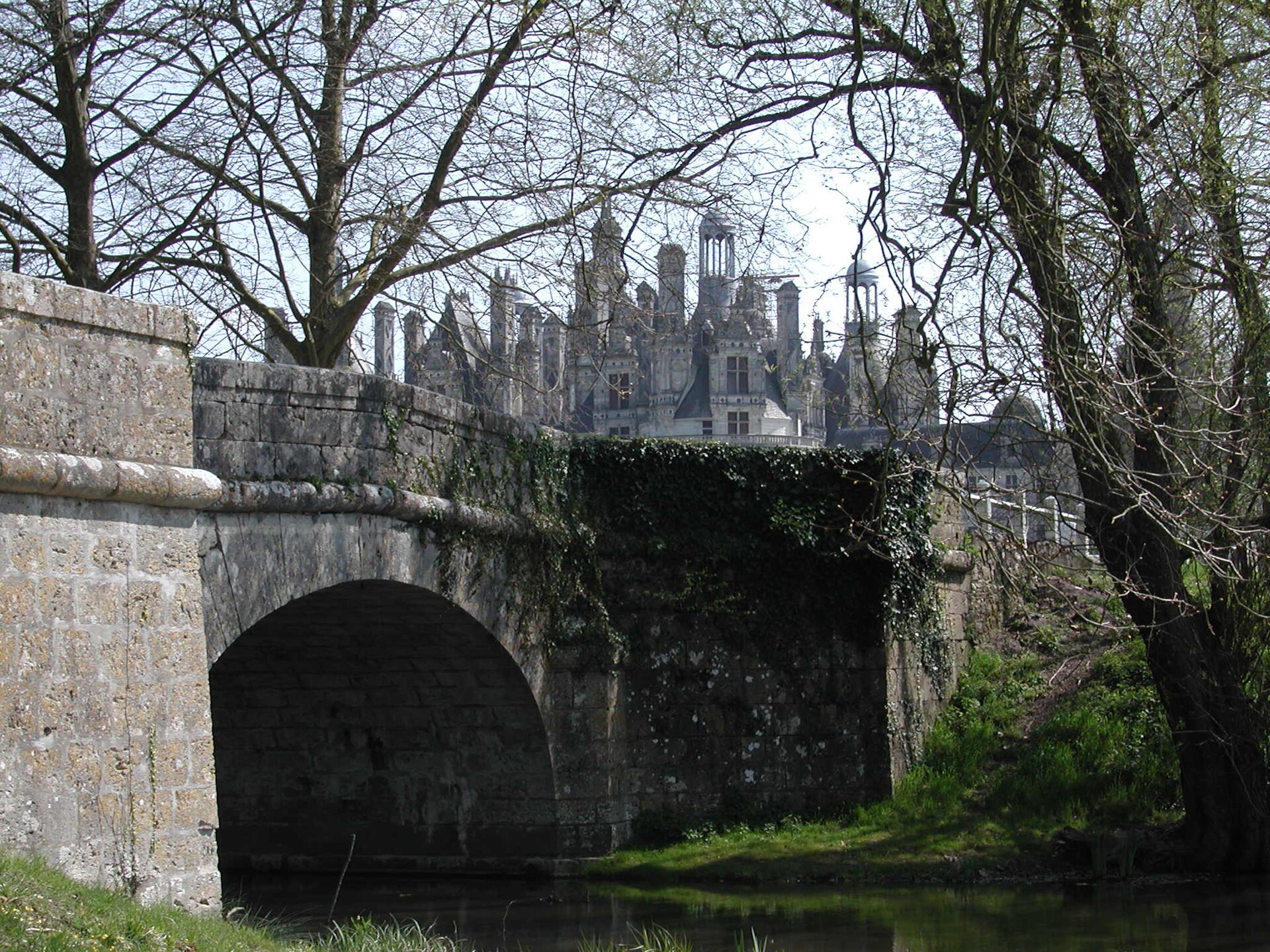
Stretching about thirty kilometers, the canal blends seamlessly into the landscape, its gentle curves and still waters mirroring the surrounding woods and meadows. The locks, built from local stone, remain functional after centuries, their weathered wooden gates creaking softly in the breeze. Bridges arch over the water, simple in design but sturdy, their reflections shimmering on the surface below. Along the banks, willows dip their branches into the water, and reeds sway in the wind, creating a sense of timelessness. It’s a place where the pace of life slows, where the only sounds are the occasional ripple of a passing boat or the call of a heron taking flight.
Unlike the more famous canals of Burgundy or Languedoc, the Canal de Chambord has never been crowded with barges or tourists. Most days, the only vessels you’ll see are rented canoes or small rowboats, gliding silently along the water. This tranquility is part of its charm. There are no tour groups here, no souvenir stands—just the quiet rhythm of nature and the faint echoes of history. The canal feels like a secret, a detour from the well-trodden paths that lead to the château, offering a different perspective on the region.
The surrounding countryside is much as it was centuries ago, when these lands were part of the royal hunting grounds. Forests stretch for miles, home to deer, wild boar, and countless birds, while fields of wheat and sunflowers sway in the summer breeze. Locals still use the canal in small, practical ways—farmers draw water for their crops, and cattle drink from its edges. It’s not a relic frozen in time but a living part of the landscape, a reminder that even in a place steeped in history, life goes on.
For visitors to Chambord, the canal is often an afterthought, overshadowed by the grandeur of the château itself. Yet those who take the time to explore it are rewarded with a deeper understanding of the place. A walk along its banks or a slow paddle in a rented boat reveals the château not as an isolated monument but as part of a broader tapestry—one where water, land, and human ambition intertwine. You can almost picture the barges of the 17th century, laden with limestone for the château’s walls, or imagine the king and his court setting off on a hunt through the nearby woods.
The canal has left its mark on the region in more ways than one. It appears in historical records, tied to the comings and goings of the royal court, and even in literature, where it serves as a backdrop to stories of the Sun King’s era. Today, it’s a place where people come to unwind—picnicking on the grassy banks, casting a fishing line into the water, or cycling along the towpaths. In summer, small festivals bring locals and visitors together, with stalls selling fresh bread, local cheeses, and wine from nearby vineyards. In autumn, the trees lining the canal turn gold and amber, their leaves drifting onto the water’s surface like scattered coins.
In recent years, efforts have been made to preserve the canal’s delicate balance between nature and human intervention. Restoration work is carried out carefully, ensuring that the locks and bridges remain functional without disrupting the ecosystem. The water stays clean, the banks well-tended, and the wildlife undisturbed. It’s a place that feels untouched by the rush of modern life, where the only urgency is the slow drift of clouds across the sky.
There’s something deeply satisfying about standing by the canal, watching the water flow past. It’s a reminder that not every journey needs to be fast or crowded, that some of the most meaningful experiences come from simply being still. The Canal de Chambord doesn’t demand attention the way the château does, but for those who take the time to notice, it offers something just as valuable—a glimpse into a quieter, slower France, where history isn’t just something you read about but something you can feel in the air.