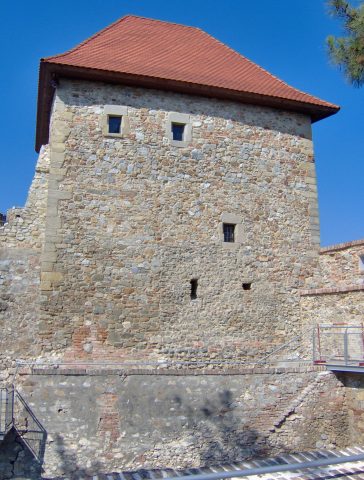
Nitra’s Calvary sits on Zobor Hill, overlooking the city. The path up draws pilgrims and anyone who wants open space or a moment to pause. From here, Nitra and the valley below stretch out—a view that feels both vast and close.
The idea of a calvary, recreating Christ’s journey to Golgotha, spread in Europe during the 17th century. The Counter-Reformation inspired such sites to strengthen faith through symbolic pilgrimage. In Nitra, Camaldolese monks—known for their asceticism—chose this hillside in the 18th century. They built chapels, statues, and winding paths, keeping everything simple, as they believed devotion needed no adornment.
The calvary has fourteen chapels, each marking a station of the Cross. They line the trail up the hill, blending into the landscape. Some still have their original details; others have been restored. The wooden sculptures of the Passion stand out—not for their craftsmanship, but for their raw emotion. Their rough faces and gestures feel real, as if the figures might step out at any moment.
The climb is slow. The path winds through shade and sunlight, past trees and clearings where the city unfolds below. On warm days, the air stays cool under the trees. In autumn, leaves crunch underfoot. Halfway up, a terrace lets you rest and look back at how far you’ve come.
At the top, the Chapel of the Crucifixion has a steep roof and narrow windows. Inside, dim light and candles make the space feel quiet. Even with others around, it’s easy to feel alone with your thoughts. Outside, Nitra spreads out: red-tiled roofs, St. Emmeram’s Cathedral, and the Nitra River. The sky above feels endless.
Zobor Hill has always been a place of spiritual seeking. In the 9th century, one of Great Moravia’s earliest monasteries stood here. Later, medieval monks made it a center of monastic life. The Camaldolese monks who arrived in the 18th century built the calvary, turning the slope into a pilgrimage site. Their monastery is gone, but the calvary keeps the spirit of that time.
Locals visit often. Families bring children to share its stories. Religious festivals happen on its slopes. On ordinary days, people walk the paths, enjoying the silence and views. Visitors from farther away have started coming, but it hasn’t turned into a crowded tourist spot. There are no vendors or loud signs—just the trail, the chapels, and the wind in the trees.
Restoration work happens now and then, done carefully to keep the site’s character. The chapels, statues, and stones feel like parts of something bigger. This is a place where the past feels close—the hands that built it, the voices that prayed here, and the people who will come after. Nitra’s Calvary isn’t a museum. It’s a place that still lives, changes, and offers quiet moments to those who walk its paths.