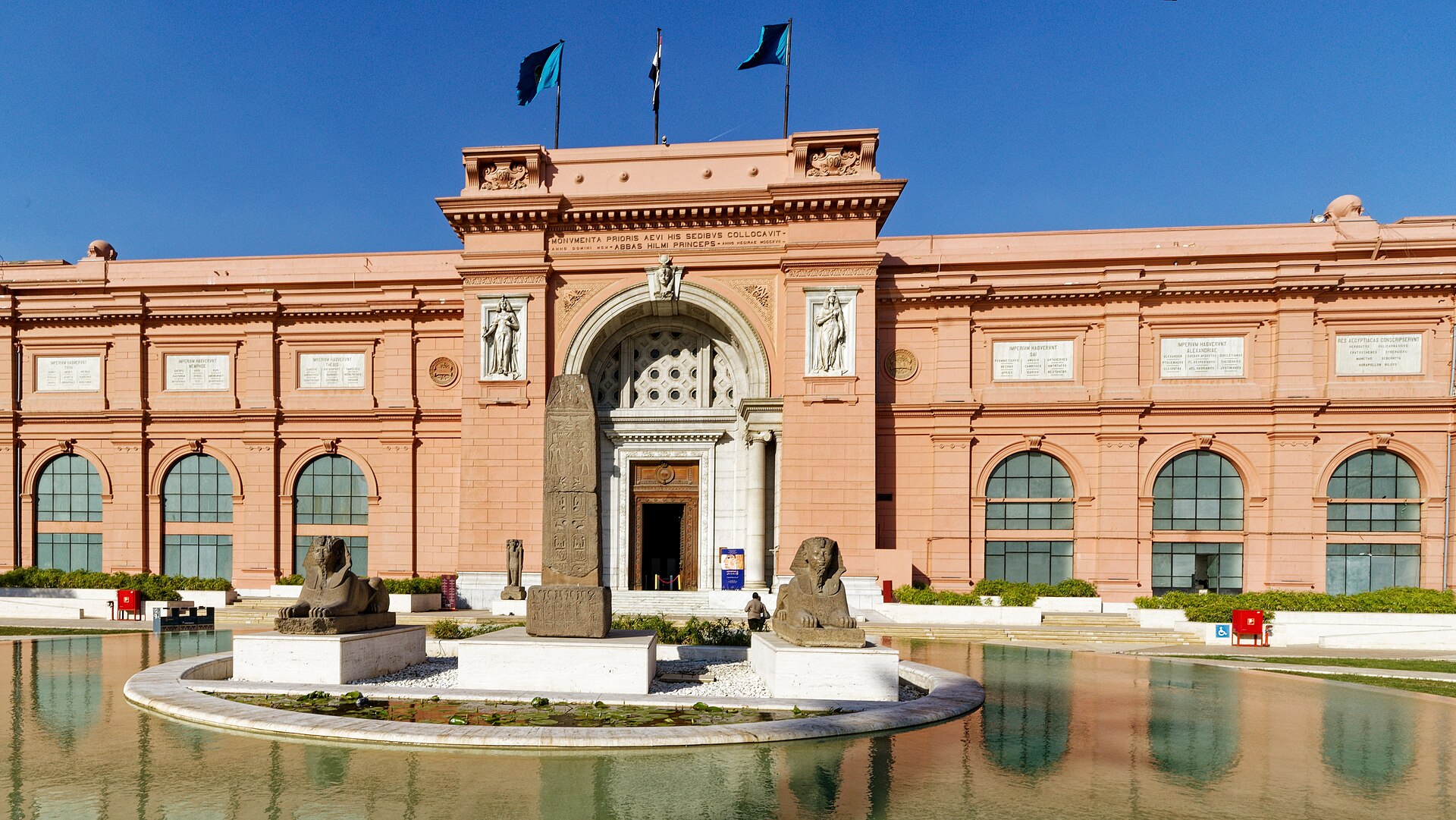
The Egyptian Museum in Cairo is one of those rare places where the weight of history feels almost tangible. Standing in the heart of the city on Tahrir Square, its pinkish neoclassical façade with towering columns draws the eye even from a distance. The building itself is a relic of another era, opened in the early 20th century, though its origins trace back further—to a time when Egypt first sought to protect its heritage from looting and foreign removal. Today, it houses over 120,000 artifacts, each a silent witness to civilizations that might otherwise feel like myth.
Stepping inside, the sheer volume of objects can be overwhelming. The galleries are arranged chronologically, guiding visitors from the predynastic era through to the Ptolemaic period. Everyday items—tools, jewelry, pottery—share space with grander relics: intricately carved sarcophagi, imposing statues of gods and pharaohs, and weapons that once belonged to kings. But the most striking exhibits are the royal mummies, displayed in climate-controlled rooms. Their presence is unsettling yet mesmerizing. The face of Ramesses II, remarkably preserved, stares back with an eerie stillness, a direct link to a ruler who commanded an empire over three thousand years ago.
No visit is complete without seeing the treasures of Tutankhamun. Discovered in 1922 by Howard Carter in the Valley of the Kings, the tomb’s contents caused a global sensation. The young pharaoh’s golden death mask, instantly recognizable, is displayed alongside his thrones, jewelry, and even childhood toys. These objects were meant to accompany him into the afterlife, and their craftsmanship is breathtaking. Nearby, amulets, ceremonial daggers, and figurines of deities offer a glimpse into ancient beliefs about death and rebirth. Standing before them, it’s easy to forget this was once a teenager who ruled a kingdom.
Beyond the royal artifacts, the museum holds quieter but equally revealing pieces. Fragments of papyrus bear hieratic script, recording everything from religious hymns to mundane accounts. Clay tablets detail grain distributions, while wooden models of boats—placed in tombs to ferry the dead across the Nile—hint at the importance of river travel. There are simple tools used by artisans, woven baskets, and storage jars for oil and wine. These unassuming items humanize a civilization often remembered only for its pyramids and pharaohs, showing the daily rhythms of farmers, weavers, and scribes.
The museum’s architecture reflects its dual role as both a repository of history and a product of its time. Designed by French architect Marcel Dourgnon in the neoclassical style, the building’s grand halls and high ceilings were meant to evoke the grandeur of the artifacts within. A central courtyard, once home to towering statues, now hosts temporary exhibitions. Natural light filters through large windows, softening the edges of the past and making the experience feel less like a tour and more like a conversation with history.
This is more than a tourist attraction; it’s an active center of scholarship. Egyptologists from around the world work here, restoring fragile papyri, deciphering inscriptions, and studying artifacts still hidden from public view. Many items remain in storage, either too delicate for display or awaiting further research. Recent discoveries, like newly unearthed papyri, continue to reshape our understanding of Egypt’s lesser-known periods. The museum also collaborates with institutions globally, loaning pieces for exhibitions that introduce ancient Egypt to new audiences.
A visit here is never rushed. Hours can slip by unnoticed as you move from one gallery to the next, each artifact offering a thread in a vast tapestry. The longer you stay, the more the past feels less like a distant chapter and more like a living presence. Some visitors return multiple times, drawn back by the sense that there’s always more to uncover. It’s not just about seeing history—it’s about feeling its pulse, even in the silence of a mummy’s gaze or the faded ink of a 3,000-year-old letter.
What makes the Egyptian Museum extraordinary is its ability to bridge the gap between the monumental and the intimate. Here, the grandeur of pharaonic Egypt coexists with the quiet details of ordinary lives. A farmer’s wooden plow sits near a king’s golden chariot, reminding you that history isn’t just about the powerful—it’s about the people who built, farmed, and worshipped in their shadow. That duality is what lingers long after you leave, a reminder that the past isn’t just something to observe, but something that still shapes the world we live in.