Al-Balad is the old heart of Jeddah, a place where the city’s past lingers in the salt-worn coral houses and the narrow, winding streets that have seen centuries of trade, pilgrimage, and daily life. Walking through its alleys feels like stepping into a living museum, though one that has never been frozen in time. The district was once the gateway for pilgrims arriving by sea on their way to Mecca, and its history is etched into the very walls of its buildings—some of which date back to the 16th century. The name itself, meaning "the town," reflects its long-standing role as the commercial and cultural nucleus of Jeddah before the modern city sprawled outward.
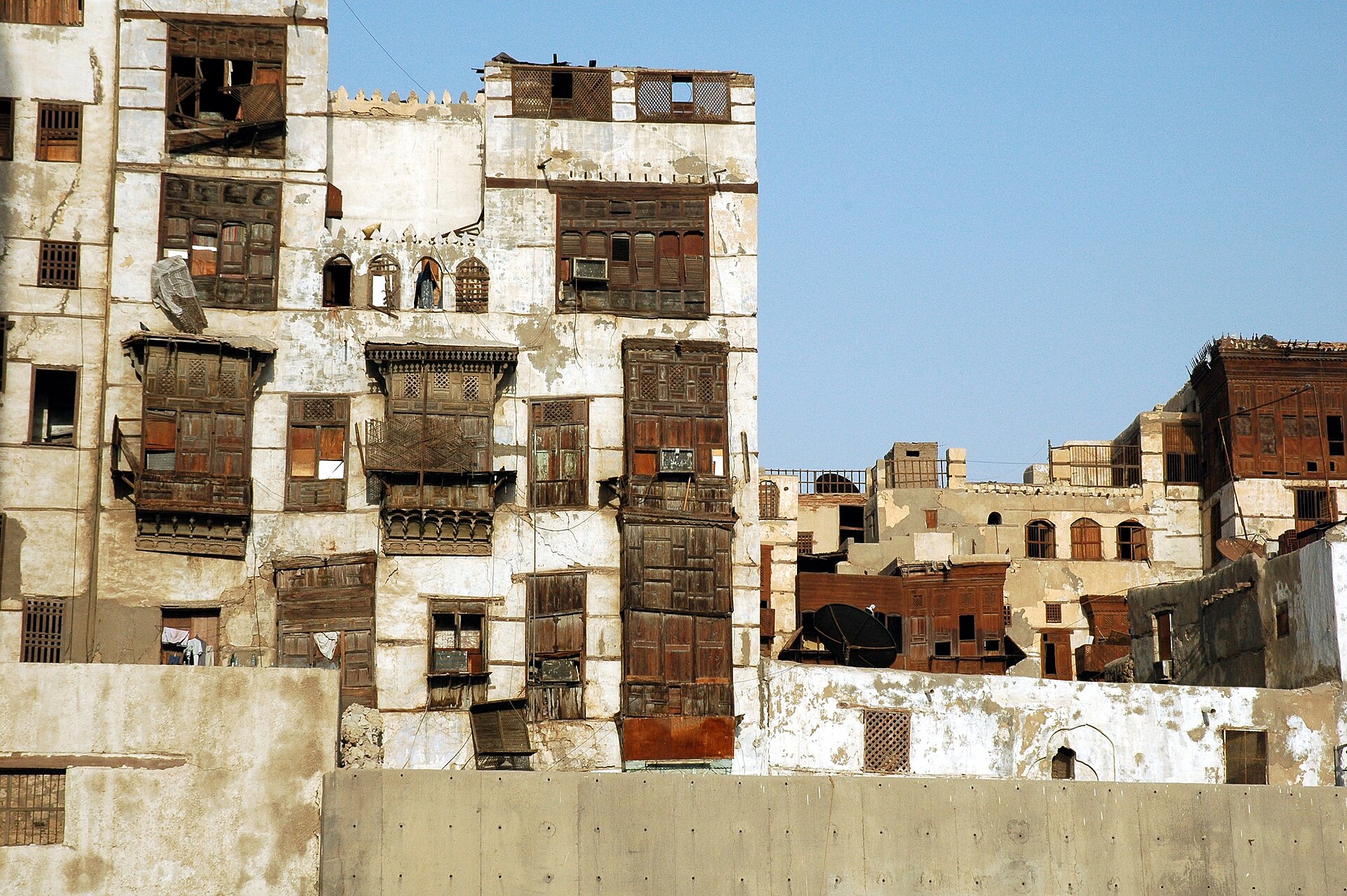
The architecture of Al-Balad is its most striking feature, a testament to the ingenuity of builders who worked with the materials at hand. The houses here were constructed from coral stone harvested from the Red Sea, a resource that was both abundant and well-suited to the climate. The thick walls kept interiors cool during the scorching summers, while the intricate wooden latticework, known as *rawashin*, served both decorative and practical purposes—allowing breezes to flow through while offering privacy to the women of the household. These ornate balconies and windows are now iconic symbols of the district, their geometric patterns casting shifting shadows as the sun moves across the sky.
Beyond the aesthetics, the buildings tell stories of the families who once lived in them. Many of the grander houses belonged to wealthy merchants, their wealth evident in the size of their homes and the elaborateness of their facades. Some of these structures have been restored in recent years, their interiors now housing small museums, cultural centers, or cafes where visitors can sit and imagine the bustle of life that once filled these spaces. Others remain in various states of disrepair, their crumbling walls a reminder of the passage of time. The contrast between the restored and the decaying adds a layer of complexity to Al-Balad, making it feel like a place caught between preservation and inevitable change.
The streets of Al-Balad are just as much a part of its character as the buildings. Unlike the wide, grid-like avenues of modern Jeddah, the alleys here twist and turn without apparent logic, following paths that were laid down long before urban planning became a formal discipline. Some are so narrow that two people can barely walk side by side, while others open into small squares where vendors once set up their stalls. The layout was never designed for cars, and today, the district is largely pedestrian, which only enhances the sense of stepping back in time. The absence of traffic noise allows the sounds of daily life—conversations, the clatter of dishes, the call to prayer—to fill the air in a way that feels almost unchanged from decades past.
Al-Balad’s significance goes beyond its architecture. For centuries, it was the commercial hub of Jeddah, a place where goods from across the Indian Ocean, Africa, and beyond were traded. The district’s souks, though smaller now than in their heyday, still offer a glimpse into this mercantile past. Shops selling spices, textiles, and traditional crafts line the streets, their wares displayed in much the same way they have been for generations. The scent of frankincense and myrrh still lingers in the air, a reminder of the incense trade that once made this region wealthy. While the souks are no longer the economic powerhouses they once were, they remain a vital part of Al-Balad’s identity, drawing both locals and visitors who come in search of something authentic.
The district has also been a melting pot of cultures, a natural consequence of its role as a port city. Over the centuries, traders, sailors, and pilgrims from Yemen, India, East Africa, and beyond passed through Jeddah, leaving their mark on the city’s cuisine, language, and traditions. This diversity is still visible in Al-Balad, from the Yemeni-style *mandi* restaurants serving slow-cooked meat and rice to the small shops selling African textiles and Indian spices. The people who live and work here today are a mix of old Jeddah families and newer arrivals, all contributing to the district’s unique atmosphere. It’s a place where history isn’t just preserved in buildings but lives on in the way people interact, the food they eat, and the stories they tell.
In recent years, there has been a growing effort to preserve Al-Balad, recognizing its value not just as a historical site but as a vital part of Jeddah’s cultural heritage. Restoration projects have brought some of the most significant buildings back to life, while initiatives to promote tourism and cultural events have helped draw attention to the district. Yet, preservation here is a delicate balance. Too much intervention risks turning Al-Balad into a sanitized version of itself, a theme park of the past rather than a living, breathing neighborhood. The challenge lies in maintaining its authenticity while ensuring it remains relevant to the people who call it home.
Visiting Al-Balad is not like visiting a typical tourist attraction. There are no grand monuments or flashy exhibits, just the quiet accumulation of history in every corner. The best way to experience it is to wander without a strict itinerary, letting the streets guide you. Stop in a café for a cup of strong Arabic coffee, chat with a shopkeeper about the history of his family’s business, or simply sit in one of the small squares and watch the world go by. The district has a rhythm of its own, one that moves at a slower pace than the rest of Jeddah. It’s a place where the past and present coexist, where every building has a story, and where the spirit of old Jeddah is still very much alive.
For those who take the time to explore it, Al-Balad offers a rare glimpse into a side of Saudi Arabia that is often overlooked. It’s a reminder that history isn’t just found in grand palaces or ancient ruins but in the everyday places where people have lived, worked, and traded for generations. In a city that is rapidly modernizing, Al-Balad stands as a testament to the enduring power of heritage—and to the idea that some places are worth preserving not just for their beauty, but for the stories they hold.