Khuzam Palace stands as one of Jeddah’s most evocative landmarks, a place where Saudi Arabia’s modern history feels almost tangible. Built in the mid-20th century, it served as a residence for King Abdulaziz and his family during a pivotal era for the kingdom. Over time, the palace became more than just a home—it was a stage for political decisions, diplomatic gatherings, and moments that would shape the nation’s future. Today, while its halls now house a museum, the building itself remains a silent witness to the events that unfolded within its walls.
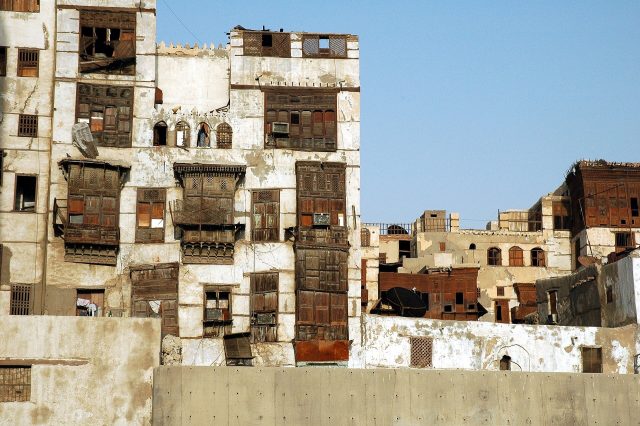
The architecture of Khuzam Palace reflects the transitional period in which it was constructed. Traditional Arabian design elements blend seamlessly with mid-century modern influences, creating a structure that is both rooted in heritage and forward-looking. The white stone facades, adorned with delicate carvings, rise above arched doorways and spacious courtyards, their simplicity lending the palace an air of quiet dignity. Unlike the ornate coral houses of Jeddah’s historic Al-Balad district, Khuzam avoids excess, favoring clean lines and thoughtful proportions that speak to the skill of its builders.
Inside, the palace was designed with both comfort and tradition in mind. High ceilings and marble floors helped mitigate the region’s intense heat, while wooden paneling added warmth to the interiors. Privacy was a key consideration—different wings of the palace could function independently, allowing the royal family to conduct affairs of state without disrupting domestic life. Though much of the original furnishings have been replaced or moved, the layout still hints at the careful balance between public duty and personal retreat that defined life here.
As a museum, Khuzam Palace offers a glimpse into Saudi Arabia’s mid-20th-century history through a collection of artifacts, documents, and photographs. Visitors can see everything from antique maps and ceremonial weapons to gifts presented by foreign dignitaries and personal items belonging to King Abdulaziz. Each piece tells a story, not just of the royal family, but of a nation in the process of defining itself. The exhibits are modest compared to those in larger museums, but their authenticity makes them compelling—these are not reproductions, but objects that once played a role in real events.
The palace is located in an older part of Jeddah, where the city’s past lingers in narrow streets and coral-stone buildings. The area feels worlds away from the sleek waterfront developments and towering skyscrapers that now dominate the skyline. Walking through the surrounding neighborhood, it’s easy to imagine what Jeddah must have been like decades ago—a quieter, more intimate place where life moved at a different pace. Khuzam Palace, with its understated presence, fits naturally into this setting, offering a counterpoint to the city’s modern ambitions.
For many Saudis, the palace holds a significance that goes beyond its historical value. Older generations may remember it as a symbol of a transformative era, while younger visitors see it as a connection to the kingdom’s formative years. It’s not uncommon to find locals exploring the exhibits alongside tourists, drawn by a shared curiosity about the past. The palace doesn’t just preserve history—it keeps it alive in the collective memory of those who visit.
A trip to Khuzam Palace is less about spectacle and more about reflection. There are no flashy displays or interactive installations, just the quiet weight of history in its most unfiltered form. The experience is best approached with patience—some exhibits may be temporarily closed, and the palace itself is more about atmosphere than entertainment. Those who take the time to wander its halls will find that the real draw isn’t just what’s on display, but the sense of stepping into a moment frozen in time.
Jeddah is a city of contrasts, where ancient mosques stand beside futuristic towers and bustling souks give way to serene coastal promenades. Khuzam Palace occupies a unique space in this landscape. It’s not as old as the coral houses of Al-Balad, nor as grandiose as the city’s newest architectural marvels. Instead, it offers something rarer: a sense of continuity. Here, the past isn’t just remembered—it’s still present, waiting to be discovered by those who seek it.