Malacca is one of those places where history isn’t just preserved in museums—it’s woven into the streets, the buildings, and even the air you breathe. Walking through its old town feels like stepping into a living storybook, where layers of time overlap in a way that’s both subtle and striking. The city was once the heart of a powerful sultanate, a bustling port that drew traders from across Asia and Europe, and later, a colonial prize fought over by the Portuguese, Dutch, and British. Each of these eras left its mark, not in grand monuments alone, but in the quiet details: the weathered red of Dutch-era buildings, the arched doorways of Chinese shophouses, the occasional spice lingering in the humid air.
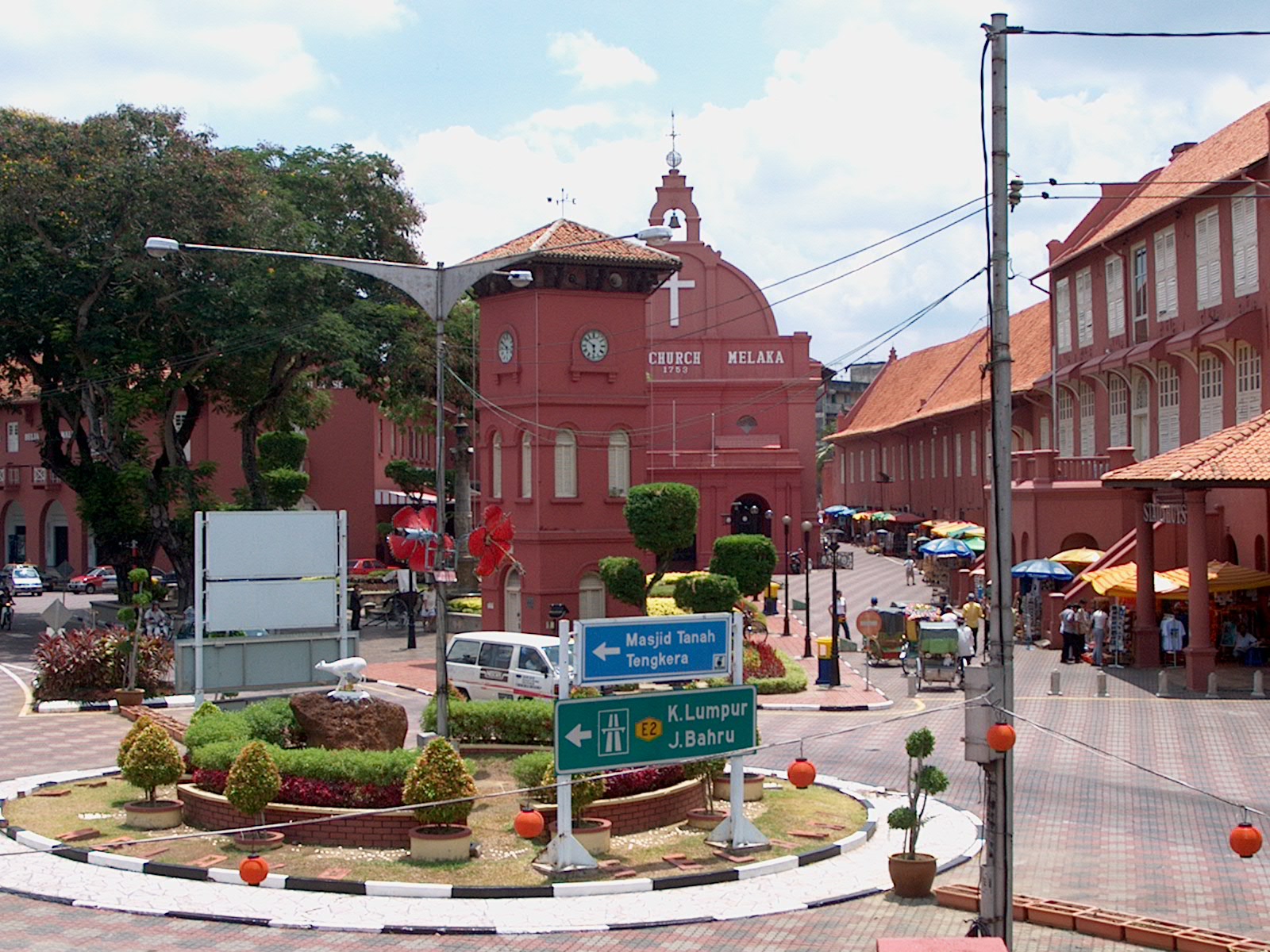
The most obvious starting point is Dutch Square, though locals often call it Red Square for the deep crimson hue of its buildings. The Stadthuys, a massive structure with thick walls and heavy wooden doors, was built in the 17th century as the administrative center of Dutch Malacca. Today, it houses a museum, but the real draw is the building itself—its sturdy, no-nonsense architecture a reminder of an era when this was the seat of power in the region. Nearby, Christ Church stands with its bright red facade and white cross, a Protestant church that has watched over the square for centuries. The interior is simple, almost austere, with handmade pews and a ceiling held up by massive beams. The floor tiles, brought from Europe as ballast in ships, still bear the marks of time.
Just a short walk away, the ruins of St. Paul’s Church sit atop a hill, offering one of the best views of the city and the strait beyond. The church was originally built by the Portuguese in the early 16th century, later taken over by the Dutch, and eventually abandoned when the British moved the colonial center to Penang. What remains is a shell of a building, its walls open to the sky, with gravestones leaning against them like silent witnesses to the past. The most famous of these belongs to St. Francis Xavier, the missionary who once preached here. His body was briefly interred in the church before being moved to Goa, but the tomb remains, a quiet spot where visitors often pause to take in the breeze and the view.
The streets around Jonker Walk tell a different kind of history—one of trade, migration, and cultural blending. This area was once the commercial heart of Malacca, where Chinese merchants settled in the 15th century and built shophouses that still stand today. The architecture here is a mix of styles: Chinese tiled roofs, European shutters, and Malay wooden carvings. Some of the buildings have been restored, their facades painted in pastel shades, while others wear their age more visibly, their walls patched and repatched over the years. On weekends, Jonker Street comes alive with a night market, but even on quieter days, the area has a rhythm of its own. Old men play checkers outside coffee shops, the scent of *nyonya* cuisine drifts from open kitchens, and the occasional trishaw, decorated with flashing lights and blaring pop music, weaves through the narrow lanes.
One of the most fascinating aspects of Malacca is how its history isn’t just about the big players—it’s also about the communities that grew in their shadow. The Peranakan, or Straits Chinese, are perhaps the most visible of these. Descendants of Chinese traders who married local Malay women, they developed a culture that was distinctly their own, blending Chinese traditions with Malay influences. Their legacy is visible in the intricate *nyonya* porcelain, the elaborate embroidery of their kebayas, and the rich, spice-laden dishes that are still served in family-run restaurants. The Baba & Nyonya Heritage Museum offers a glimpse into their world, with rooms preserved as they would have been in the early 20th century—dark wooden furniture, ornate silverware, and a sense of a life that was both opulent and deeply rooted in tradition.
Then there’s Kampung Kling Mosque, one of the oldest in Malaysia, with its unusual mix of architectural styles. The mosque was built in the 18th century by Indian Muslim traders, and its design reflects their origins: the minaret resembles a Hindu or Buddhist pagoda, while the prayer hall is supported by Corinthian columns. The mosque is still in use, and visitors are welcome outside of prayer times, though it’s worth remembering that this is a place of worship, not just a tourist site. Nearby, the Cheng Hoon Teng Temple, the oldest functioning Chinese temple in Malaysia, offers another perspective on the city’s religious diversity. Its curved eaves, red lanterns, and intricate carvings are a testament to the Chinese community’s long presence in Malacca.
The waterfront, where the Malacca River meets the strait, was once the lifeblood of the city. In its heyday, this was one of the busiest ports in Southeast Asia, where ships from China, India, and the Middle East unloaded goods that would be traded across the region. Today, the river is quieter, lined with cafes and boutique hotels, but it’s still possible to imagine the scene centuries ago. A river cruise at dusk offers a different view of the city, with the lights of the old town reflecting on the water and the sound of the muezzin’s call mixing with the hum of modern life. The riverbanks are dotted with murals and installations that tell the story of Malacca’s past, though some feel a bit too polished, as if trying to package history for easy consumption.
What makes Malacca special isn’t just its monuments or its museums—it’s the way the past and present coexist without much fanfare. You can have a cup of *teh tarik* at a roadside stall, then turn a corner and find yourself face-to-face with a 500-year-old gate. You can watch a traditional *dondang sayang* performance, where singers improvise verses in Malay, then walk into a modern art gallery housed in a restored shophouse. The city doesn’t feel like it’s trying too hard to be historic; it just is. That’s not to say it’s frozen in time—new buildings go up, old ones are repurposed, and the rhythms of daily life continue. But there’s a sense that the past isn’t something to be preserved in glass cases; it’s something that’s still alive, still shaping the way people live, eat, and move through the streets.
If you visit, it’s worth lingering beyond the usual tourist spots. Wander into the back alleys where laundry hangs between buildings, or sit in a *kopitiam* and watch the world go by. The best moments in Malacca often happen when you least expect them—a conversation with a shopkeeper, the taste of a dish you’ve never tried before, the way the light hits the red walls of the Stadthuys at sunset. The city has a way of making you slow down, not because it’s sleepy, but because there’s so much to notice if you take the time. It’s a place where history isn’t just something you read about; it’s something you feel in the warmth of the sun, the salt in the air, and the stories that are still being told.