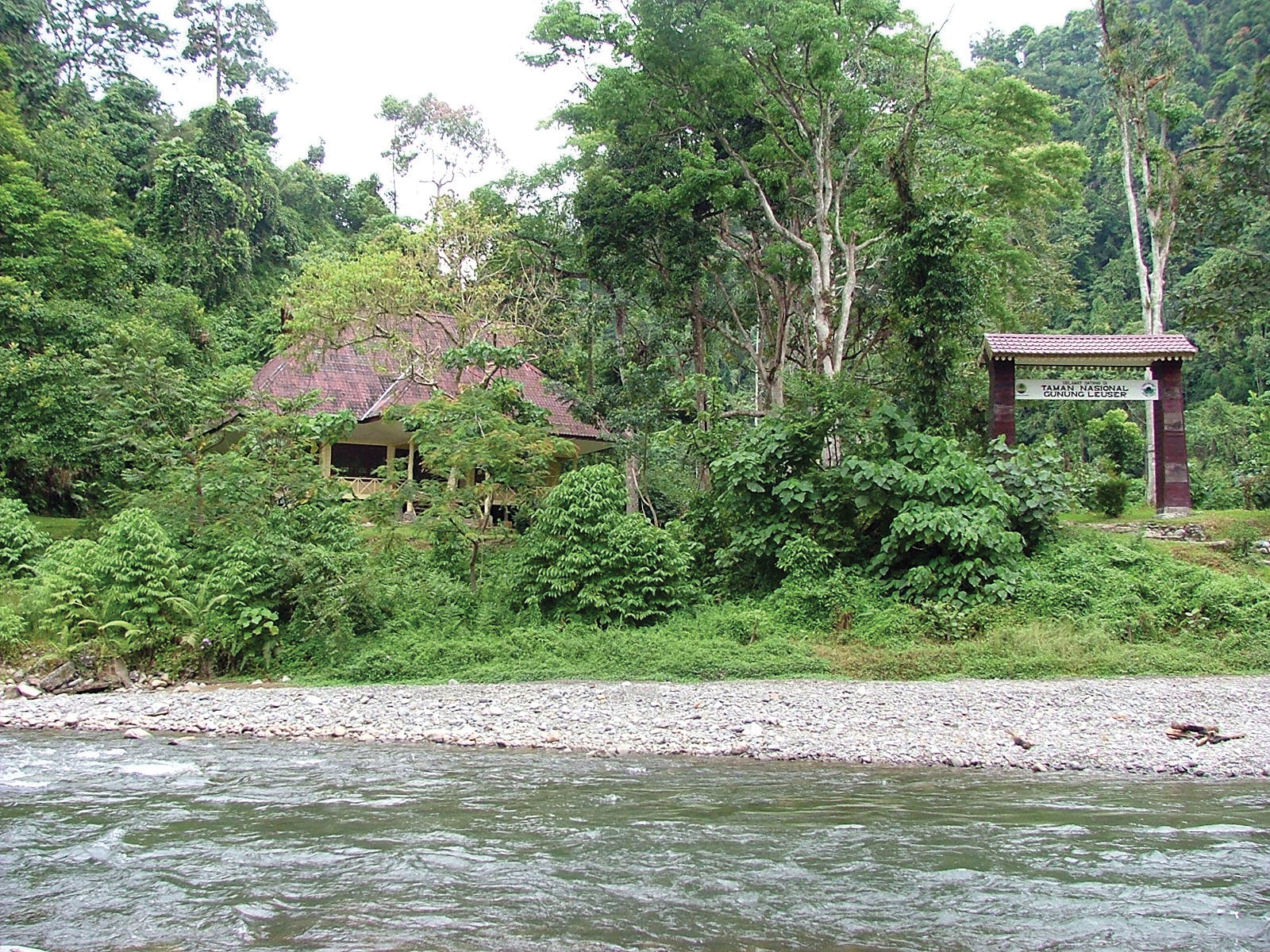
Gunung Leuser isn’t just a mountain—it’s an entire world tucked away in the heart of Sumatra. The national park that bears its name sprawls across the island’s northern reaches, where jungle meets the clouds and ancient volcanoes hold memories of a time before humans ever set foot here. There are no crowds, no resort towns, no guides trying to sell you a postcard experience. Instead, there’s silence broken only by the calls of gibbons, the rustle of leaves, and the distant roar of waterfalls. This is a place where nature speaks for itself, and those who come seeking more than just a pretty view find something far greater.
The mountain itself rises nearly 3,500 meters above sea level, one of Sumatra’s tallest peaks. But its height isn’t what makes it special—it’s what lies beneath. Gunung Leuser is an active volcano, though its last eruption was over a century ago. The earth here still breathes heat, with steam rising from cracks in the ground and hot springs hinting at the life simmering below. Volcanic activity has shaped the park’s landscape, carving steep slopes, deep gorges, and fertile valleys where the jungle grows so dense that sunlight barely reaches the forest floor.
Established in the late 1980s, Gunung Leuser National Park is one of Southeast Asia’s largest protected areas. Its creation was meant to safeguard Sumatra’s unique ecosystem, but the land’s story goes back much further. Indigenous groups like the Batak and Kubu have long considered these forests sacred, believing the mountains to be the dwelling place of spirits. For them, Gunung Leuser wasn’t just a landmark—it was a living entity to be respected. Even now, as the park holds UNESCO World Heritage status, some villages within its borders still follow ancient traditions, harvesting wild honey or cultivating rice on terraced hillsides.
The park’s biodiversity is staggering. Over 8,000 plant species thrive here, many found nowhere else on Earth. Giant rafflesias, carnivorous flowers that can grow a meter wide, bloom on the forest floor, their scent of rotting meat luring flies for pollination. Orchids in every shade cling to tree branches, while vines as thick as an arm twist around trunks. But the park’s true treasures are its animals. Sumatran tigers, rhinos, elephants, and orangutans all call this place home, with the last becoming something of a symbol for Gunung Leuser. Spotting them in the wild is rare, but their presence is felt everywhere—broken branches where elephants have passed, claw marks on trees, or nests woven high in the canopy.
Exploring the park isn’t a stroll along paved paths. Roads are scarce, and those that exist turn to mud after rain. Local guides, who know every twist and turn, lead visitors through dense jungle where you’ll wade through rivers, scramble over slippery rocks, and push through thick undergrowth. There are no guarantees of seeing rare wildlife or reaching the summit, but that’s part of the appeal. Here, you’re not a tourist—you’re an explorer stepping into a world where time moves to its own rhythm.
One of the most challenging yet rewarding experiences is the climb to the mountain’s summit. The trek takes several days and demands good physical condition. It begins in the village of Kebulten, where the trail winds upward through dense forest. As you ascend, the landscape shifts—jungle gives way to shrubs, then to bare, moss-covered rocks. By the time you reach 3,000 meters, the air is thin and the nights cold. But those who make it to the top are rewarded with a view that makes every struggle worthwhile: endless forests stretching to the horizon, clouds drifting so low they seem within reach.
For those not up for a multi-day trek, the park offers gentler options. The trail to Sipiso-Piso Waterfall, one of Sumatra’s tallest, is a popular choice. Water plunges over a 100-meter cliff, creating rainbows in the mist and a roar that fills the air. Around the falls, meadows offer a place to rest and cool off. Another option is Lake Tawar, a serene body of water surrounded by jungle. Local legends say the lake formed where a village once stood, swallowed by the earth as punishment for its people’s sins. Today, it looks peaceful, though some claim remnants of the old settlement still lie beneath its surface.
There are no luxury hotels or restaurants here, no menus in multiple languages or souvenir shops. Accommodation is basic—tents or simple huts—and meals are cooked over open fires with whatever supplies you’ve brought. It might sound uncomfortable, but that’s what makes the experience unforgettable. Waking up to birdsong and the smell of coffee brewed over coals, you realize no five-star resort could ever replace this feeling of being truly connected to the world.
The park exists on its own terms, independent of tourists. Scientific research continues here, as Gunung Leuser remains a living laboratory for studying evolution and human impact on nature. Authorities and conservationists work to preserve this corner of Sumatra in its original state, limiting visitor numbers and combating poaching. Yet despite these efforts, the park’s future is uncertain. Deforestation outside its borders, expanding palm oil plantations, and illegal hunting all threaten its delicate ecosystem. Gunung Leuser isn’t a museum—it’s a living thing, one that could vanish if not protected.
Coming here puts things in perspective. The world is smaller than we think, and the responsibility to those who come after us is greater. Gunung Leuser doesn’t need advertising—it exists as a reminder that the planet is far more complex and beautiful than we often realize. There are no easy answers here, only questions posed by nature itself. And perhaps that’s why people keep returning—to listen, to learn, and to remember what it means to be a part of something much larger than themselves.