- Home
- Lake Malawi
- Livonde
- Liwonde Safari Camp
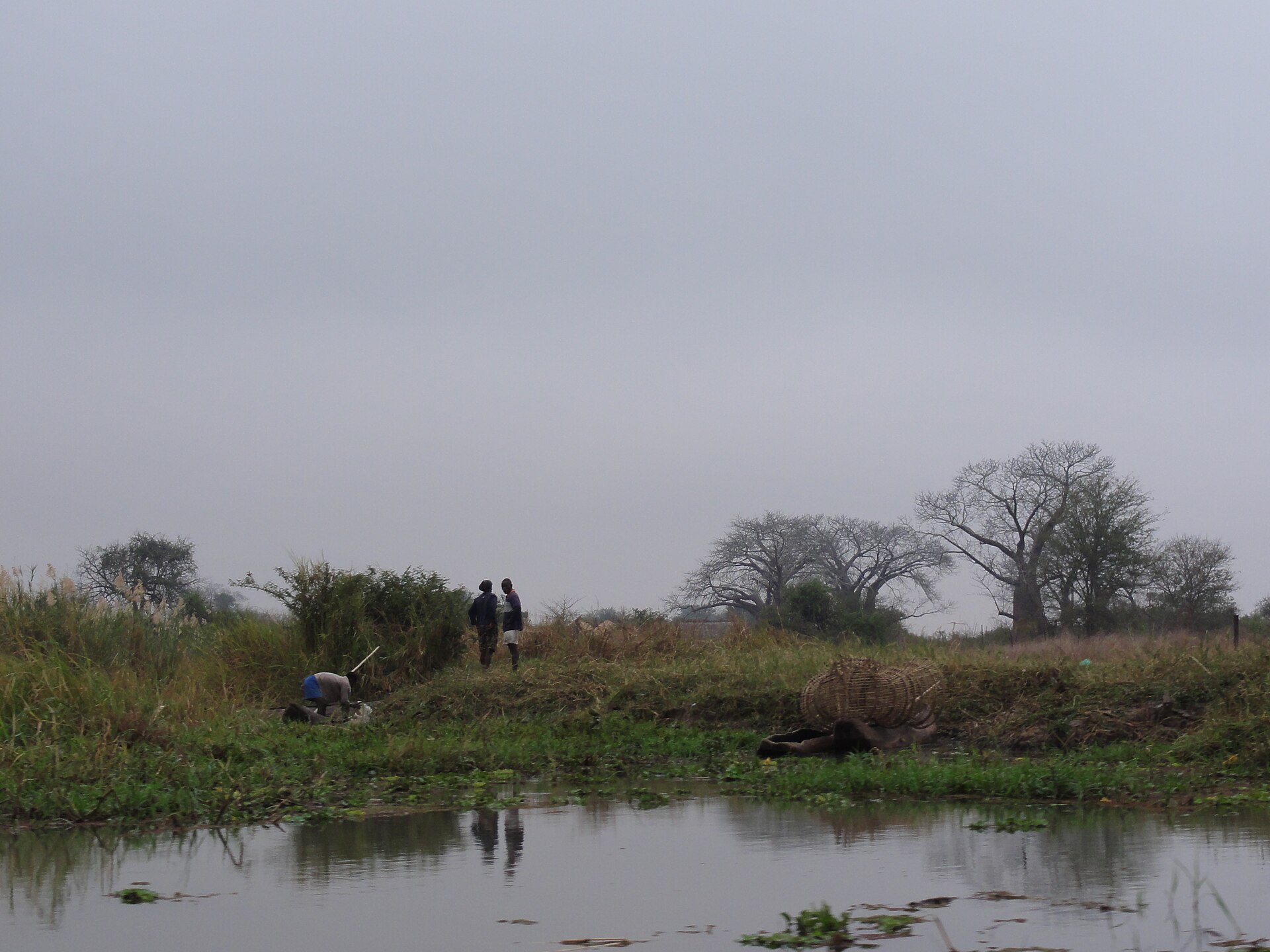
Photo: Timon Zingg, CC BY-SA 3.0
Liwonde Safari Camp
out of 5 0 ratingsLivonde sits quietly along the banks of the Shire River in southern Malawi, far from the capital’s bustle and the well-trodden tourist trails. The town moves at the pace of the water, unhurried and unconcerned with the outside world. Beyond its edges, where the tarmac gives way to dirt and the horizon stretches into acacia trees and termite mounds, Liwonde Safari Camp offers a different kind of stay—one that trades polished luxury for something far more real. This is a place for those who come to Malawi not for beaches or souvenirs, but to step into the rhythm of the wild, to listen to the night sounds of the bush, and to feel, even briefly, as though they belong to this vast, slow-moving landscape.
The camp itself feels like a temporary settlement that has settled in naturally, as if it grew from the earth rather than being built upon it. A handful of single-story chalets with thatched roofs stand on stilts, raised just enough to let the land breathe beneath them. Winding stone paths connect the buildings, designed to blend rather than impose. There’s no round-the-clock electricity—just a few hours in the evening when the hum of a generator fades into the background. Water is warmed by the sun, and the air moves freely through mosquito nets, carrying the scent of dry grass and distant rain. The main lodge, where meals are served, has no walls, only a roof held up by pillars, so that the view of the river and the setting sun is never interrupted. At night, kerosene lamps flicker, their light dancing on the water, making the camp feel less like a hotel and more like a forgotten corner of Africa, untouched by time.
Liwonde Safari Camp is more than just a place to sleep—it’s a gateway to Liwonde National Park, one of Malawi’s most accessible and rewarding wildlife reserves. Unlike the vast, crowded parks of Tanzania or Kenya, Liwonde is compact enough that animals aren’t lost in endless bush. Elephants, hippos, crocodiles, antelopes, and even lions move closer to the river, making them easier to spot. Safaris here take place on boats or in open jeeps, turning each outing into a quiet adventure. In the early morning, when the air is still cool and the sun casts long shadows, hippos emerge from the water, and birds—storks, herons, kingfishers—begin their day. By evening, as the heat lifts, the Shire River comes alive. Elephants gather at the water’s edge, crocodiles bask on the banks, and flocks of flamingos pass overhead, their pink wings catching the last light.
The camp’s restaurant is a world away from the predictable menus of tourist lodges. Here, meals are built around what the land and the river provide—fish caught that morning, vegetables from nearby gardens, spices from the markets of Zomba or Blantyre. Everything is cooked over open flames or in traditional clay ovens, the aromas mingling with the scent of the bush. Breakfasts come with fresh fruit—mangoes, papayas, passionfruit—and homemade bread still warm from the oven. In the evenings, after a day in the park, guests gather around the fire with a glass of local beer or wine, listening to guides recount the night’s close encounters—how lions prowled near the camp, or how elephants crossed the river just beyond the chalets.
The people who stay here aren’t looking for five-star comfort. They’re travelers who prefer authenticity over luxury—photographers, nature lovers, couples seeking solitude, or those simply weary of the noise and rush of modern life. The camp’s atmosphere encourages slow conversations, long walks, and nights spent under a sky so clear it feels within reach. When the lamps go out, the Milky Way stretches overhead in a way that’s impossible in cities, and the sounds of the night—crickets, the distant roar of a lion, the lap of water against the shore—make it easy to believe you’re at the very heart of Africa.
This place carries the echoes of Malawi’s early days as a destination for adventurers. In the mid-20th century, when the country first opened to outsiders, Livonde was one of the few places where hunters and naturalists ventured. The Shire River was wild then, untamed and unpredictable, and the land that would become Liwonde National Park was still a frontier. When hunting was banned and the park was established, the camp became a base for researchers and conservationists. Today, it retains that spirit of discovery. The owners and staff are locals who know the park intimately, and they share that knowledge freely—stories of the Yao people who have lived here for generations, of how the river has sustained and protected them, and of why the savanna remains a place where humans are merely visitors.
Liwonde Safari Camp isn’t the kind of place you visit for a single night. To truly understand it, you need at least a few days—to adjust to the rhythm of the bush, to grow accustomed to the sounds of the night, and to realize that real Africa isn’t just about lions and elephants. It’s about the silence that settles after sunset, the smell of woodsmoke, the way time seems to move differently here. This is a place for those willing to trade familiar comforts for something deeper—the chance to see the world as it was before civilization reshaped it. Malawi may not be on every traveler’s list, but for those who come, it offers something rare: a sense of quiet, of connection, of being part of something far bigger than themselves.
Day around this place
Where else to go on the same day
Building the day…
Where it is
-15.02834, 35.23954