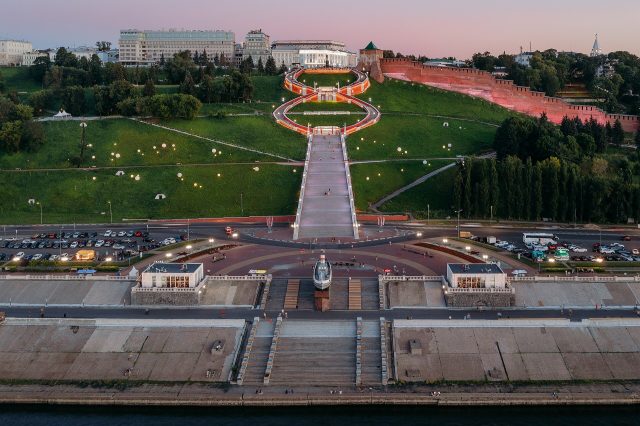
Gorodets sits quietly on the banks of the Volga, a place where time seems to have paused. Unlike the polished tourist hubs where every corner is staged for visitors, this small town feels untouched by the rush of modern expectations. Its charm lies in its unassuming nature—wooden houses with intricate carvings, narrow streets that wind past low-slung cottages, and a riverside promenade where the water laps gently against the shore. There’s no fanfare here, no grand declarations of importance. Gorodets simply exists, living its own rhythm, and that authenticity is what makes it special.
Founded in the 12th century, Gorodets began as a fortress on the edge of Russian lands, a strategic outpost guarding the trade routes along the Volga. For centuries, it remained a key stronghold, though its history is marked by quieter moments rather than battles. One of the most significant events tied to the town is the death of Alexander Nevsky in 1263, as he returned from the Golden Horde. The story is woven into Russian culture, yet Gorodets itself has never turned it into a spectacle. There are no grand memorials or overbearing tourist traps—just the modest Feodorovsky Monastery, where, according to legend, the prince spent his final days.
The town’s architecture is a testament to its love of wood. Gorodets is famous for its carved houses, their facades adorned with delicate patterns that seem plucked from an old painting. The eaves, window frames, and balconies are all works of art, each telling a story of craftsmanship passed down through generations. The riverside is particularly striking, where houses stand close to the water, their reflections shimmering in the current. While there are a few 19th-century stone buildings in the center, they don’t overshadow the town’s character. Here, beauty isn’t about grandeur but about harmony—how the buildings blend with the landscape, how the past lingers in the details.
Gorodets is deeply connected to traditional crafts, particularly its namesake folk painting. The Gorodets style emerged in the mid-1800s, known for its vibrant colors, floral motifs, and scenes of rural life. What started as decoration for spinning wheels and distaffs evolved into a celebrated art form, with painted boxes, trays, and souvenirs now synonymous with the town. Visitors can still find workshops where artisans demonstrate the technique, their hands moving with practiced ease. The small museums dedicated to the craft feel more like a craftsman’s home than a formal exhibit—intimate, unpretentious, and alive with the spirit of the tradition.
The Volga is more than just a river here; it’s the heartbeat of the town. Gorodets stretches along its banks, and the water shapes daily life in ways both subtle and profound. In summer, the promenade hums with activity—fishermen casting lines, children playing in the sand, elderly men hunched over chessboards. Autumn brings a different mood, the river turning stern and majestic, while winter locks it under ice. Come spring, the Volga swells, flooding the lowlands and making the town feel like an island. The locals have learned to live with its rhythms, neither fighting the river nor fearing it, but moving with its currents.
There’s no hurry in Gorodets. The pace is slow, unforced, and that’s part of its appeal. You won’t find tour guides herding crowds or souvenir shops clamoring for attention. Instead, life unfolds at its own speed—vendors at the market selling fresh produce, neighbors chatting on wooden benches, the scent of baking bread drifting from a local bakery. The food is simple but satisfying: hearty cabbage pies, fish soup simmered with river catch, pancakes drizzled with honey. It’s the kind of place where you can sit in a small café and watch the world go by, unhurried and unscripted.
What makes Gorodets truly stand out is its refusal to conform. It doesn’t try to impress or entertain; it simply is. That lack of pretense is refreshing, especially for travelers weary of overcrowded attractions and staged experiences. There are no lines for museums, no pushy vendors, no need to follow a set itinerary. You can wander the streets, step into an old church, or spend an afternoon by the river, letting the town reveal itself in its own time. Gorodets doesn’t hand you memories—it lets you discover them, and that’s where its magic lies.
For those who seek something beyond the usual tourist trail, Gorodets offers a rare kind of quiet. It’s a place where history isn’t locked behind glass but woven into the fabric of everyday life. The wooden houses, the painted crafts, the slow flow of the Volga—all of it tells a story, not through grand gestures, but through small, enduring details. You might leave with more questions than answers, but that’s the point. Gorodets doesn’t give you a postcard experience; it gives you something real. And in a world where so much feels curated, that’s a gift in itself.