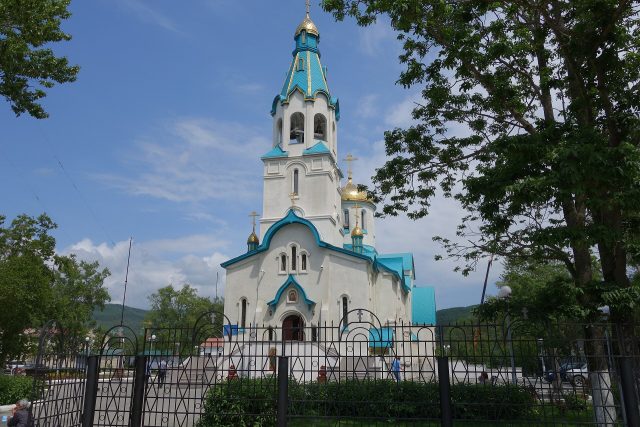
Perched on the slopes of the hills that cradle Yuzhno-Sakhalinsk, Gorny Vozdukh is more than just a neighborhood—it’s a way of life. The name, which translates to "Mountain Air," isn’t just poetic; it reflects the very essence of the place. Long before it became a residential area, these hills were where city dwellers escaped for a breath of fresh air, leaving behind the dust and noise of urban life. Today, the district retains that same quiet charm, with winding streets lined with houses half-hidden in greenery, and views that stretch across the valley toward the distant sea. In Soviet times, it evolved into a favored spot for summer cottages, where families built small wooden homes to retreat from the city. Over the decades, those cottages grew into permanent residences, but the area never lost its connection to nature or its unhurried rhythm.
The history of Gorny Vozdukh is woven into the broader story of Sakhalin’s turbulent past. When the southern part of the island was under Japanese control in the early 20th century, the first settlements began to take shape here. After the Soviet Union reclaimed the territory, the area saw rapid development, particularly in the 1960s and 70s, when it became a popular retreat for city residents. Many of the streets still carry the imprint of that era—narrow lanes flanked by wooden fences, gardens heavy with apple and cherry trees, and houses that seem frozen in time. Even as Yuzhno-Sakhalinsk has expanded, Gorny Vozdukh has managed to hold onto its character, remaining one of the greenest and most tranquil corners of the city.
There’s nothing grand about the architecture here, but that’s part of its appeal. The houses are modest, most of them built during the Soviet period, with some still featuring the intricate woodwork and carved window frames that were common decades ago. In recent years, newer homes have sprung up, but they’ve been designed to blend in rather than stand out, preserving the neighborhood’s understated aesthetic. The real beauty of the area reveals itself in the changing seasons—spring, when the gardens burst into bloom, and autumn, when the hillsides blaze with color. It’s a place where the past lingers in the details, from the weathered fences to the old fruit trees that still bear fruit every year.
What truly sets Gorny Vozdukh apart, though, is its natural surroundings. The district sits on the slopes of the hills, offering sweeping views of the city below, the Aniva Bay, and on clear days, even the distant outline of Moneron Island. The forests here are alive with wildlife—squirrels dart between the trees, birds fill the air with song, and the trails that wind through the woods provide a quiet escape from the world. In winter, the hills become a playground for skiers and sledders, while in summer, the cooler temperatures make it a refuge from the city’s heat. For locals, these hills aren’t just scenery; they’re a part of daily life, a place to walk the dog, gather wild berries, or simply sit and listen to the wind.
Despite being just a short drive from the city center, Gorny Vozdukh feels worlds away. There’s no traffic, no crowds, no sense of rush. Instead, there’s a slow, steady pace where neighbors know each other by name and the streets have stories to tell. It’s a place that attracts those who value peace and nature but don’t want to give up the conveniences of urban living. The district has its own schools, shops, and clinics, and the city center is only a 15- or 20-minute bus ride away. Yet here, life moves at a different speed, one that’s dictated by the seasons rather than the clock.
Gorny Vozdukh isn’t just a place to live—it’s a place to unwind. Locals often come here for picnics, firing up grills in the clearings and spreading out blankets under the trees. May is a particularly special time, when the cherry blossoms planted during the Japanese era burst into bloom, their delicate pink petals drifting through the air like confetti. These trees, scattered throughout the neighborhood, serve as a quiet reminder of Sakhalin’s layered history. In recent years, the city has made efforts to improve the area, adding walking paths, benches, and playgrounds, making it even more inviting for families and visitors.
For first-time visitors to Yuzhno-Sakhalinsk, Gorny Vozdukh can come as a surprise. There are no grand monuments or tourist traps here, just a quiet, lived-in beauty that’s hard to find in bigger cities. It’s the kind of place where you can wander for hours without seeing another soul, where the air smells of pine and damp earth, and where the views make you pause and take a deep breath. Many travelers who stumble upon this neighborhood leave with a sense that they’ve glimpsed something rare—a corner of the world where nature and city life coexist without one overpowering the other.
Of course, life here isn’t without its quirks. Winters can be harsh, with heavy snowfall that sometimes makes the roads impassable, and summer rains can turn the dirt paths into muddy tracks. But the residents take it in stride, seeing these challenges as part of what makes the place unique. For them, Gorny Vozdukh isn’t just a neighborhood; it’s home in the truest sense—a place where memories are made, where children grow up playing in the woods, and where the changing seasons mark the passage of time.
Today, Gorny Vozdukh continues to evolve, but it does so carefully, mindful of what makes it special. There are no high-rises or shopping malls here, no neon lights or bustling nightlife. Instead, there are quiet streets lined with gardens, where the biggest excitement might be the sight of a fox darting across the road at dusk. It’s a place that values simplicity, where the sound of a neighbor’s laughter carries farther than the hum of a car engine. For those who live here, that’s the real luxury—not the absence of noise, but the presence of something deeper, something that feels like belonging. And for visitors, it’s a reminder that sometimes the most memorable places aren’t the ones you see in guidebooks, but the ones that make you slow down and pay attention.