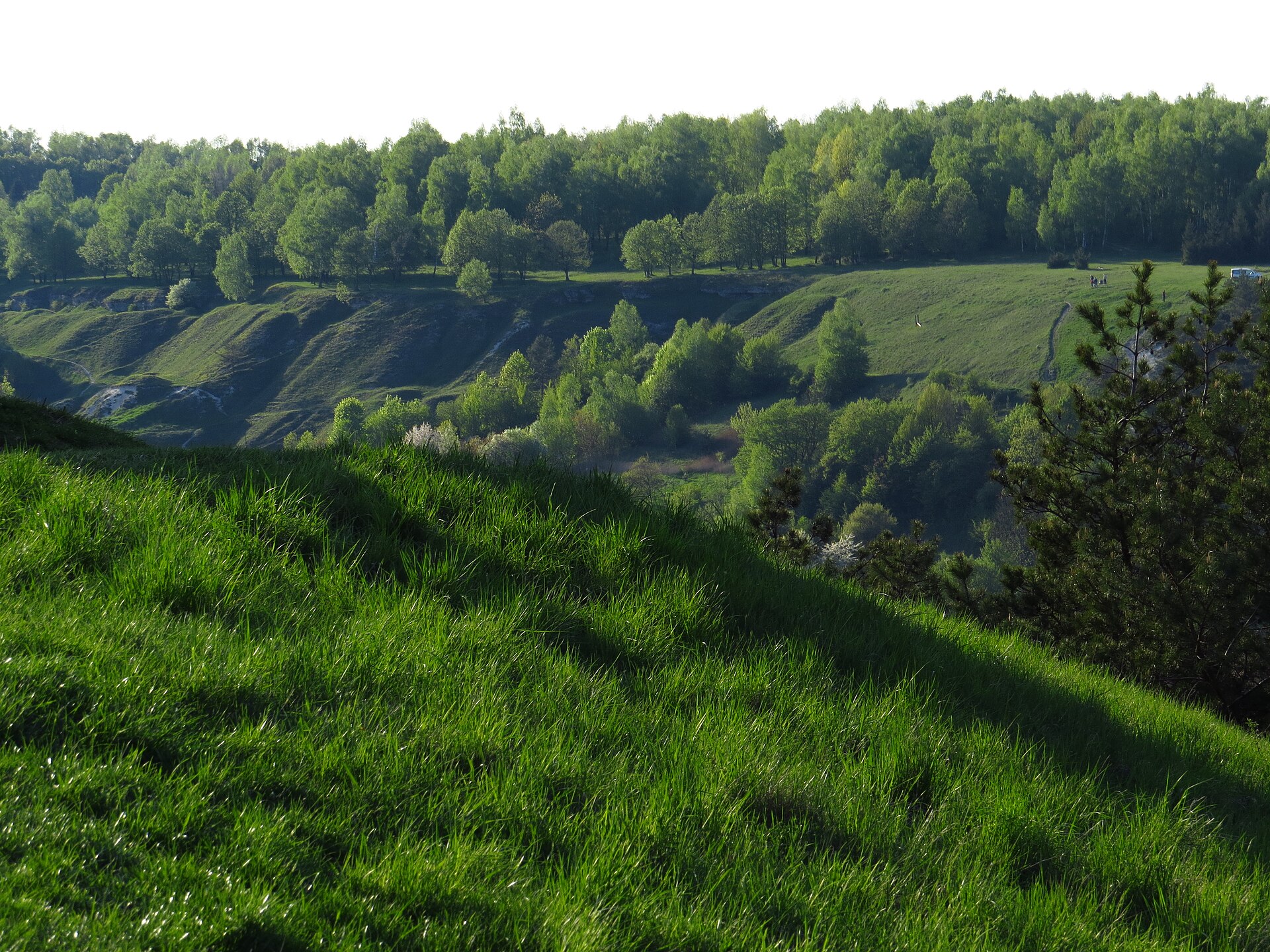
Mount Bona rises above Kremenets like a quiet guardian of centuries past, its forested slopes forming a natural pedestal for the ruins that once crowned its summit. Today, the hill feels peaceful—only the wind rustling through the leaves and the occasional visitor making their way up the narrow paths to take in the view. But if you look closely, the layers of history begin to reveal themselves, woven into the landscape.
The name comes from Bona Sforza, the Italian-born queen of Poland and grand duchess of Lithuania in the 16th century. She left her mark on these lands, and Kremenets, a strategic border town at the time, was no exception. It’s said that under her rule, fortifications were built atop the hill, turning it into a nearly impregnable stronghold. Little remains of those structures now—time and conflict have worn them down to scattered fragments of foundations and overgrown ditches.
The hill itself is part of the Kremenets Mountains, a modest but striking range that stretches across Volhynia and Podolia. Its slopes are steep, especially on the western side, where they drop almost vertically. On clear days, the view from the top is expansive—Kremenets spreads out below like a map, while beyond it, fields, groves, and winding rivers fade into the horizon. Locals once called this place the Watchtower, and it’s easy to see why. From such a height, any approaching threat would have been visible long before it reached the town.
Nowadays, Mount Bona is more of a place for quiet walks than for studying ruins. The trails are well-trodden, not just by tourists but by locals who come here for solitude and fresh air. In summer, the slopes are lush and green, while autumn turns the forest into a blaze of red and gold. Winter, though, is stark—snow drifts over the paths, and the wind sweeps across the open spaces, a reminder that nature still rules here.
The remnants of the past are subtle but intriguing. You can still make out the outlines of earthworks and moats that once encircled the castle. In places, fragments of brick and stone hint at the walls and towers that once stood here. Historians believe the fortress on Mount Bona was part of a larger defensive network, working alongside the castle on nearby Zamkova Hill to control the approaches to the town and the mountain passes.
Interestingly, the hill hasn’t always been tied to military history. In the 19th century, monks from a nearby monastery planted medicinal herbs on its slopes. Later, during the Soviet era, a small arboretum was established, introducing rare tree species that still grow here today. Over time, these plantings have blended into the landscape, making them feel like a natural part of the forest.
The best way to experience Mount Bona is on foot. The paths aren’t difficult, but they’re steep in places, and the climb takes about half an hour. There are no viewing platforms or signs at the top—none are needed. The moment you step out of the trees, the view unfolds on its own. Below lies Kremenets, with its narrow streets, old churches, and low-slung houses, while beyond the town, fields and groves stretch toward the horizon.
This is a place where history and nature intertwine so closely that they become one. There are no grand museums or reconstructed castles here, just silence, space, and the sense of time moving slowly. You might come in the early morning, when mist still lingers over the valley, or in the evening, when the sunset turns the sky to fire. Either way, the hill doesn’t disappoint—it doesn’t so much show you its past as let you feel what it means to stand on this land.