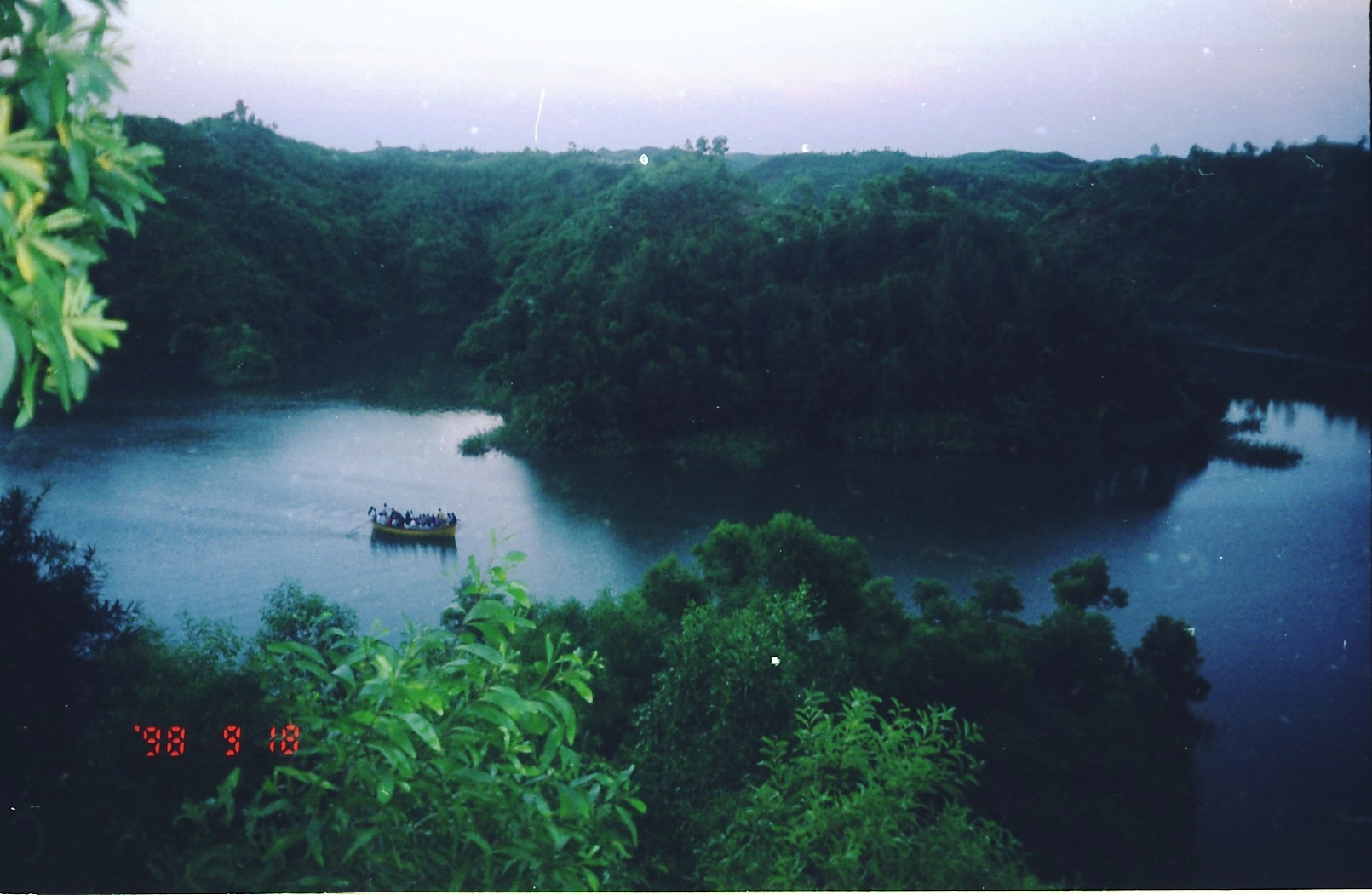
Foy’s Lake is one of those quiet corners of Chittagong that feels like a world apart, even though it sits just beyond the city’s edge. Created in the early 1900s by British engineers working on the region’s railway, the lake began as a practical solution to a natural problem. Rainwater from the surrounding hills collected in a low-lying area, and rather than draining it, the engineers shaped it into a reservoir. Over time, what was once a functional water source for steam locomotives became a place where the city could breathe.
The lake is framed by dense greenery, with tall trees casting dappled shadows across the water. Winding paths follow the shoreline, offering a pleasant escape from the heat, especially in the late afternoon when the air cools. There’s no sense of isolation here, but neither is there the usual city bustle. Instead, it’s a place where time seems to slow down, where the only sounds are the rustle of leaves and the occasional call of birds.
On one side of the lake, a small amusement park draws families, particularly on weekends. The rides are modest, the kind that children remember fondly rather than the flashy attractions of larger theme parks. There are picnic spots, simple cafes serving tea and snacks, and open spaces where groups gather under the shade of trees. The atmosphere is lively but never overwhelming, a balance that keeps the lake feeling like a shared secret rather than a crowded tourist spot.
The history of Foy’s Lake is woven into Chittagong’s growth as a transport hub. When the British built the railway, the lake supplied water for the steam engines that passed through. As the city expanded, the lake’s role shifted from industrial necessity to recreational retreat. At one point, there was even a small beach where people could swim, though that faded as the water quality became less reliable. Today, the lake remains a place for reflection rather than recreation, its still surface mirroring the sky and the surrounding hills.
The architecture around the lake is unassuming, almost deliberately so. Wooden bridges, some still bearing the marks of their colonial-era construction, arch over narrow streams that feed into the water. The benches along the shore are weathered, some with faded English inscriptions, remnants of a time when the lake was a different kind of gathering place. There’s a sense of continuity here, as if the past and present exist side by side without much fanfare.
Beyond its physical presence, Foy’s Lake holds a place in Chittagong’s cultural memory. It’s a venue for festivals, open-air concerts, and community events, especially during the warmer months. On summer evenings, you might hear the strains of traditional Bangladeshi music drifting across the water or see artists sketching the landscape. For a few hours, the lake becomes a stage, a backdrop for the city’s creative energy. Yet even during these events, it retains its quiet charm, as if the crowds are merely passing through while the lake remains constant.
What makes Foy’s Lake special is its ability to feel both connected and removed from the city. The hills that surround it create a natural barrier, muffling the noise of traffic and commerce. Standing at the water’s edge, it’s easy to forget that Chittagong’s busy streets are just a short distance away. This duality—being both within and apart from the city—gives the lake its enduring appeal.
For many who grew up in Chittagong, Foy’s Lake is tied to personal memories. Some recall childhood visits with family, others remember lazy afternoons spent here as students. It’s the kind of place that becomes part of a city’s collective identity, a reference point in stories and shared experiences. Even those who have left Chittagong often carry a piece of the lake with them, a quiet reminder of home. In that way, Foy’s Lake is more than just a scenic spot—it’s a living archive of the city’s past and present.