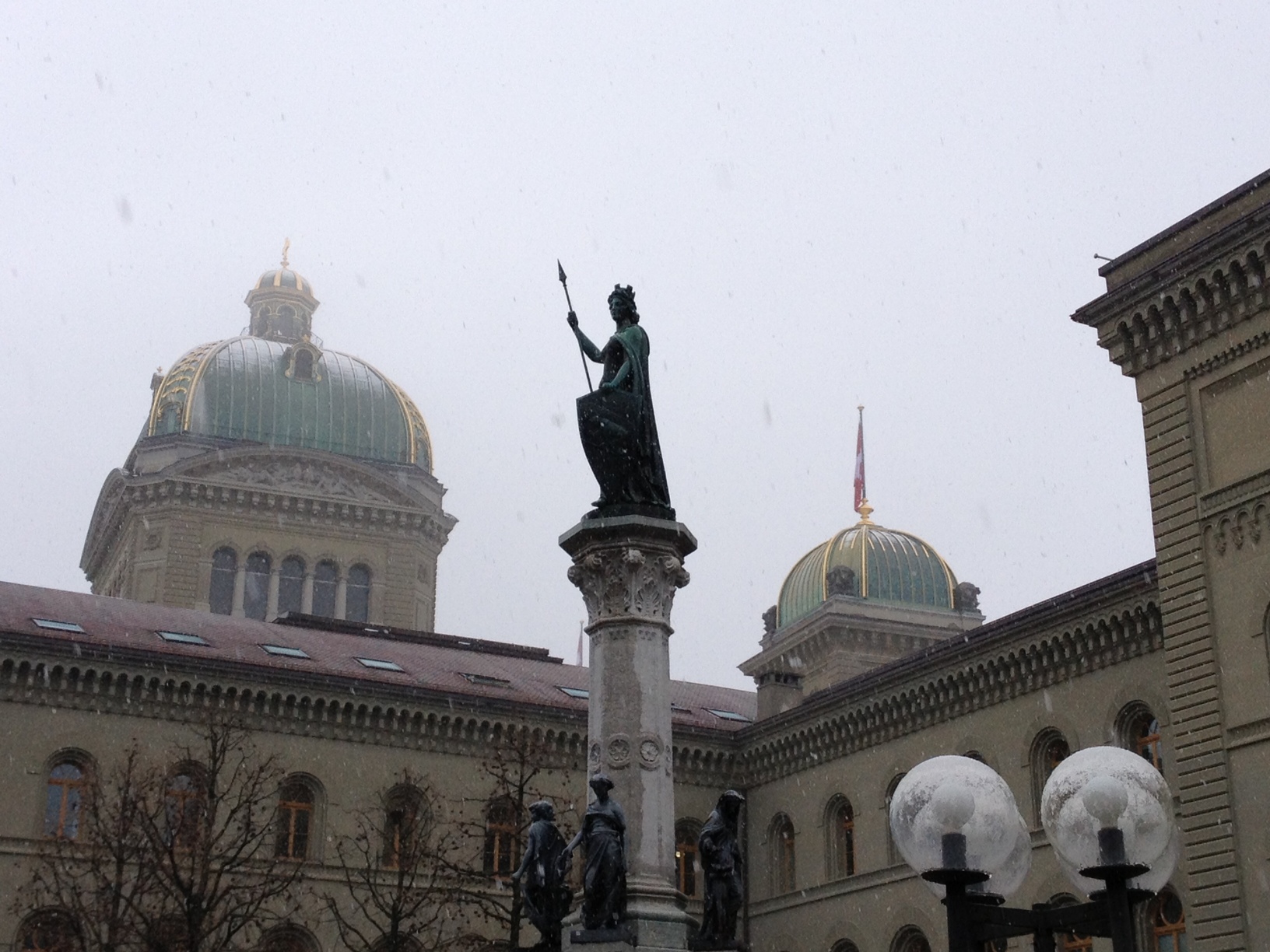
The Federal Palace of Switzerland stands at the heart of Bern, a city that has long served as the political center of the country. Built between 1852 and 1902, the complex is a striking example of neoclassical architecture, designed to reflect the stability and democratic ideals of the young Swiss Confederation. Its construction marked a turning point in the nation’s history, as Switzerland transitioned from a loose alliance of cantons into a unified federal state. The palace wasn’t just an administrative building—it was a symbol of a new era, one where governance was no longer confined to regional strongholds but centralized in a capital chosen for its neutrality and accessibility.
The building’s most recognizable feature is its central dome, which rises above the city’s rooftops and dominates the skyline. The dome is crowned with a gilded figure of Helvetia, the national personification of Switzerland, holding a spear and shield—a nod to the country’s long tradition of armed neutrality. Inside, the dome’s interior is equally impressive, with intricate frescoes depicting scenes from Swiss history and allegorical figures representing justice, wisdom, and unity. The craftsmanship reflects the era’s attention to detail, where every element was meant to convey both grandeur and purpose.
The Federal Palace is divided into two main wings, connected by a central hall. The west wing houses the National Council, the larger of Switzerland’s two parliamentary chambers, while the east wing is home to the Council of States, which represents the cantons. The contrast between the two chambers is subtle but telling: the National Council’s hall is more expansive, with rows of seats arranged in a semicircle, while the Council of States’ chamber is smaller and more intimate, reflecting its role as a forum for regional voices. Both spaces are designed to facilitate debate rather than spectacle, a reflection of Switzerland’s consensus-driven political culture.
Beyond its parliamentary functions, the palace also serves as the seat of the Swiss Federal Council, the country’s collective head of state. The Federal Council’s meeting room is a study in understated elegance, with dark wood paneling, a long oval table, and portraits of past councilors lining the walls. Unlike many other government buildings, there’s no throne or grand podium—just a space where seven equal members gather to deliberate. This simplicity underscores Switzerland’s unique approach to governance, where power is shared rather than concentrated.
The palace’s architecture blends seamlessly with Bern’s medieval old town, a UNESCO World Heritage site. The building’s sandstone facade and arched windows echo the city’s historic arcades, creating a visual harmony between the old and the new. The surrounding Bundesplatz, or Federal Square, is a lively public space where locals and visitors gather for events, markets, and protests. In winter, the square transforms into an ice rink, while in summer, it hosts open-air concerts and festivals. The palace, with its imposing presence, feels both part of the city and apart from it—a place where the past and present coexist.
Visitors can explore parts of the Federal Palace, though access is limited to guided tours that must be booked in advance. The tours offer a glimpse into the building’s history and its role in Swiss democracy, from the early days of the Confederation to the present. One of the highlights is the Hall of the Dome, where the frescoes and stained-glass windows tell the story of Switzerland’s formation. Another is the National Council chamber, where the public can sit in the visitors’ gallery and observe parliamentary sessions when they’re in progress. The experience is less about spectacle and more about understanding how Switzerland’s political system functions.
The Federal Palace is more than just a government building—it’s a living monument to Swiss identity. Its architecture, history, and daily operations reflect the values that have shaped the country: neutrality, federalism, and direct democracy. While it may not have the dramatic flair of other national capitols, its understated dignity speaks volumes about Switzerland’s approach to governance. Whether you’re watching a debate in the National Council, admiring the frescoes in the dome, or simply strolling through Bundesplatz, the palace offers a quiet but profound insight into what makes Switzerland unique.
For those interested in history or politics, the Federal Palace is a must-visit, but even casual travelers will find something to appreciate. Its location in Bern makes it an easy stop on a walking tour of the city, and the surrounding area is full of cafes, museums, and boutiques. The palace doesn’t demand attention the way some landmarks do—it invites you to look closer, to understand the principles that have guided Switzerland for centuries. In a world where politics often feels distant or divisive, the Federal Palace stands as a reminder of what governance can look like when it’s built on consensus and compromise.