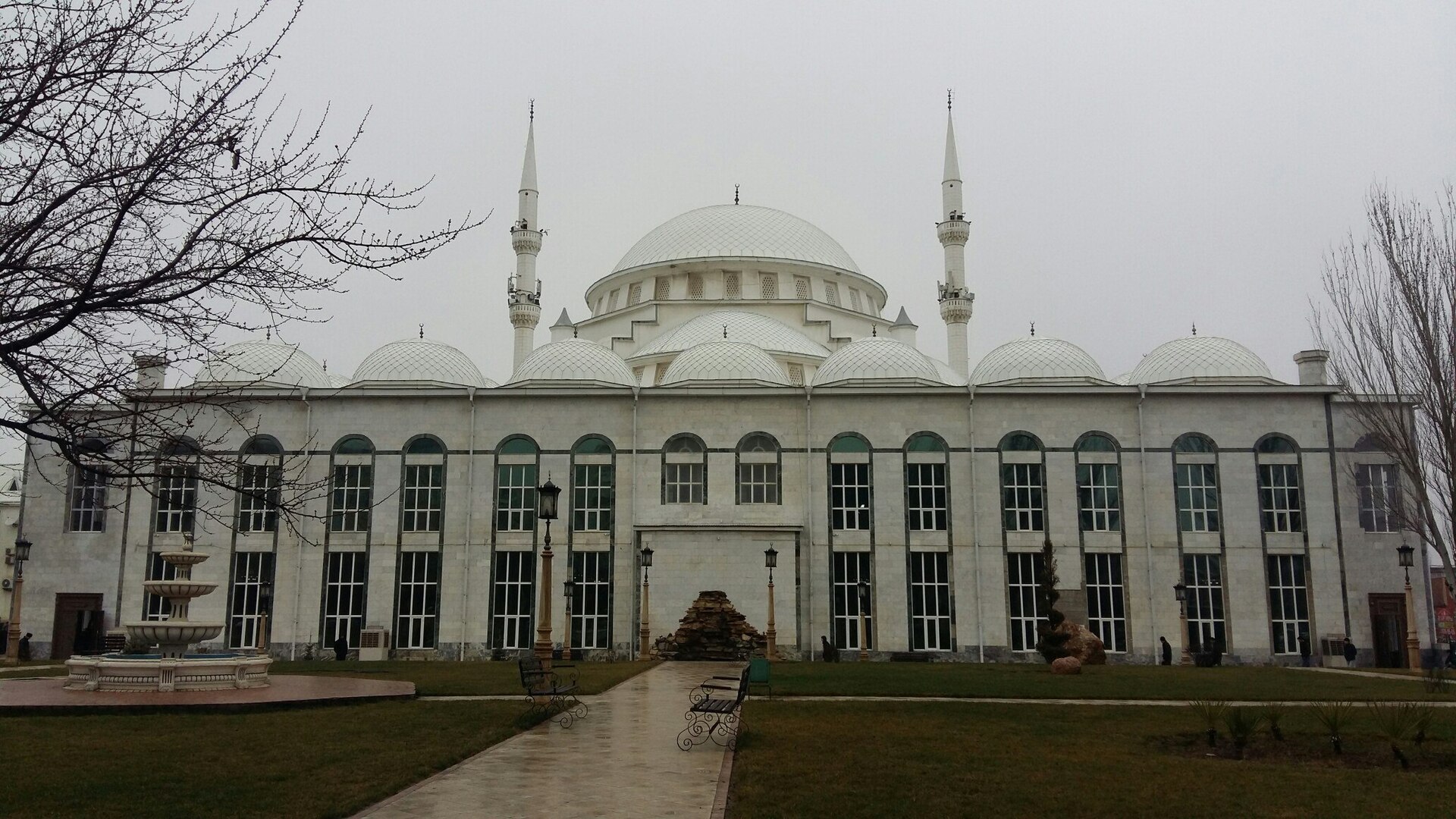
The Juma Mosque in Makhachkala is one of those rare places where the past and present seem to merge effortlessly, as if time itself moves to a different rhythm here. Built in the early 2000s, it has become more than just a religious center—it’s a defining feature of the city’s skyline, visible from afar. Its tall white minaret reaches toward the sky, while the expansive dome shelters thousands of worshippers, giving the mosque a sense of grandeur. Though it may not have the weathered patina of ancient Islamic landmarks, its presence is no less striking, blending modern ambition with timeless tradition.
The mosque’s design draws from classical Islamic architecture while adapting to the local context. There are echoes of Ottoman influences in its proportions, yet the details reflect the realities of Dagestan. Inside, the space feels open and luminous, with high windows casting sunlight across marble floors and intricately carved columns. The decor avoids excessive ornamentation, favoring thoughtful details—geometric patterns on the walls, soft lighting that enhances the sense of tranquility. Every element serves a purpose, whether practical or spiritual, without sacrificing beauty.
For Makhachkala, the Juma Mosque has long been more than a place of worship. It’s a symbol of unity, especially during major holidays like Eid al-Fitr and Eid al-Adha, when its courtyard fills with people of all ages. Elders in traditional clothing stand alongside young people in modern attire, families with children gather, and the air hums with shared celebration. The mosque bridges generations and social divides, a reminder that in Dagestan, faith has always been woven into daily life.
What makes the mosque particularly interesting is its location in the heart of the city, surrounded by the hustle of everyday life. Nearby, markets buzz with activity, cafes serve customers, and office buildings stand tall. The contrast is striking—one moment, the call to prayer rings out; the next, the sounds of traffic and conversation take over. This juxtaposition isn’t accidental. In Dagestan, religion and daily life have always coexisted, and the Juma Mosque embodies that harmony.
The mosque complex extends beyond the main building, with fountains and landscaped gardens offering a peaceful retreat. In the summer, the shade of trees and the murmur of water provide relief from the heat, making it a popular spot for locals to relax or chat. For visitors, it’s one of the few places in Makhachkala where the city’s atmosphere can be felt beyond the usual tourist spots. The mosque isn’t just a monument; it’s a living part of the community.
The construction of the Juma Mosque was a significant event for Dagestan, funded by worshippers and sponsors alike. In a region where Islam plays a central role in culture and identity, the mosque’s completion symbolized a revival of traditions. Yet it doesn’t feel out of place in the modern city. Instead, it has become an integral part of Makhachkala’s landscape, a testament to how faith and progress can coexist.
Inside, the mosque invites quiet contemplation. The mihrab, the niche indicating the direction of Mecca, is a focal point, adorned with delicate carvings and calligraphic inscriptions. The floors are covered with carpets where worshippers gather for prayer, while the high ceilings create a sense of openness. Everything is designed to facilitate reflection, yet the aesthetic beauty remains undeniable. Even those unfamiliar with Islamic traditions can appreciate the craftsmanship and serenity of the space.
The Juma Mosque isn’t just for Muslims. It welcomes anyone curious about Dagestan’s culture and history. Guided tours often explore the mosque’s architectural features, the role of Islam in the region, and its significance to the city. For many visitors, stepping inside is one of the most memorable experiences in Makhachkala. Unlike a museum exhibit, the mosque is a living tradition, deeply embedded in the rhythms of daily life.
In recent years, the mosque has also become a hub for community discussions, hosting lectures, meetings with religious leaders, and charitable events. This underscores its role not just as a spiritual center but as a gathering place for broader social dialogue. In Dagestan, where communal bonds run deep, such spaces are vital—they bring people together not only during holidays but in everyday moments.
Visiting the Juma Mosque leaves a lasting impression of calm and reflection. Whether it’s the quiet atmosphere, the sense of history, or simply the chance to step away from the city’s pace, the mosque offers something rare. It’s more than an architectural landmark; it’s a place where the pulse of modern Dagestan can be felt—a region where tradition and contemporary life exist side by side, each enriching the other.