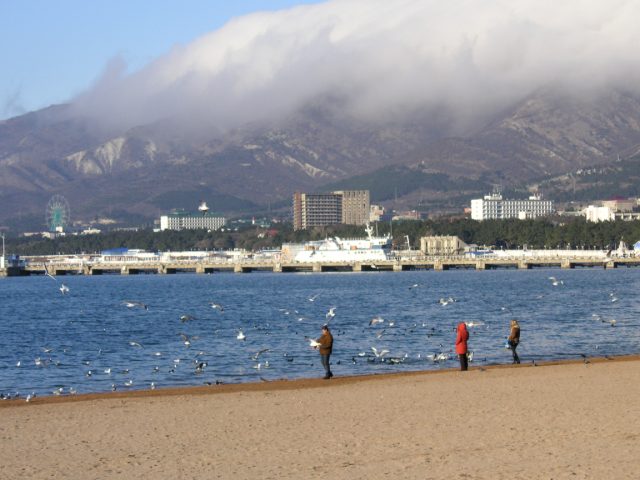
Jankhot Pine Forest is one of those rare places along the Black Sea coast where nature feels untouched, as if it deliberately preserved a piece of the world before human hands shaped it. There are no crowded promenades, no rows of souvenir stalls, no blaring music from beachside cafes—just a dense grove of tall pines sloping down to the water, their needles filtering sunlight into shifting patterns on the forest floor. The air carries the sharp scent of resin mixed with salt, and the only sounds are the rustle of waves, the cry of gulls, and the occasional snap of a branch underfoot. This isn’t a place for those seeking entertainment; it’s for anyone who wants to step away from the noise, breathe deeply, and let the quiet settle in.
The forest stretches along a narrow strip of coastline between the village of Jankhot and the Doob Cape, covering around two hundred hectares. The pines here are ancient—some over a century old—with thick, straight trunks that tower overhead, casting long shadows even in the middle of the day. The canopy is so dense that the heat of summer rarely penetrates, and the ground stays cool underfoot. Locals say that once, even older trees grew here, relics of a time when the forest was wilder, but even now, it feels timeless, as if the modern world barely exists beyond its edges.
The history of Jankhot Pine Forest is woven into the broader story of the Black Sea coast. In the late 19th century, when Gelendzhik was just beginning to emerge as a resort town, this stretch of forest was already known for its beauty. Back then, there were no roads or marked trails—just the trees, the sea, and the people who lived nearby. The villagers, mostly Greeks and Armenians, fished and farmed, using the forest as a natural shelter from the wind and sun. When the region later saw the rise of sanatoriums and holiday resorts, the forest was spared from development, allowing it to retain its wild character.
Today, the forest is both a natural landmark and a favorite spot for walking. Several trails wind through the pines, leading to the sea, the Doob Cape, and nearby villages. The most popular route descends to a small, secluded beach tucked between the rocks. There are no sunbeds, no umbrellas, no vendors—just smooth pebbles, clear water, and the kind of solitude that’s hard to find elsewhere. The sea here can be unpredictable, though, with sudden currents and a rocky seabed, so swimming requires caution.
For those who enjoy exploring, the forest offers more than just a walk to the shore. The Doob Cape, a low but rugged promontory, provides a vantage point with sweeping views of the water and the distant mountains. The climb isn’t difficult, but the rocky path demands attention. From the top, the sea stretches endlessly, waves crashing against the cliffs below, while ships pass on the horizon and gulls circle overhead. On clear days, you can even make out Gelendzhik’s harbor in the distance.
The forest is at its most peaceful in the off-season, when the summer crowds thin out and nature reclaims the space. In spring, wildflowers bloom along the trails, filling the air with their scent, while in autumn, the pines take on a golden hue as they prepare for winter. Even in colder months, when the forest is nearly empty, it doesn’t lose its charm. The crunch of pine needles underfoot and the sight of the sea through the trees create a sense of quiet resilience.
Despite its popularity, Jankhot Pine Forest remains a place where you can feel far removed from the modern world. There are no signs, no advertisements, no reminders of the bustling resorts just a short drive away. Just the trees, the trails, and the sea. That simplicity is why many people return—it’s a place where time slows down, where the only agenda is to walk, to listen, and to breathe.
If you find yourself in Gelendzhik and want a break from the usual tourist spots, the forest is worth the trip. Bring water, a light snack, and sturdy shoes, then follow the paths wherever they lead. The scent of pine, the sound of the waves, and the quiet under the trees will do the rest. There’s nothing here but the land and the sea—and sometimes, that’s all you need.