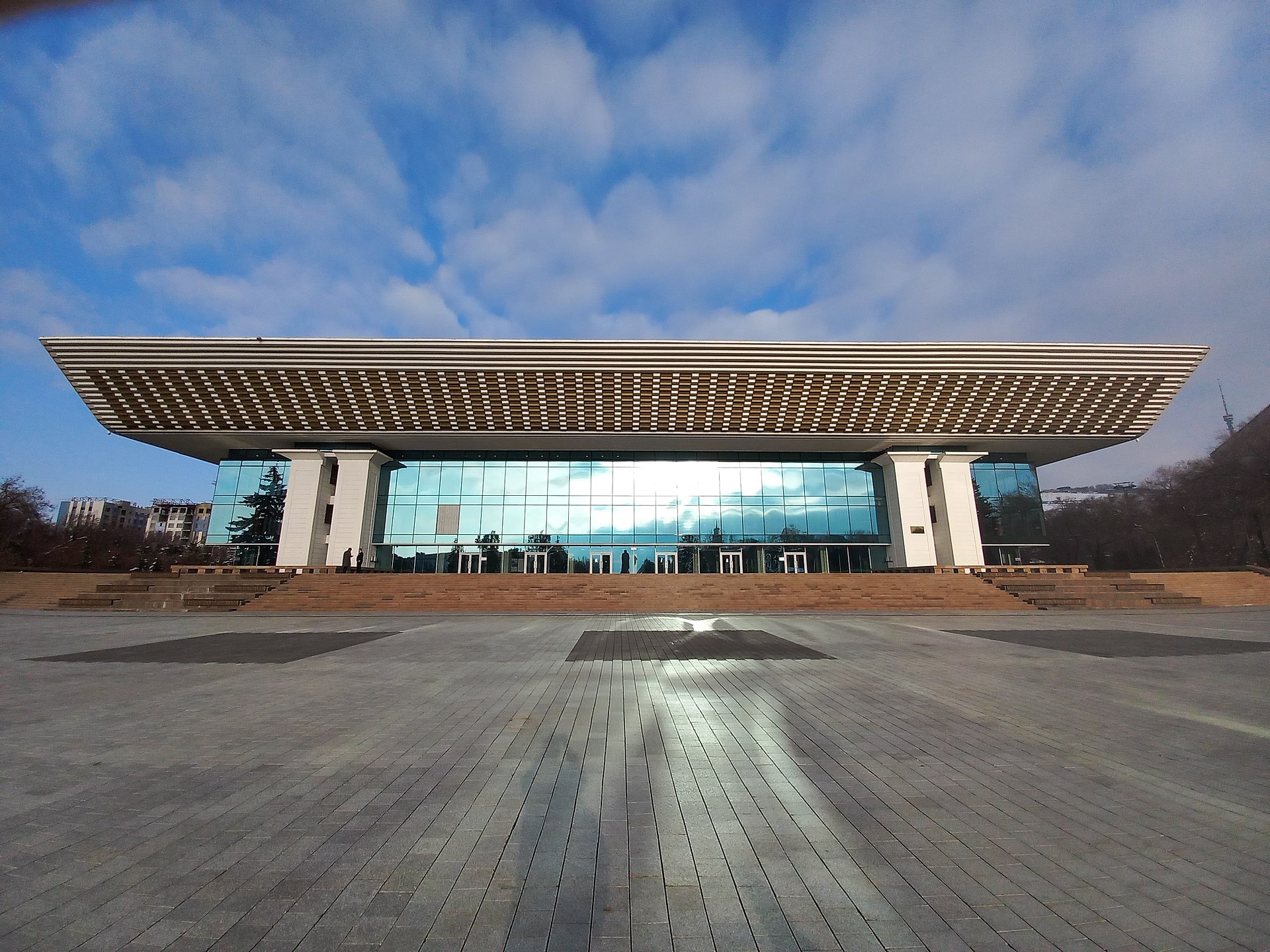
The Palace of the Republic in Almaty is one of those rare places that feels suspended in time, yet remains a living witness to change. Built in the late 1970s, when the city was still known as Alma-Ata and served as the capital of the Kazakh SSR, it became a symbol of an era defined by ambition and transformation. Its architecture is a striking example of Soviet modernism—monumental yet functional, with towering columns, clean lines, and an expansive interior that balances grandeur with restraint. The design was never about excess; it was about creating a space versatile enough to host anything from political congresses to grand concerts, a place where form followed purpose without apology.
Over the decades, the Palace of the Republic has been more than just a building—it has been a stage for history. During the Soviet years, it hosted Communist Party congresses, performances by legendary musicians, and major cultural festivals. After Kazakhstan gained independence, the palace didn’t fade into obscurity. Instead, it evolved, becoming a venue for state ceremonies, international forums, and high-profile events. Yet its core purpose never changed. The halls still echo with music, the stage still welcomes performers, and the seats still fill with audiences, whether for a classical concert, a rock show, or a theatrical production. The building has adapted, but its soul remains intact.
Step inside, and the scale of the Palace of the Republic is immediately striking. The main auditorium seats thousands, its acoustics so finely tuned that even symphony orchestras can perform without amplification. The high ceilings, plush seating in the stalls and balconies, and vast stage create an atmosphere that feels both intimate and vast, a place where the outside world fades away. There’s no clutter here—every detail, from the lighting to the wall finishes, serves a purpose. Even the foyer retains subtle nods to its Soviet past, not as relics of a bygone era, but as natural extensions of the building’s history. These elements don’t feel out of place; they feel like part of a story that refuses to be erased.
The palace sits on Abay Avenue, one of Almaty’s central thoroughfares, surrounded by a green park that offers a quiet respite before or after an event. The avenue itself is a microcosm of the city—wide, bustling, lined with fountains, cafes, and shops, always alive with movement. The Palace of the Republic doesn’t dominate the streetscape; it complements it, its imposing structure softened by the trees and the rhythm of urban life. Here, you can sense the pulse of Almaty—a city that is both modern and deeply rooted in its past, where the old and new coexist without tension.
Like many Soviet-era landmarks, the Palace of the Republic faced an uncertain future in the 1990s. For a time, it fell into disrepair, a fate shared by countless public buildings across the former USSR. But by the early 2000s, it underwent a careful restoration that revived its original splendor without stripping away its character. The architects resisted the temptation to modernize it into oblivion; instead, they preserved the essence of the original design while updating its technical capabilities. Today, it looks much as it did forty years ago, a rare achievement in a world where historic buildings often lose their identity to renovation.
For many Almaty residents, the Palace of the Republic is more than just a venue—it’s a part of the city’s identity. Generations remember coming here as children for New Year’s celebrations, concerts by their favorite artists, or school ceremonies. It was where young talents received their first applause, where the city gathered to mourn its heroes, and where the nation marked its milestones. The palace has witnessed Kazakhstan’s transformation from a Soviet republic to an independent state, and that history is etched into its walls. It’s not a museum or a static monument; it’s a living space that continues to serve its original purpose, bridging the past and present.
As one of Kazakhstan’s premier concert halls, the Palace of the Republic remains a magnet for performers and audiences alike. International stars and local artists take the stage here, while festivals, competitions, and theatrical productions keep the calendar full. What makes the palace special, though, is its versatility. On any given night, you might hear classical music, jazz, pop, rock, or traditional Kazakh melodies. The acoustics and layout adapt effortlessly to different genres, whether it’s an intimate chamber performance or a large-scale spectacle. This flexibility ensures that the palace stays relevant, drawing crowds who appreciate its ability to host a wide range of events.
Visiting the Palace of the Republic is more than just attending a show—it’s a chance to connect with history. Walking through its corridors, you can almost hear the echoes of political speeches, the roar of applause, or the hush of a captivated audience. The building carries the weight of its past in the texture of its walls, the shape of its chandeliers, even the arrangement of its seats. There’s no ostentatious luxury here, just a quiet sense of significance, a feeling that this place has been, and continues to be, an important part of the city’s cultural and civic life.
Almaty is a city in constant motion, but the Palace of the Republic stands as a steady landmark, a point of reference that ties generations together. For some, it’s a childhood memory; for others, a place to meet friends or see a favorite performer. For everyone who walks through its doors, it becomes a personal connection to the city and the country. In a world where so much changes so quickly, the palace endures—not as a relic, but as a living testament to the idea that some places are meant to last. That, perhaps, is its greatest magic.