Amir Nezam House, often called Qajar Museum or Kalaye Rashidi, is one of those rare places in Tabriz where the past doesn’t just linger—it feels alive. Built in the mid-19th century, this elegant mansion was once the residence of Amir Nezam Garousi, a prominent statesman and diplomat of the Qajar era. Today, it stands as a museum dedicated to that period, offering a glimpse into a time when Tabriz was a cultural and political hub of Iran. The house doesn’t just preserve the story of one family; it holds the memory of an entire chapter in the country’s history, when the city was a crossroads of ideas, trade, and diplomacy.
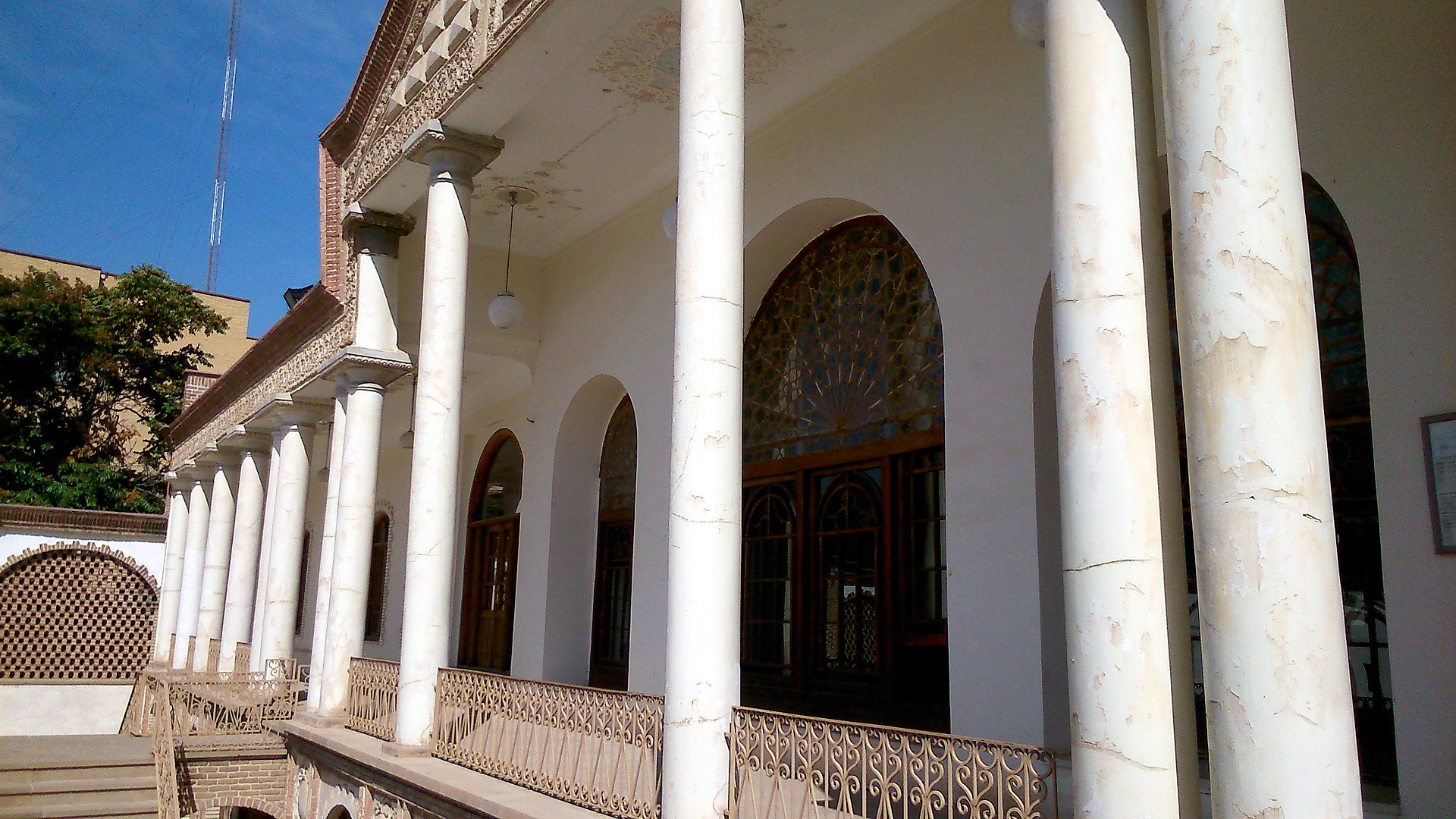
The architecture of the house is a masterclass in Qajar design, where every detail serves both beauty and function. The two-story structure follows the traditional Iranian layout, centered around an inner courtyard—a space that was once the heart of daily life. The facades are adorned with intricate wooden balconies, lattice windows, and tilework featuring floral motifs, all hallmarks of the era. Inside, the grand reception hall is particularly striking, with its high ceilings, original frescoes, and mirrored walls framed in gilded wood. Sunlight filters through stained-glass windows, casting a soft glow over the room, as if time itself has paused to admire the craftsmanship.
The courtyard, or *anderooni*, is where the house truly breathes. This was the gathering place for family, guests, and quiet evenings spent in conversation. Today, it looks much as it did a century and a half ago: stone pathways winding around a central fountain, fruit trees providing shade, and grapevines climbing the walls. On hot days, the air here is cooler, the sound of water blending with the rustle of leaves. The rooms surrounding the courtyard each have their own character, yet together they form a harmonious whole. Some are intimate, others grand, but all reflect the refined tastes of their original inhabitants.
The museum’s exhibits go beyond mere artifacts; they tell the story of Qajar aristocracy in a way that feels personal. Visitors can see everyday objects from the era—handwoven carpets, silver and porcelain tableware, embroidered garments, and jewelry—alongside more intimate items, like the family’s personal belongings. One room recreates the study where Amir Nezam once received foreign dignitaries, its walls lined with documents and photographs that hint at the political intrigues of the time. These aren’t just relics behind glass; they feel like pieces of a life that once unfolded here, where private moments and public affairs were inseparable.
What makes Kalaye Rashidi special is its connection to Tabriz’s broader history. The city has always been a meeting point of cultures, a place where trade routes from the Caucasus, Anatolia, and Central Asia converged. In the 19th century, Tabriz was a center of political power, and its elite maintained close ties with Europe and Russia. Diplomats, merchants, and travelers passed through its streets, and many likely visited this very house. Walking through its rooms, it’s easy to imagine the murmur of conversations in French, Russian, or Persian, the clink of fine china as tea was served, the exchange of news from distant capitals.
The house is tucked away in one of Tabriz’s older neighborhoods, where the rhythm of life hasn’t changed much over the decades. The streets here are narrow and cobbled, lined with two-story homes featuring carved wooden doors and small shops selling traditional goods. Unlike the bustling avenues nearby, this area feels like a quiet enclave, where time moves at its own pace. Kalaye Rashidi fits perfectly into this setting—unassuming yet dignified, a place where the past isn’t just preserved but still felt.
Visiting Amir Nezam House is less about ticking off a tourist attraction and more about stepping into another era. There are no ropes or barriers keeping visitors at a distance; you can stand by the same windows where the family once looked out onto the courtyard, or sit on a bench in the garden, imagining the conversations that once took place there. In places like this, history isn’t something you read about—it’s something you experience. The house doesn’t just display the past; it invites you to be part of it, if only for a little while.
Tabriz is a city that reveals itself slowly, and Kalaye Rashidi is one of those places where that patience is rewarded. There are no crowds here, no rush—just the quiet dignity of a home that has witnessed generations come and go. It’s the kind of place that stays with you long after you’ve left, not because of grand spectacles, but because of the way it makes the past feel tangible. Even as the modern world hums just beyond its walls, the house remains a living piece of history, a reminder of the people who once called it home.