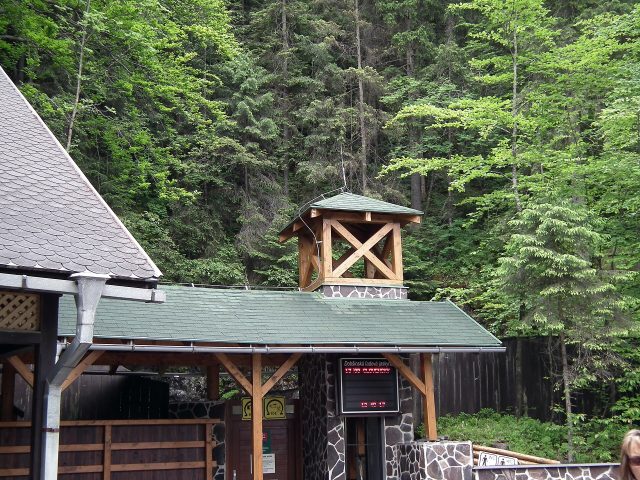
Dobšinský Waterfall is one of those places in Slovakia where nature doesn’t need to explain itself. It may not be the tallest waterfall in Europe, but its raw power and quiet beauty leave a lasting impression. Tucked away in the forested mountains of the Slovak Ore Mountains near the small town of Dobšiná, it feels like a secret the landscape has kept for centuries. There are no crowds here, no flashy signs or souvenir stalls—just the steady rush of water over stone, the scent of pine, and the kind of silence that makes you listen harder.
The waterfall formed over time as the Hnilec River carved its way through the rocky terrain. The drop is about twenty meters, but the numbers don’t matter as much as the way the water spills over the ledge, crashing against the boulders below and sending up a mist that lingers in the air. On sunny days, a rainbow often arcs above the falls, while in winter, the water freezes into intricate ice formations that can grow several meters thick. Locals say that in the coldest months, the entire waterfall can turn into a frozen sculpture, a moment of stillness in the middle of the forest.
Getting here is part of the experience. From Dobšiná, the road winds through hills and dense woodland, narrow enough that you feel the landscape closing in around you. There are signs, but they’re subtle, more like suggestions than directions. If you walk, the journey takes about an hour, and along the way, the forest feels alive—the crunch of needles underfoot, the murmur of streams crossing the path, the occasional rustle of something unseen in the undergrowth. The climb isn’t strenuous, but it’s enough to make you feel like you’ve earned the view.
The history of the waterfall is woven into the story of the region. The Slovak Ore Mountains have long been a place of mining, with iron and other metals extracted from the earth for generations. Dobšiná itself was shaped by this industry, but the waterfall remained untouched, a natural landmark known mostly to those who lived nearby. In the 19th century, as travel became more popular across Europe, a few visitors began to seek it out, though it never drew the same attention as more famous sites. Back then, there were no viewing platforms or bridges—just people standing at the water’s edge, watching the same scene that had unfolded for centuries.
There’s no grand architecture here, and that’s the point. The only human touches are a few wooden railings and small footbridges, built to blend into the surroundings rather than stand out. At the base of the falls, a natural ledge offers the best view, where you can sit on the rocks and let the spray cool your face. The sound of the water is constant, a low roar that fills the air, and if you close your eyes, it’s easy to imagine you’re the first person to ever stand here.
The waterfall changes with the seasons. In spring, when the snow melts, the Hnilec River swells, and the falls become a thunderous cascade. Autumn turns the surrounding forests into a blaze of gold and red, making the water’s plunge even more striking. Winter transforms the scene entirely, with ice formations drawing photographers and those who appreciate the quiet beauty of a frozen landscape. Even in the off-season, when the weather is unpredictable, there’s a certain magic—mist curling through the trees, the waterfall half-hidden in the gloom, as if the forest is keeping its secrets a little longer.
For hikers, Dobšinský Waterfall is just the beginning. From here, trails lead deeper into the mountains, past other natural landmarks and through villages where time moves at a slower pace. There are no luxury hotels or fine-dining restaurants in the area, just simple guesthouses and small cafés where you can eat hearty local food. It’s the kind of place where you might strike up a conversation with someone who’s lived here all their life, or where you’ll find yourself lingering longer than planned, just because the air feels different.
What makes this place special is how little it demands from you. There are no guided tours, no set paths, no schedules to follow. You can arrive at dawn, when the first light touches the treetops, or stay until dusk, when the forest grows quiet and the waterfall becomes a shadowy presence. The water will keep falling, just as it has for hundreds of years, and that sense of continuity is part of what draws people back. Maybe it’s the way the place makes you feel small in the best possible way—reminded that some things don’t change, no matter how much else does.