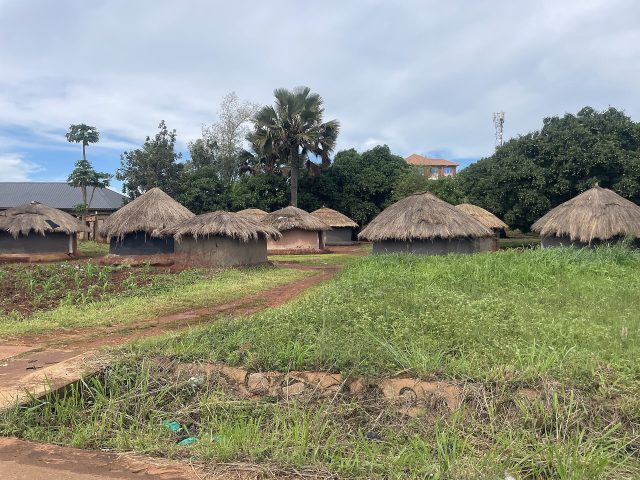
All Saints Church in Gulu is one of those quiet places that doesn’t demand attention but lingers in the mind long after you’ve left. Tucked away on the edge of the city, where the pace of life slows and the hum of the streets gives way to greenery and old trees, it stands unassuming yet deeply rooted in the local landscape. There are no grand facades or gilded domes here—just a modest structure that feels authentic in a way modern buildings rarely do.
The church’s architecture is simple and practical, much like many things in Uganda, where form often follows function. Built from red brick that has mellowed over the years into a warm, faded hue, its corrugated iron roof is a common sight in the region—durable, affordable, and unpretentious. The low bell tower is visible from a distance, especially at sunset when the light bathes the walls in gold. Inside, the space is bright and airy, with high windows filtering soft, diffused light. Wooden pews, a plain altar, and a few icons make up the decor, but it’s this very simplicity that gives the church its quiet charm.
The history of All Saints is woven into the fabric of Gulu itself, a town that has long existed in the shadow of Uganda’s more famous destinations. Gulu grew as a colonial trading and administrative hub, and the church emerged in the mid-20th century, a time when Christianity had taken hold in the region but local communities were still finding their footing. For decades, it served not just as a place of worship but as a gathering point for residents, particularly during difficult times. When northern Uganda became a flashpoint in the civil war, the church remained a rare sanctuary, offering solace to those who sought it.
Today, the church continues to play a role in the life of the city, though Gulu has changed in the years since the conflict. The scars of war are still visible, but the town is slowly rebuilding. On Sundays, the church fills with worshippers, many of them families with children. Services are held in English, Acholi, and Luo, reflecting the diversity of the local population. The choir sings traditional hymns, sometimes blending them with folk melodies, and in those moments, the church feels alive with a faith that is inseparable from culture.
On weekdays, the church is usually quiet, save for the occasional visitor or traveler who stumbles upon it. A small garden surrounds the building, where locals sometimes gather for picnics or rest in the shade of the trees. Women sell fruit and baked goods nearby, and children kick a football around a dusty patch of ground. The atmosphere is peaceful, as if time moves at its own unhurried pace. This isn’t a place for those seeking spectacle or exotic thrills—it’s for those who want to experience the rhythm of everyday life in a Ugandan town.
Gulu itself is nothing like the tourist hubs of Kampala or the national parks in the south. There are no luxury hotels or European-style restaurants here, just a town that moves to its own quiet beat. All Saints Church is part of that rhythm. It doesn’t seek attention or advertise itself, and perhaps that’s why visiting it feels like more than just ticking off a sight. You can sit on a pew, listen to the birds, and reflect on how much of the world is held together by small, unnoticed things.
If you find yourself in Gulu, it’s worth stopping by the church, even for a few minutes. Whether you’re religious or not, there’s something quietly compelling about the place. Maybe it’s the stillness after the noise of the streets, or the way the light falls on the old wooden beams. Or maybe it’s simply that All Saints Church is a living piece of history, one that endures despite everything. It doesn’t tell grand stories of famous events or people, but within its walls, it holds the memories of those who lived, prayed, and hoped here. And in that, there’s a value that doesn’t need to shout to be heard.