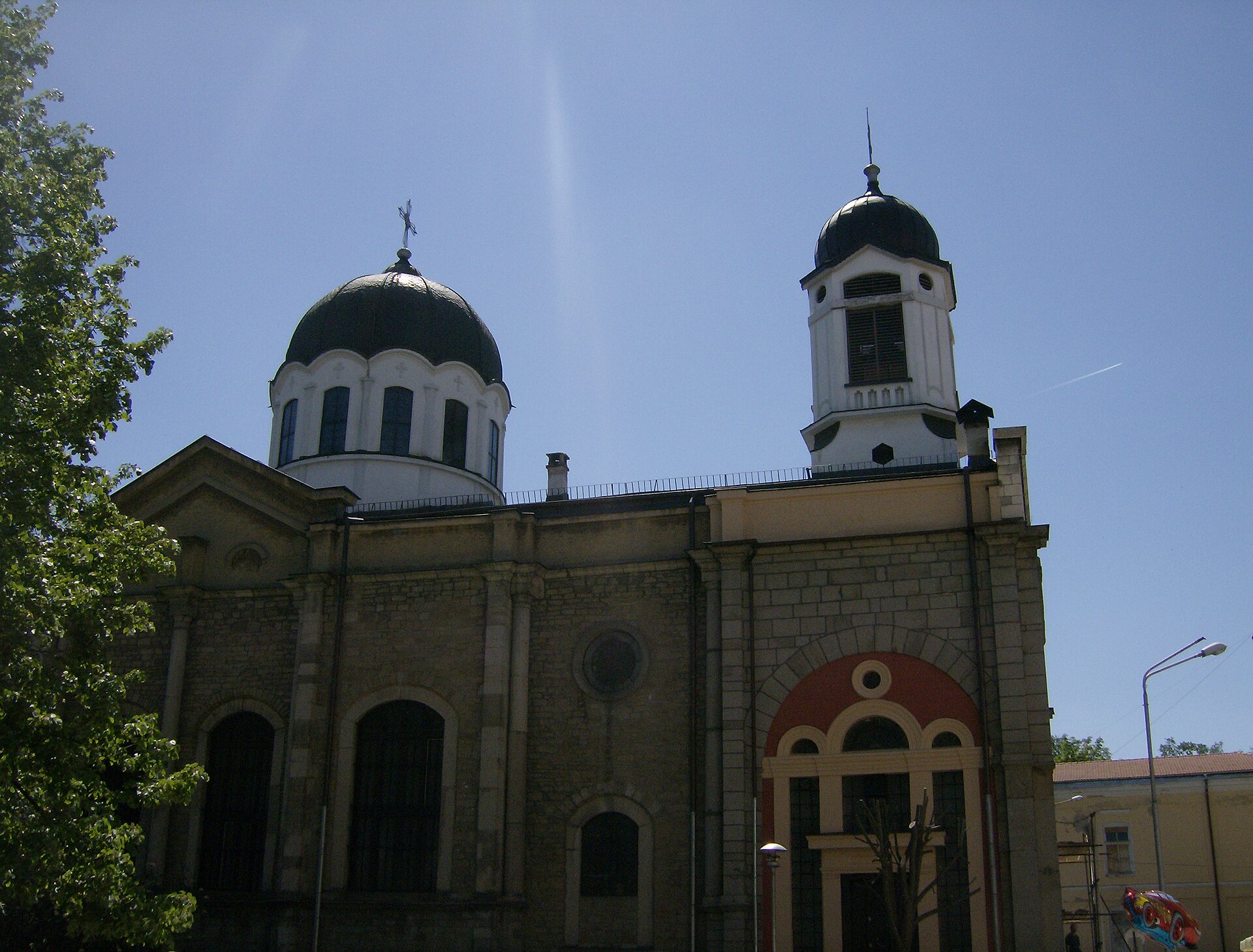
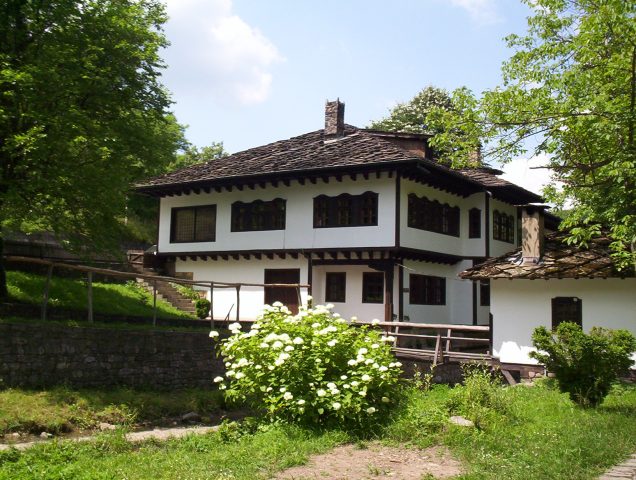
The Church of the Holy Trinity in Gabrovo is one of those quiet places that don’t demand your attention at first glance but leave a lasting impression. Tucked away on a gentle rise in the heart of the city, it stands as if watching the world go by, its presence unassuming yet deeply rooted in the life of the town. From the outside, it’s a modest structure, typical of 19th-century Bulgarian provincial architecture—whitewashed walls, a low bell tower, and a red-tiled roof that blends seamlessly with the surrounding buildings. There’s nothing grand about it, and that’s precisely what makes it special. The simplicity of its design feels almost deliberate, as if the building itself is whispering that beauty doesn’t need to shout.
Gabrovo, often called the Manchester of Bulgaria for its historical role in the textile industry, has always been a town of resilience and quiet determination. The church was built in 1835, a time when Bulgaria was still under Ottoman rule, and constructing places of worship came with strict limitations. Churches couldn’t overshadow mosques, and their bell towers had to remain unobtrusively low. These restrictions shaped the Church of the Holy Trinity, giving it its understated appearance. Yet, like many things in Bulgaria, what lies beneath the surface is far richer than what meets the eye.
Step inside, and the contrast is striking. The interior is a world away from the plain exterior, filled with the warmth of tradition and craftsmanship. The iconostasis, carved with intricate patterns and adorned with faded gilding, is a masterpiece of Bulgarian woodwork, its details still sharp despite the passage of time. The icons, painted by local artists, glow with a quiet intensity, their colors still vivid after nearly two centuries. The frescoes, too, tell stories of faith and devotion, their lines softened by age but their meaning undiminished. Every corner of the church feels alive with history, as if the walls themselves remember the prayers and whispers of generations.
For much of its existence, the Church of the Holy Trinity wasn’t just a place of worship—it was the heart of the community. In the 19th century, when Gabrovo was growing into an industrial hub, the church served as a gathering place where people came not only to pray but to discuss news, make decisions, and seek solace. It was a refuge in turbulent times, a constant in a world that was changing rapidly. That sense of continuity lingers even now. The church remains active, though it doesn’t draw the crowds of more famous Bulgarian landmarks. For the people of Gabrovo, it’s a place of quiet pride, a link to their past and a reminder of what endures.
Gabrovo has seen its share of hardships—wars, fires, economic upheavals—but it has always found a way to rebuild. The Church of the Holy Trinity has stood through it all, bearing silent witness to the town’s struggles and triumphs. It survived earthquakes, political shifts, and the ebb and flow of history, yet its essence remains unchanged. There’s something deeply moving about that. In a world where everything seems to be in constant motion, the church offers a rare stillness, a sense of timelessness that feels almost out of place in the modern era.
What makes this place worth visiting isn’t just its architecture or its history, but the way it captures the spirit of Gabrovo. The town is often overlooked by tourists rushing toward the Black Sea resorts, yet those who take the time to explore it discover a different side of Bulgaria—one that’s unpolished, authentic, and deeply human. The streets are quiet, the pace of life unhurried, and the people warm without being intrusive. The Church of the Holy Trinity is very much a part of that rhythm. It doesn’t exist for visitors; it exists for the people who call Gabrovo home, and that’s what makes it so genuine.
If you find yourself in Gabrovo, don’t just walk past. Step inside, take a seat on one of the wooden benches, and let the silence settle around you. You might hear the distant chime of the bells, or you might simply feel the weight of the years pressing gently against the present. There’s no need to rush, no script to follow. The church doesn’t ask for admiration or applause—it only asks that you pause, look closely, and listen. In doing so, you’ll catch a glimpse of something rare: a place where history isn’t just remembered, but lived. The Church of the Holy Trinity isn’t just a building; it’s a thread in the fabric of a town that has learned, time and again, how to endure.