St Mary’s Church in Tartu stands as one of the oldest and most historically layered buildings in Estonia’s second-largest city. Its origins trace back to the 13th century, when the region was under the influence of the Livonian Order, a medieval crusading military order that shaped much of the Baltic landscape. The church was initially constructed as a Catholic place of worship, reflecting the Gothic architectural style that dominated Northern Europe at the time. Over the centuries, it has witnessed fires, wars, and reconstructions, each leaving its mark on the structure. The building we see today is a blend of these eras, with its thick stone walls, arched windows, and a tower that has been rebuilt more than once.
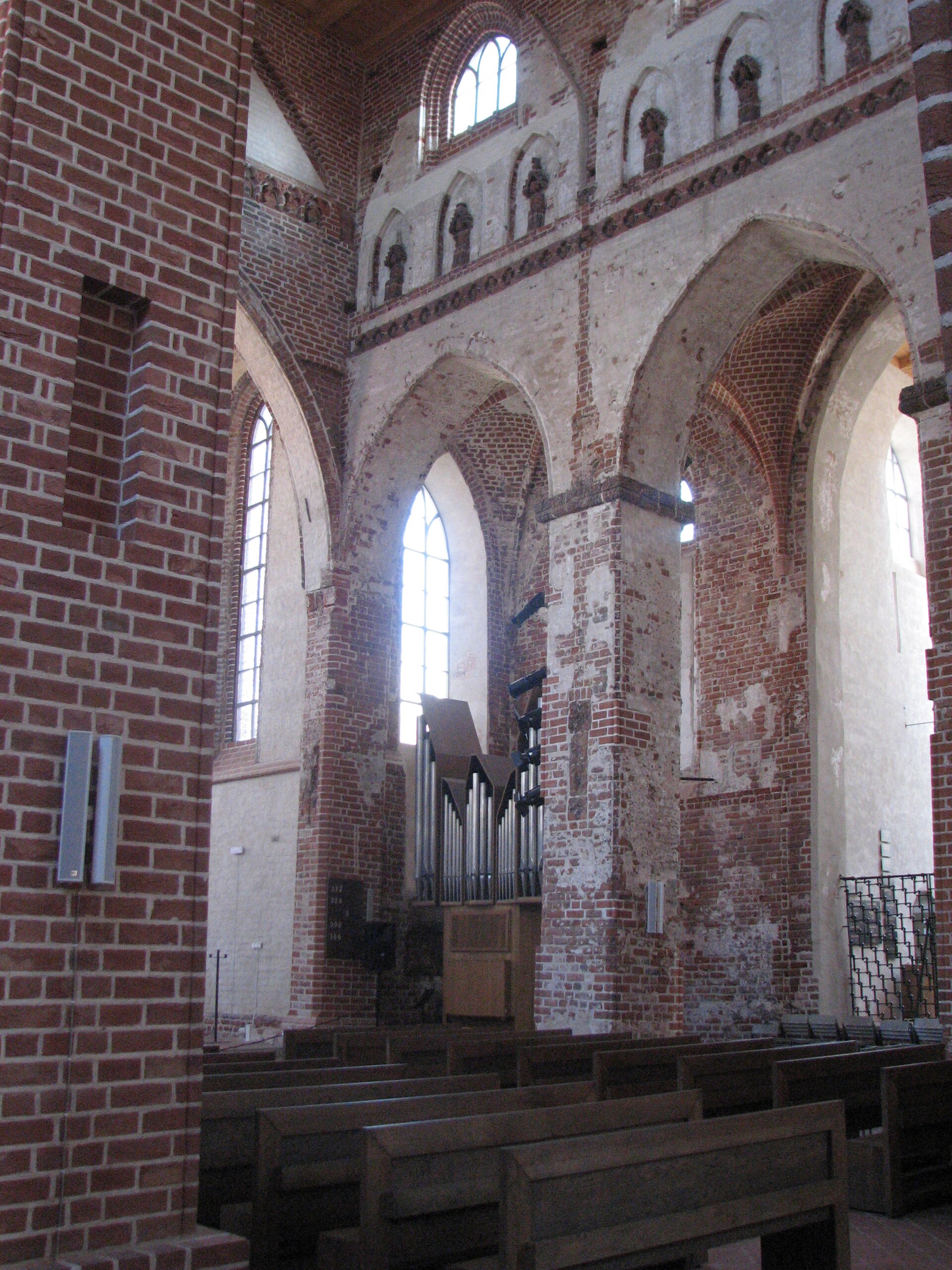
The church’s interior tells its own story, though much of it has been altered by time and necessity. The vaulted ceilings, once adorned with medieval frescoes, now bear the simpler aesthetics of later periods. During the Reformation in the 16th century, the church transitioned from Catholic to Lutheran use, a shift that brought changes in both liturgy and design. The pulpit, altar, and pews date from different centuries, each reflecting the tastes and needs of their time. One of the most striking features is the organ, installed in the 19th century, which still fills the space with music during services and occasional concerts.
St Mary’s has not always been a place of quiet reflection. In the 17th century, during the Polish-Swedish wars, the church was severely damaged, and its tower was destroyed. It was later rebuilt, only to suffer again in the Great Northern War in the early 18th century, when Tartu was besieged and much of the city was reduced to ruins. The church’s resilience mirrors that of the city itself, which has repeatedly risen from destruction. By the 19th century, Tartu had become a center of Estonian national awakening, and St Mary’s played a role in this cultural shift, hosting gatherings and events that fostered a sense of identity among the local population.
The exterior of the church is deceptively modest, blending into the surrounding streets of Tartu’s old town. Unlike the grand cathedrals of Tallinn or Riga, St Mary’s does not dominate the skyline but rather fits into the rhythm of everyday life. Its tower, though not the tallest in the city, offers a quiet presence, and the churchyard, with its weathered gravestones, adds a layer of historical depth. The stones tell stories of Tartu’s past residents—merchants, scholars, and ordinary citizens—whose lives were intertwined with the church’s history.
Today, St Mary’s remains an active Lutheran church, serving both the local congregation and visitors who come to explore its past. Services are held regularly, and the church occasionally hosts concerts, particularly those featuring the organ, which is considered one of the finest in southern Estonia. The atmosphere inside is one of quiet dignity, a place where the weight of history is felt without being overwhelming. Unlike tourist-heavy sites, St Mary’s does not draw crowds, which allows for a more contemplative experience.
For those interested in Tartu’s history, the church offers a tangible connection to the city’s medieval roots. It stands near other landmarks, such as the ruins of Tartu Cathedral and the university’s main building, forming part of a historical walk that reveals the layers of the city’s past. The church’s location in the heart of Tartu makes it easy to visit, whether as part of a broader exploration or as a brief stop during a stroll through the old town.
St Mary’s is also a reminder of the broader religious and cultural shifts that have shaped Estonia. From its Catholic beginnings to its Lutheran present, the church reflects the country’s journey through different eras of belief and governance. It has survived not only physical destruction but also the ideological changes that swept through the Baltic region. In this sense, it is more than just a building—it is a witness to the resilience of a community and the enduring nature of faith in the face of change.
Visiting St Mary’s is not about grand spectacle but about appreciating the quiet persistence of history. The church does not demand attention; it simply exists, as it has for centuries, offering a space for reflection amid the bustle of modern life. Whether you come for the architecture, the music, or the sense of continuity, it provides a moment of stillness in a city that is otherwise full of energy and movement.