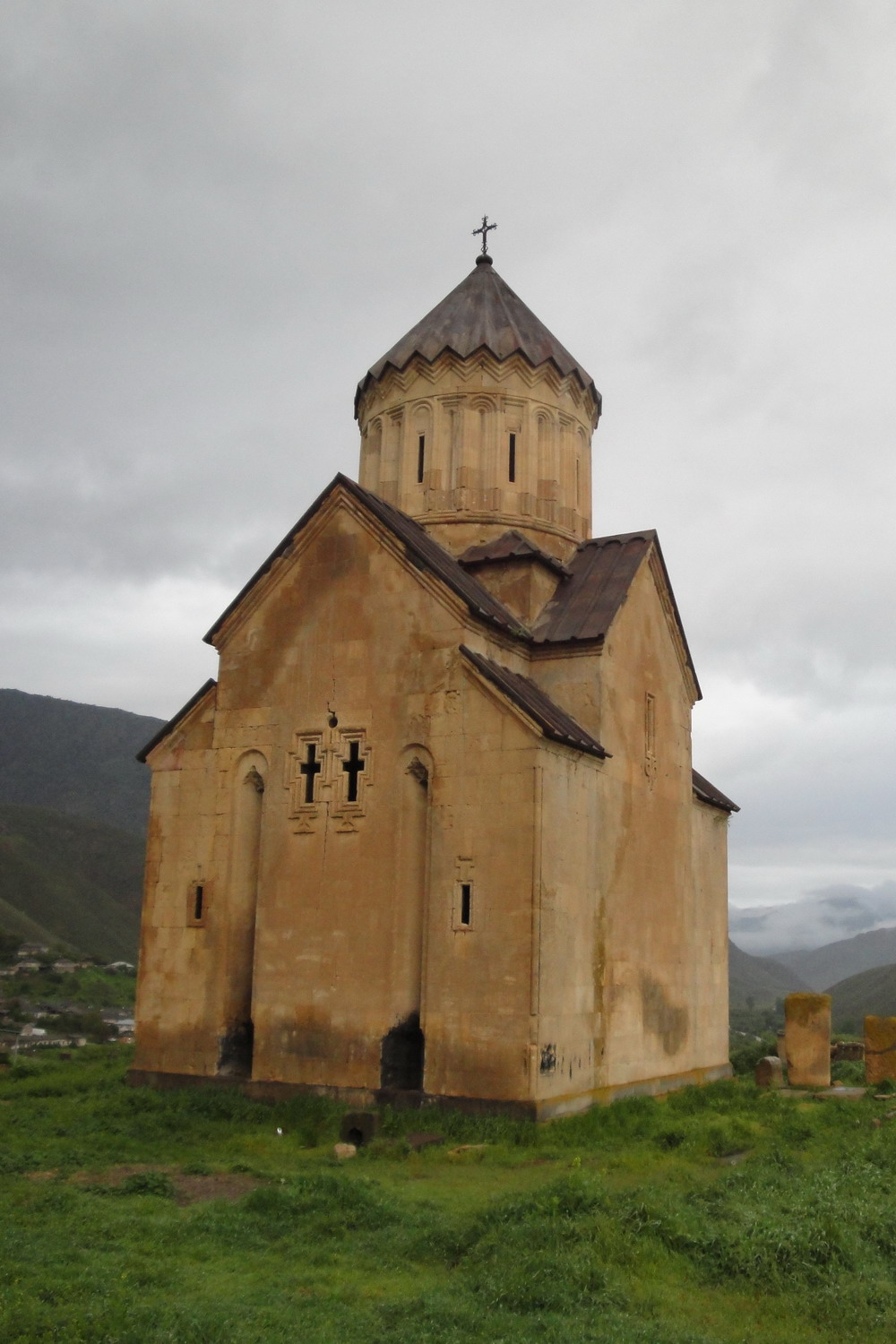
The Church of the Holy Mother of God sits on a hill above Areni, overlooking the Arpa River as it winds through the mountains. It doesn’t stand out at first—just a small stone building, plain and unadorned. But that plainness holds its own kind of strength. Built in the early 1300s, the church was raised during a time of upheaval: Mongol invasions, civil unrest, and the slow collapse of Armenia’s medieval kingdoms. Still, in this valley, people built it anyway.
The design is typical of Armenian medieval churches, with a few small differences. Local tuff stone gives the walls a soft, rosy color, especially in the late afternoon. The layout is cross-domed, with one apse and two side chapels. The dome rests on four pillars, and the entrance is a simple arch with minimal carvings. Inside, the walls are mostly bare, but narrow windows cast moving patterns of light across the stone, making the space feel both calm and slightly mysterious.
Areni wasn’t always quiet. In the Middle Ages, it was a center for trade and craftsmanship, a stop for caravans traveling between Armenia, Persia, and Georgia. The church was once part of a larger monastery, though now only fragments of walls and foundations remain. Archaeologists have found traces of living quarters, workshops, and wineries—proof that this region has been growing grapes and making wine for thousands of years. Nearby, a cave holds the world’s oldest known winery, over six thousand years old. The church seems to watch over that history.
The Church of the Holy Mother of God has survived when others haven’t. Maybe because it was more than a place of worship. During wars, villagers hid valuables, manuscripts, and icons here. In peacetime, it was where the community gathered for births, weddings, and funerals. Even now, on feast days, locals and a few pilgrims still come to light candles.
The land around the church tells its own story. The Arpa River valley is covered in vineyards and apricot orchards. Summers are hot and dry, but spring and autumn bring wildflowers and the scent of ripe fruit. From a nearby hill, you can see the mountains change color—pink at dawn, violet at dusk. In winter, snow covers the ground, and the church looks like a small outpost of faith in a quiet world.
This isn’t a place for crowds. There are no souvenir stalls or guided tours. Just quiet, stone, and distant mountains. The church doesn’t feel like a relic; it feels like it’s still in use, even if the people who once filled it are gone. If you come here, climb the hill. Stand in its shadow, touch the warm stone, and listen. The past isn’t as far away as you think.