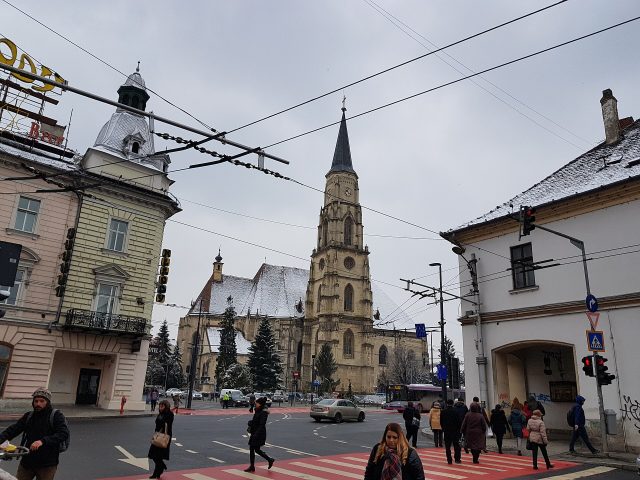
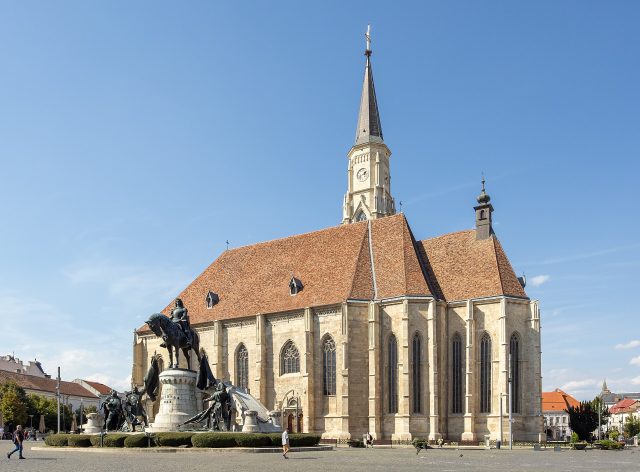
St. Peter’s Church stands quietly in the heart of Cluj-Napoca, a city where medieval streets still hum with the echoes of history. Built in the 15th century, it is one of the oldest religious structures in the city, though its origins are often overshadowed by the more imposing St. Michael’s Church nearby. Yet those who take the time to step inside discover a place where time seems to slow, where the weight of centuries lingers in the cool, dim air.
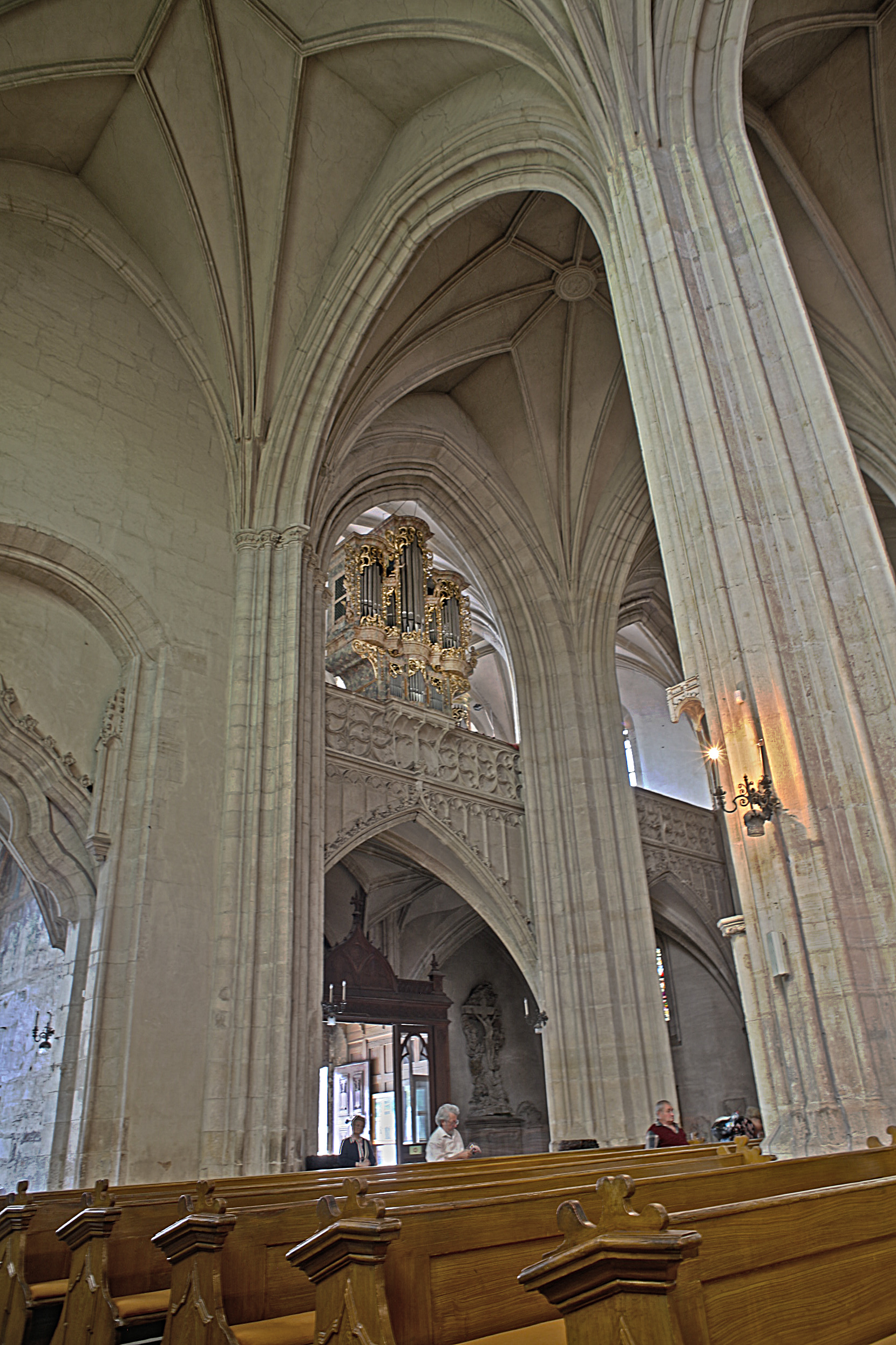
The church was originally constructed in the Gothic style, a reflection of the architectural tastes of the era, though later renovations softened some of its sharper edges. The exterior is modest, with a simple facade that belies the craftsmanship within. The tower, added in the 18th century, rises above the surrounding buildings, its clock a familiar landmark for locals. Inside, the space is intimate, almost understated, with vaulted ceilings that draw the eye upward. The walls, though worn by time, still bear traces of frescoes, faint reminders of the artistry that once adorned them.
What makes St. Peter’s particularly interesting is its role in the city’s religious and cultural life over the centuries. Cluj-Napoca has always been a place where different faiths and communities intersected, and this church has witnessed much of that history. It served as a parish church for the city’s German community during the Middle Ages, a period when Cluj was known as Klausenburg and was part of the Kingdom of Hungary. Later, as the city changed hands and identities, the church adapted, becoming a place of worship for Romanian Orthodox Christians in the 18th century.
The interior of the church is a blend of styles, a testament to the many hands that have shaped it over the years. The altar, though not as ornate as those in larger cathedrals, carries a quiet dignity. The wooden pews, polished by generations of worshippers, creak softly underfoot. Light filters through stained-glass windows, casting colored patterns on the stone floors. There is no grand spectacle here, no overwhelming opulence—just a sense of continuity, of a place that has endured through wars, empires, and shifting borders.
One of the most striking features of St. Peter’s is its organ, installed in the 19th century. Though not as famous as the instruments in some of Europe’s great cathedrals, it has a warmth and clarity that make it well-suited to the church’s intimate scale. Occasionally, concerts are held here, filling the space with music that seems to resonate with the very stones. For those who visit on a quiet afternoon, the silence itself can feel like a kind of music, a pause in the rhythm of the city outside.
The churchyard is small but peaceful, a green space tucked away from the bustle of nearby streets. A few old gravestones lean against the walls, their inscriptions worn smooth by time. It’s a place where locals sometimes stop to sit for a moment, away from the noise of traffic and commerce. The surrounding neighborhood, with its narrow lanes and pastel-colored houses, feels like a village within the city, a reminder of Cluj’s layered past.
St. Peter’s is not a place that demands attention, nor does it seek to impress with grandeur. Instead, it offers something subtler—a sense of connection to the past, a quiet corner where history is not just remembered but felt. For travelers who wander beyond the main tourist routes, it provides a glimpse into the everyday life of Cluj-Napoca, a city where the old and the new coexist with ease. There are no crowds here, no lines, no pressure to perform the role of a tourist. Just a church, standing as it has for centuries, waiting to be noticed.