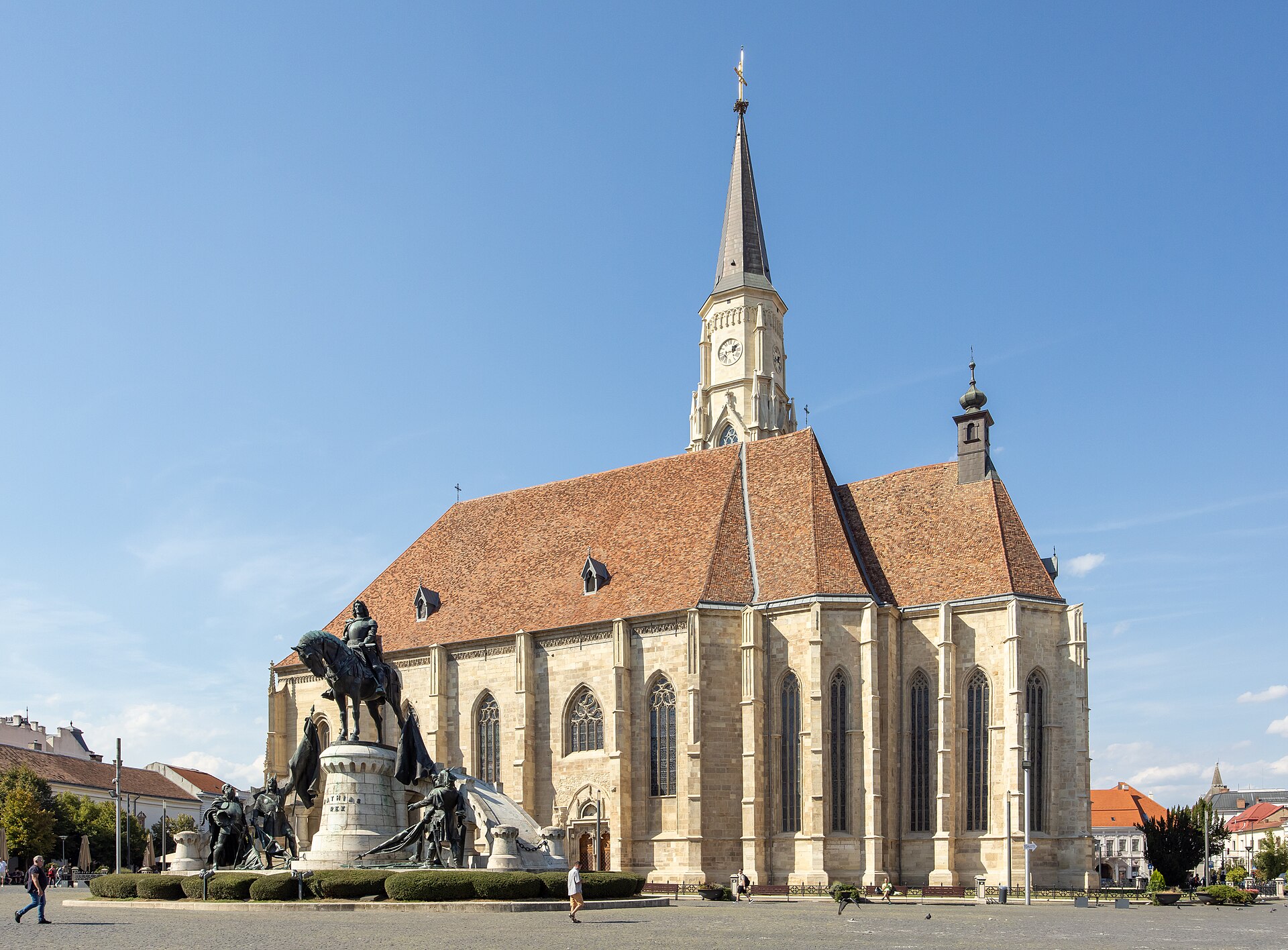
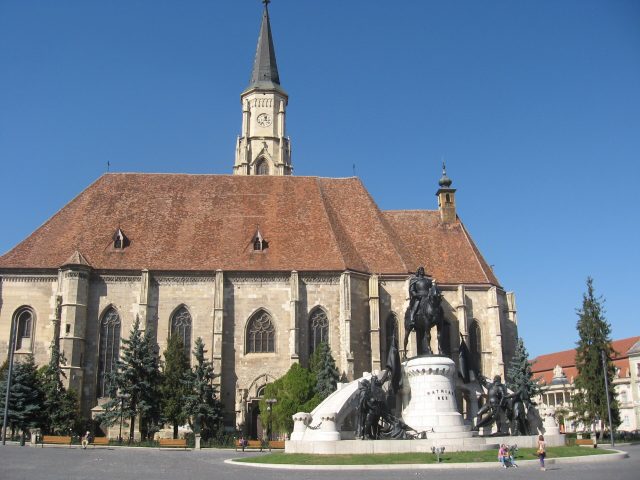
St. Michael’s Church in Cluj-Napoca isn’t just a landmark—it’s a quiet witness to centuries of life unfolding around it. Standing in the heart of the city’s main square, it has watched over markets, festivals, and everyday routines since the late Middle Ages. The first thing you notice is its Gothic silhouette: soaring pointed arches, slender windows, and sturdy buttresses that seem to defy gravity. Inside, the space feels surprisingly airy despite the weight of stone, with soft light filtering through the stained glass, casting muted colors across the vaulted ceilings. It’s a place where history isn’t just preserved—it’s still being lived.
Construction began in 1316, when Cluj was part of the Kingdom of Hungary, and stretched over nearly 150 years. The church evolved alongside the city, absorbing different styles as tastes changed. Early Gothic elements gave way to later refinements, and by the Renaissance, delicate carvings had been added to the portals and interior. The Baroque high altar arrived much later, in the 18th century, long after the church had become a cultural as well as a spiritual hub. Over the centuries, it also became a battleground of sorts—Catholics and Protestants took turns claiming it, leaving behind a patchwork of altars, pulpits, and half-erased frescoes that hint at the religious tensions of the past.
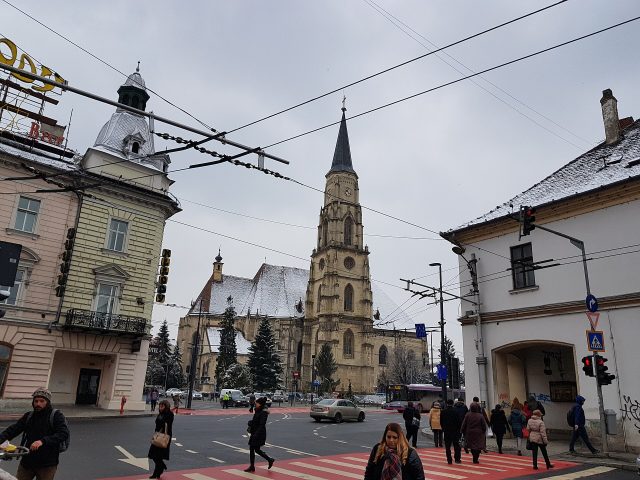
The tower is perhaps the most striking feature, and its history is as layered as the church itself. Originally shorter, it was extended in 1859 to its current height of 80 meters, making it one of the tallest structures in Transylvania. Climbing to the top rewards you with a view that stretches over the city’s red-tiled roofs, the rolling hills beyond, and the lively streets below. The tower has seen its share of drama—bells rang for victories and defeats, and in the 19th century, a clock was installed, becoming a reference point for the entire city. Today, it stands as a symbol of endurance, having survived fires, wars, and countless renovations without losing its place in the skyline.
Inside, the walls are lined with tombstones—some ornate, others simple—belonging to merchants, nobles, and clergy who once shaped the city. One of the most famous names here is Matthias Corvinus, the Hungarian king born in Cluj, though his remains were later moved to Budapest. Still, the mere mention of his name adds weight to the church’s history. These graves aren’t just relics; they’re reminders that St. Michael’s was more than a place of worship—it was a final resting place for those who left their mark on the city.
What makes the church’s architecture so compelling is how it blends influences from across Central Europe. The southern portal, with its intricate reliefs, echoes the work of Silesian craftsmen, while the buttresses are more robust than those in Western European cathedrals, giving the building a grounded, almost fortress-like presence. Inside, Gothic vaults coexist with Renaissance paintings and Baroque altars, creating a space that feels both grand and intimate. It’s not a museum piece but a living church, where services are still held and every detail tells a story.
Beyond its religious role, St. Michael’s has become a cultural gathering spot. The acoustics make it ideal for organ concerts, and the square outside buzzes with activity year-round. In summer, vendors sell honey, crafts, and traditional sweets at open-air markets, while winter brings a festive Christmas tree and twinkling lights. There’s always a sense of celebration here, yet the atmosphere remains calm, as if time moves a little slower within these walls.
For those curious about history, the church holds its share of mysteries. No one knows for certain who designed the original structure—some credit a Prague master, others local builders trained in Hungary. Legends persist about hidden tunnels beneath the church, though no evidence supports them. Even without such intrigue, the building speaks for itself: the worn stones, the faded inscriptions, and the layers of paint and plaster all hint at the lives that have passed through its doors.
Cluj-Napoca is a city where the past and present coexist effortlessly, and St. Michael’s Church embodies that balance. It doesn’t feel like a relic but a natural part of the city’s rhythm. You can sit on a bench outside, watching people come and go, or step inside to admire the stained glass. Even a passing glance at its towering facade is enough to remind you that Cluj isn’t just a modern hub—it’s a place where history is still being written, one stone at a time.