Mutundwe Hill is one of those quiet corners of Kampala that most visitors never see, though it sits just beyond the city’s bustling edges. Perched on a gentle rise, the hill is wrapped in dense greenery, as if holding itself apart from the urban sprawl below. At its heart stands St. Noah’s Church, a place that doesn’t demand attention but somehow lingers in the memory long after you’ve left. From the outside, it’s unassuming—a low brick building with a simple gabled roof and a modest spire over the entrance. There’s no grand facade, no towering arches, just the quiet dignity of a structure that has settled into its surroundings over decades. The real charm reveals itself in the late afternoon, when the sun slants through the trees, casting long, shifting shadows across the walls and turning the red brick a deeper, warmer shade.
The church’s story is woven into the fabric of Mutundwe itself, a place that was once a distinct village before the city swallowed it whole. Built in the mid-20th century, St. Noah’s emerged during a time when Uganda was still finding its footing after colonial rule, a period marked by both uncertainty and the rapid spread of Christianity. Unlike the grand cathedrals of Kampala or Entebbe, this was never meant to be a monument. It was a place for ordinary people—farmers, laborers, craftsmen—who needed more than just a house of worship. For them, the church was a gathering point, a refuge, and a living record of their community’s struggles and small triumphs. The fact that it still stands today, largely unchanged, feels like a quiet act of defiance against the relentless march of time.
The architecture is straightforward, almost austere, reflecting the practical needs of rural East African churches of the era. The layout is rectangular, the windows small and arched, the interior furnished with plain wooden pews. But if you look closely, you’ll notice the touches that make it unique. The carved wooden panels behind the altar, for instance, bear the unmistakable imprint of local craftsmanship, their patterns echoing traditional Ugandan motifs. The ceiling, too, has a subtle design that hints at something beyond mere functionality. Inside, the air is always cool, even on the hottest days, and the light filtering through the stained glass casts a soft, muted glow over everything. It’s a space that invites stillness, where the outside world feels distant.
St. Noah’s isn’t the kind of place you’ll find in guidebooks or on tourist itineraries. There are no guided tours, no audio headsets, no gift shops selling postcards. What it offers instead is something far rarer: a sense of authenticity. On Sundays, the church comes alive with worshippers from Mutundwe and beyond. Services are held in multiple languages—English, Luganda, sometimes even Swahili—reflecting the diversity of the congregation. The choir sings to the rhythm of drums, their voices carrying beyond the church walls, blending with the rustling leaves and the occasional call of a bird. For many, this isn’t just a religious ritual; it’s a moment of connection, a reminder of shared history in a country where the past and present often feel at odds.
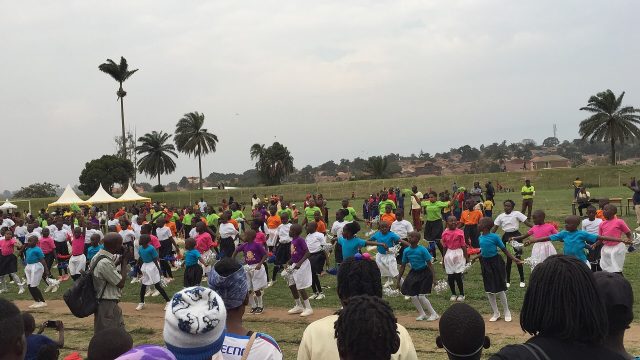
During the week, the church is usually quiet, save for the occasional visitor who comes to sit in the pews or wander the grounds. The area around it is well-tended, with neatly trimmed lawns, stone pathways, and benches tucked beneath the trees. Locals sometimes bring food and gather for small picnics, especially on holidays, turning the churchyard into a communal space. Children play on the grass while adults chat in the shade, their conversations drifting lazily in the warm air. There’s no rigid formality here, no sense that you’re intruding. It’s a place where people can simply be, without pretense or pressure.
What’s remarkable about St. Noah’s is how it has endured. Uganda’s history over the past half-century has been turbulent, marked by political upheaval, economic hardship, and social change. Yet through it all, the church has remained a constant—a place of solace and stability. In the 1990s, when the country was grappling with crisis, it even served as a temporary shelter for those who had nowhere else to go. Today, the only traces of that time are a few faded photographs in the narthex, but the stories live on in the memories of those who were there. It’s a reminder that some places aren’t just buildings; they’re witnesses to the lives that unfold around them.
From the hill where the church stands, you can see the patchwork of Mutundwe stretching out below—rooftops, fields, and the distant silhouette of Kampala’s skyline. The contrast is striking: the quiet of the hillside against the hum of the city, the slow pace of life here versus the relentless energy down there. It’s as if time moves differently on this little rise, giving you space to pause, to breathe, to consider what really matters. That’s the gift of St. Noah’s—not grand spectacle, but the chance to step out of the rush and into something deeper.
This isn’t a place for those seeking Instagram-worthy backdrops or dramatic tales of history. It’s for the traveler who values stillness, for the person who understands that some of the most meaningful experiences don’t come with fanfare. There are no crowds here, no pushy guides, no agenda. Just the rustle of leaves in the breeze, the distant murmur of voices, the faint scent of flowers in the morning air. Maybe that’s why those who know St. Noah’s keep coming back—not for what it is, but for what it offers: a quiet corner of the world where time slows down, and the soul can catch its breath.