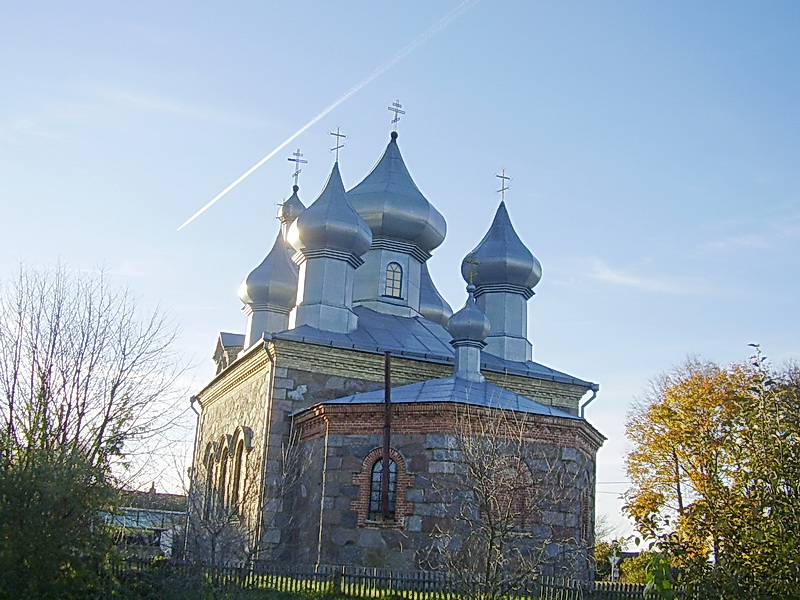
Saint Nicholas Church in Ruba is one of those quiet places that doesn’t announce itself to travelers but lingers in the mind long after you’ve left. Tucked away on the edge of a small Belarusian town, far from the usual tourist routes, it feels like a natural part of the landscape—low hills, scattered woodlands, and fields stretching toward the horizon. Here, the church isn’t just a building; it’s woven into the daily rhythm of life, where faith, history, and local customs have blended over generations.
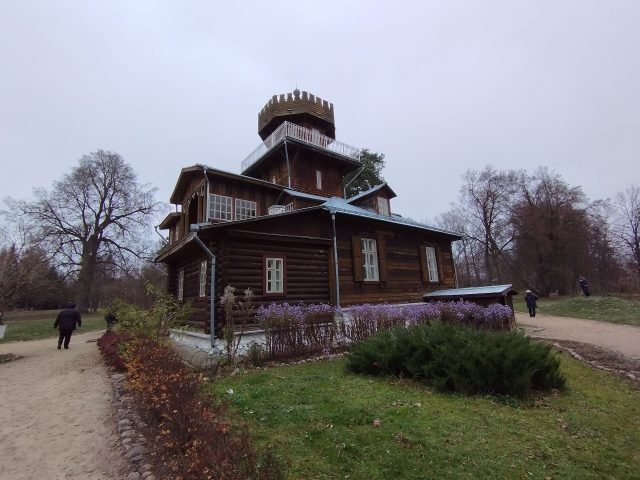
Built in the early 20th century, when Ruba was little more than a cluster of peasant homesteads, the church reflects the practical yet thoughtful approach of traditional wooden architecture. There’s no grand ornamentation, just careful craftsmanship—log walls, a steeply pitched roof, and a modest bell tower that speaks to an era when carpenters were as revered as architects. Inside, the iconostasis, intricately carved royal doors, and a handful of locally painted icons remain, their surfaces darkened by time and candle smoke.
The church has weathered its share of upheavals. During the Soviet era, when religious sites across the country were shuttered or repurposed, Saint Nicholas somehow endured. Perhaps Ruba was too small, too unremarkable to attract attention. Unlike many others, it was never turned into a warehouse or a cultural center. After the Soviet Union collapsed, the building was returned to the faithful, and today it still serves its original purpose. Services, baptisms, and weddings are held here, though visitors rarely stay long. Those who do step inside often remark on the sense of stepping into another time.
The small cemetery surrounding the church is as unassuming as the building itself. The graves are simple, marked by modest headstones rather than grand monuments, yet each one holds a story. Some of those buried here may have helped build the church; others likely prayed within its walls for decades. In that way, Saint Nicholas is more than a place of worship—it’s a monument to the generations who lived, worked, and died in this corner of Belarus, their names now fading but their presence still felt.
The architecture is classic Belarusian wooden design: a rectangular log structure with a small apse, its roof shingled with weathered wood that has taken on a silvery-gray hue over the years. The bell tower, added later, is low but fits seamlessly with the rest of the building. A covered porch shelters the entrance, where a single bell hangs, its sound carrying across the fields when rung. Inside, the wooden walls and benches give the space a warm, intimate feel, while the few surviving icons add a touch of solemnity.
Ruba isn’t a place for grand attractions or bustling crowds. There are no museums, no theaters, no festivals—just the quiet pace of rural life. That’s part of its charm. On Sundays, locals gather here: elderly women in headscarves, men in worn jackets, children fidgeting quietly. Services aren’t frequent, but when the bells ring, their sound travels far, echoing over the fields and through the trees.
The church changes with the seasons. In summer, it’s surrounded by lush greenery; in autumn, the golden leaves of nearby trees frame it like a painting. Winter brings a hush, the building standing serene under a blanket of snow. Spring turns the road to the church into a muddy track, but people still come, their boots leaving prints in the thawing earth.
If you find yourself in this part of Belarus, it’s worth taking a detour. Step inside, sit on one of the wooden benches, and listen to the silence. There’s something about this place—something that feels absent in cities, where the past is often paved over or forgotten. Here, the connection to those who came before is still tangible, as if the walls themselves remember.