St. Leodegar’s Church stands quietly at the heart of Lucerne, its twin spires rising above the rooftops like silent sentinels. From almost anywhere in the city, you can glimpse its silhouette against the sky, a constant presence on the banks of the Reuss River. Built in the Gothic style, the church is more than just an architectural landmark—it’s a living piece of Lucerne’s history, having weathered fires, wars, and centuries of change.
The first traces of a chapel on this site date back to the 8th century, though the church as it appears today took shape much later, between the 14th and 15th centuries. By then, Lucerne had grown into a thriving trade and religious hub, and the church became a symbol of its rising importance. The twin towers, now iconic, were added during this period. The southern tower remains largely unchanged, while the northern one was rebuilt after a 17th-century fire, giving it a slightly different character.
Inside, the church feels less like a museum and more like a place where time has settled into a gentle rhythm. The high vaulted ceilings, pointed arches, and stained-glass windows create an atmosphere of quiet dignity. The wooden pews, the grand organ, and the flickering candlelight all contribute to a sense of continuity, as if the same prayers have been whispered here for centuries. The Baroque altar stands out against the Gothic simplicity of the nave, a reminder of how different eras have left their mark.
St. Leodegar’s has always been more than just a place of worship. In the Middle Ages, it was a center of civic life, where deals were struck, decisions were made, and people sought refuge during times of crisis. When the Reformation swept through Switzerland, Lucerne remained Catholic—a rare exception in a region where many cities embraced Protestantism. This choice shaped the city’s religious identity for generations, and the church became a symbol of that resilience.
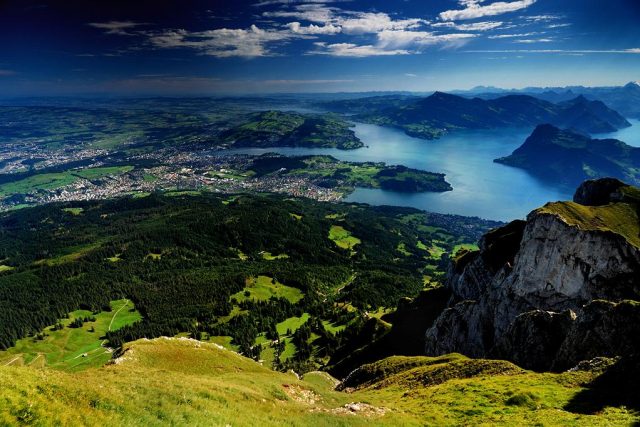
Today, the church remains an active part of Lucerne’s daily life. Services are held regularly, and the sound of the organ fills the space during concerts. Couples exchange vows beneath its arches, while visitors come simply to sit in silence or climb one of the towers for a view of the city and Lake Lucerne. In the summer, the square in front of the church buzzes with small markets, where vendors sell handmade crafts and local treats.
The church’s location adds to its charm. It sits on a small plaza surrounded by colorful old houses, their facades leaning slightly as if whispering secrets to one another. Nearby, the Chapel Bridge stretches across the Reuss, connecting the church to the rest of the city. In the evening, when the streetlights glow and the river reflects the church’s silhouette, the scene feels almost timeless.
For those curious about history, St. Leodegar’s offers layers of stories. The crypt holds remnants of earlier structures, while the side chapels display religious artifacts from different eras. Medieval tombstones, Baroque decorations, and Gothic arches all coexist here, each telling a part of Lucerne’s past. Even if you’re not religious, the church has a way of making you pause, of reminding you that some places carry more than just their own weight.
Lucerne is a city where history lingers in the air, and St. Leodegar’s is one of its quiet treasures. It doesn’t demand attention, but it rewards those who take the time to notice. There’s a sense of balance here—between grandeur and simplicity, between the past and the present. Maybe that’s why people keep coming back, drawn by something they can’t quite name, but can feel in the stillness of its walls.