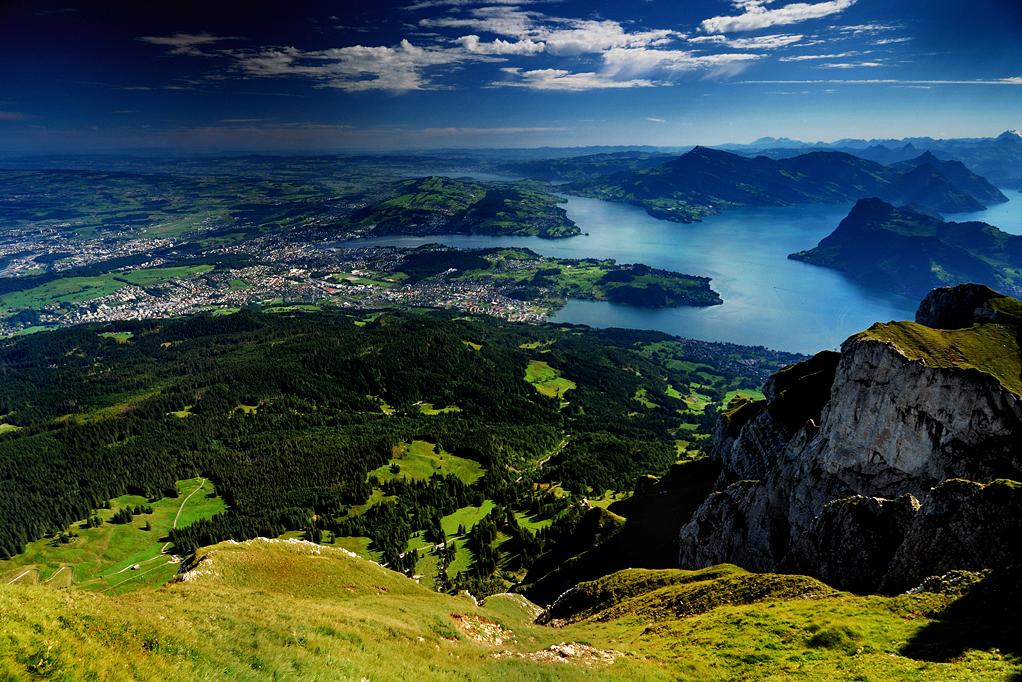
Mount Pilatus looms over Lucerne like a silent guardian, its slopes holding as many legends as they do stones. The peaks, often shrouded in clouds, seem to float above the lake and the city, as if nature itself had decided to build a fortress here. The mountain’s name is tied to an ancient Roman legend about Pontius Pilate, whose spirit was said to haunt these cliffs. For centuries, locals avoided climbing here, fearing the wrath of the cursed procurator, while those who dared spoke of eerie apparitions and voices drifting through the mist. Today, Pilatus is one of Switzerland’s most popular destinations, yet even now, with thousands of visitors ascending its heights, there’s still something mysterious in the air—especially when the clouds part to reveal the valley below or when evening fog creeps across the slopes like a living thing.
Reaching the summit isn’t just a journey; it’s an adventure, with several routes offering their own unique experiences. The most famous begins in Alpnachstad, where the world’s steepest cogwheel railway climbs at a staggering forty-eight percent gradient. As the train inches upward, it feels as though it might tip backward at any moment, but the engineering is sound, and the views quickly distract from any unease. Below, Lake Lucerne glistens, framed by green hills, while in the distance, the snow-capped peaks of the Alps rise like sentinels. Another way up is the cable car from Kriens, which lifts passengers over forests and cliffs, offering a bird’s-eye perspective of the landscape. For those who prefer walking, trails wind through alpine meadows and pine forests, where the only sounds are the wind and the distant chime of cowbells from grazing herds.
At the top, time seems to slow down. There’s no hustle here, just expansive viewing platforms where visitors can stand for hours, lost in the horizon, and cafés serving hot chocolate and local cheeses. On clear days, the view stretches across four Swiss cantons, with the iconic peaks of the Jungfrau, Mönch, and Eiger visible in the distance. In winter, Pilatus becomes a snowy playground with ski slopes and sled runs, while summer brings mountain biking and leisurely hikes along trails leading to hidden lakes and rocky outcrops. The most magical moments come at sunrise or sunset, when the sky blushes pink and gold, and the shadows of the mountains stretch across the valley like giant fingers.
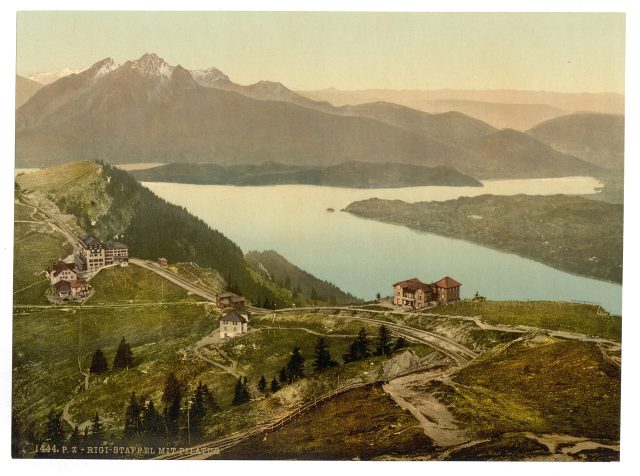
Pilatus became a tourist destination in the 19th century, as travelers from across Europe began discovering the beauty of the Swiss Alps. The first cogwheel railway opened in 1889, making the mountain accessible to the public for the first time. Before that, reaching the summit was a long and perilous endeavor, reserved for the boldest adventurers. Today, the infrastructure is so well-developed that anyone can visit, yet despite the millions who have stood on its peaks, Pilatus hasn’t lost its allure. Perhaps it’s because the mountain doesn’t try to please everyone—it simply exists, majestic and slightly enigmatic, just as it has for centuries.
The architecture on Pilatus is understated but blends seamlessly with the landscape. At the summit, a handful of buildings in the traditional alpine style feature wooden balconies, stone foundations, and large windows framing the mountain views. The most notable is the Pilatus-Kulm Hotel, which has welcomed guests since the late 1800s. Its rooms, furnished in classic Swiss style, remain popular with those who want to spend the night on the summit, waking to sunrise above the clouds. Nearby, a small chapel honors those who have lost their lives in the mountains, while a museum shares the region’s history and the legends tied to Pilatus. Everything here feels respectful of the natural surroundings, as if the architects took care not to disrupt the harmony of the landscape.
One of the mountain’s most intriguing features is the Dragon Trail, a narrow footpath running along a rocky ridge. Its name comes from a legend about dragons that once lived here, guarding treasures hidden in the caves. Today, the trail attracts hikers looking for a bit of adventure—it’s not overly difficult, but it demands caution, with sheer drops on one side and steep slopes on the other. Along the way, informational signs explain the local flora, fauna, and geology, offering a chance to connect with the wild beauty of the mountain. Walking the Dragon Trail is a reminder of how small humans are in the face of nature’s grandeur.
For the people of Lucerne and central Switzerland, Pilatus is more than just a tourist attraction—it’s a symbol of their connection to the land, traditions, and history. The mountain hosts festivals celebrating alpine culture, and local herders still bring their cows to graze on the summer pastures, their bells ringing across the valleys just as they have for generations. In winter, the slopes host ski competitions, while summer brings folk music festivals and traditional dances. For the Swiss, Pilatus isn’t just a place to visit; it’s part of their identity, a spot where they can escape the noise of modern life and remember what truly matters.
A visit to Pilatus leaves a sense of calm and clarity, as if for a moment, you’ve stepped outside of time and into something greater. There’s no rush here, just the wind, the clouds, and the mountains, which exist beyond the worries of the world. On the journey back to Lucerne, you might find yourself glancing back at Pilatus from the lakeshore, watching as its peaks disappear into the mist and reappear, as if playing a game. Even after descending, part of you lingers there, where the air is crisper and the horizon wider. Maybe that’s why people keep returning—to feel that strange, almost mystical pull of a mountain that still holds its secrets close.