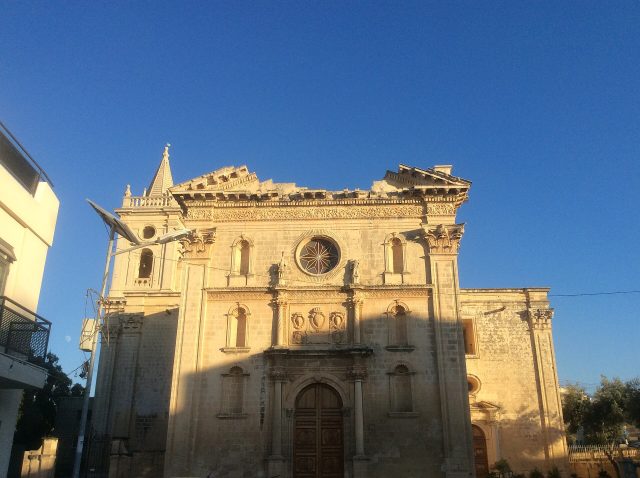
St. Joseph’s Church in Mġarr doesn’t demand attention but lingers in the memory after you leave. It stands on a small square surrounded by low stone houses, their wooden balconies painted in bright, sun-bleached hues. Mġarr isn’t a tourist hub—no souvenir stalls, no cafés with sea views, no crowds. It’s a Maltese village where life moves at its own pace, where neighbors know each other by name.
The church is unassuming, its design a blend of influences that define Maltese architecture. The façade is Baroque, a style favored on the island during the 17th and 18th centuries. The white limestone walls glow under the Mediterranean sun, their brightness softened by narrow, arched windows. The bell tower is modest, blending into the structure. Inside, the high vaulted ceilings create space, though the decor is simple.
The history of St. Joseph’s is tied to Mġarr. For centuries, the village was a small agricultural and fishing community, far from the political and military upheavals that shaped other parts of Malta. The first records of the church date back to the 17th century, when it was built as a parish church for locals. At the time, Malta was under the rule of the Knights Hospitaller, and many churches were funded by the Order or private benefactors. St. Joseph’s was financed by villagers, who wanted their own place for worship instead of traveling to nearby towns.
Over the years, the church underwent minor renovations but kept its original character. In the 19th century, when Malta came under British control, many religious buildings were altered. St. Joseph’s escaped major changes. The interior still holds traces of its past: a carved wooden altar, a few icons in the traditional Maltese style, and old oil lamps.
The wooden statue of St. Joseph, the village’s patron saint, is one of the church’s most cherished features. On his feast day in March, the church becomes the center of a quiet celebration. Villagers decorate it with flowers, carry the statue in procession, and share a meal afterward. It’s a gathering where everyone knows one another.
Most of the time, the church is quiet. In the mornings, parishioners stop by to light a candle or pray before work. Sometimes, an organ plays during a service. On weekdays, the silence is broken only by footsteps or the rustle of a prayer book.
Mġarr and its church show Malta’s layered history, where different eras and traditions coexist without fanfare. There are no grand palaces or ancient ruins here. Instead, there’s authenticity. St. Joseph’s is still part of the village, still serving its purpose centuries later.
If you visit Mġarr, step inside, even if you’re not religious. There’s nothing staged about it—just stone, wood, and soft light through the windows. Time moves differently here.