Ta’ Ħaġrat is one of those rare places in Malta that feels untouched by time, a quiet witness to an era when the islands were part of a world entirely different from our own. Tucked away near the village of Mġarr, far from the usual tourist trails, this small megalithic temple complex doesn’t immediately demand attention. Its modest size belies its significance—here, you can almost sense the breath of a time when people were just beginning to master stone construction, shaping their understanding of the divine into rough-hewn yet remarkably thoughtful structures.
Built between 3600 and 3200 BCE, Ta’ Ħaġrat belongs to the Ġgantija phase of Maltese prehistory, a period when the islands’ inhabitants were likely farmers and herders, still centuries away from the discovery of metal. Their tools were made of stone and bone, yet they managed to create some of the world’s oldest free-standing stone buildings—older than the Egyptian pyramids and Stonehenge. While Ta’ Ħaġrat may not have the grandeur of its more famous counterparts like Ġgantija or Ħaġar Qim, its charm lies in its intimacy. It feels raw and unpolished, as if inviting visitors to step closer to the very roots of Maltese civilization.
The temple’s architecture follows the familiar pattern of Malta’s megalithic sites: two oval chambers connected by a passageway, constructed from rough limestone blocks. The entrance is marked by a trilithon—a simple yet striking arrangement of two upright stones supporting a horizontal lintel. Such structures appear in other temples across the islands, but here, their simplicity feels especially moving. The stones are uneven, their surfaces bearing the marks of primitive tools, and the fit between them is far from perfect. Inside, you’ll find niches and altars, likely used for rituals, though their exact purpose remains a mystery. Archaeologists suggest the temple may have been tied to fertility rites, a vital concern for an agricultural society.
Ta’ Ħaġrat was discovered by chance in the early 20th century when locals were digging for construction. For years, it remained largely overlooked, until archaeologists began studying it in the 1920s. Today, it’s protected by the state but remains freely accessible. Unlike the more crowded temples, it rarely sees many visitors, which only adds to its quiet allure. You can wander among the ancient stones, touch their weathered surfaces, and imagine the voices of people who gathered here thousands of years ago, performing rituals we can only guess at.
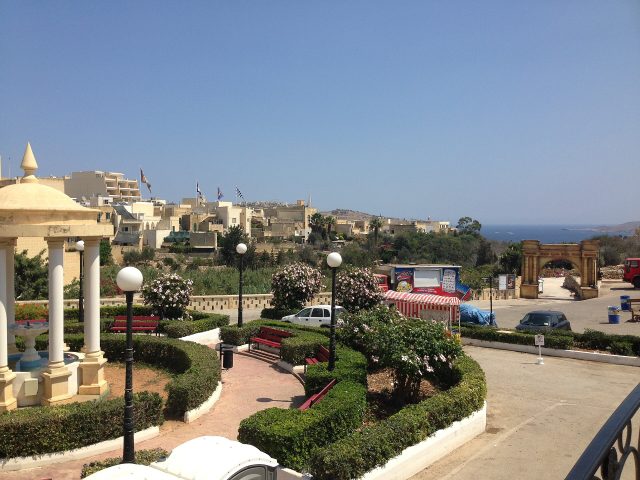
The village of Mġarr, where the temple is located, is a quintessential Maltese settlement—narrow streets, low stone houses, and balconies draped in flowers. Life here moves at a slower pace, still tied to farming and fishing. The surrounding countryside is a patchwork of fields and rolling hills, dotted with the sparse vegetation typical of the Mediterranean. Nearby, you’ll find another ancient site, Skorba, which together with Ta’ Ħaġrat forms a kind of open-air trail through Malta’s prehistoric past. These places offer a glimpse into how the island’s culture evolved over millennia, long before the arrival of the Phoenicians or the Romans.
Visiting Ta’ Ħaġrat isn’t just about seeing an ancient temple; it’s an opportunity to reflect on how little we truly know about the people who built it. Their language, beliefs, and customs have vanished, leaving behind only these silent stones. That’s the magic of such places—they don’t tell stories in words but allow you to feel them. Standing within these walls, it’s hard not to wonder what drove those early builders, what hopes they poured into their work, and how they managed such feats without the tools we take for granted today.
Today, Ta’ Ħaġrat is part of Malta’s UNESCO-listed megalithic temples, recognized for its historical value. Yet for most visitors, it remains a place of quiet contemplation. There are no crowds, no guided tours shouting over one another, no souvenir stalls. Just the wind rustling through the grass and the ancient stones, holding the memories of a people who lived here long before recorded history. That’s why Ta’ Ħaġrat draws those who seek more than just a sightseeing stop—it offers a rare connection to the past, unfiltered and unhurried.