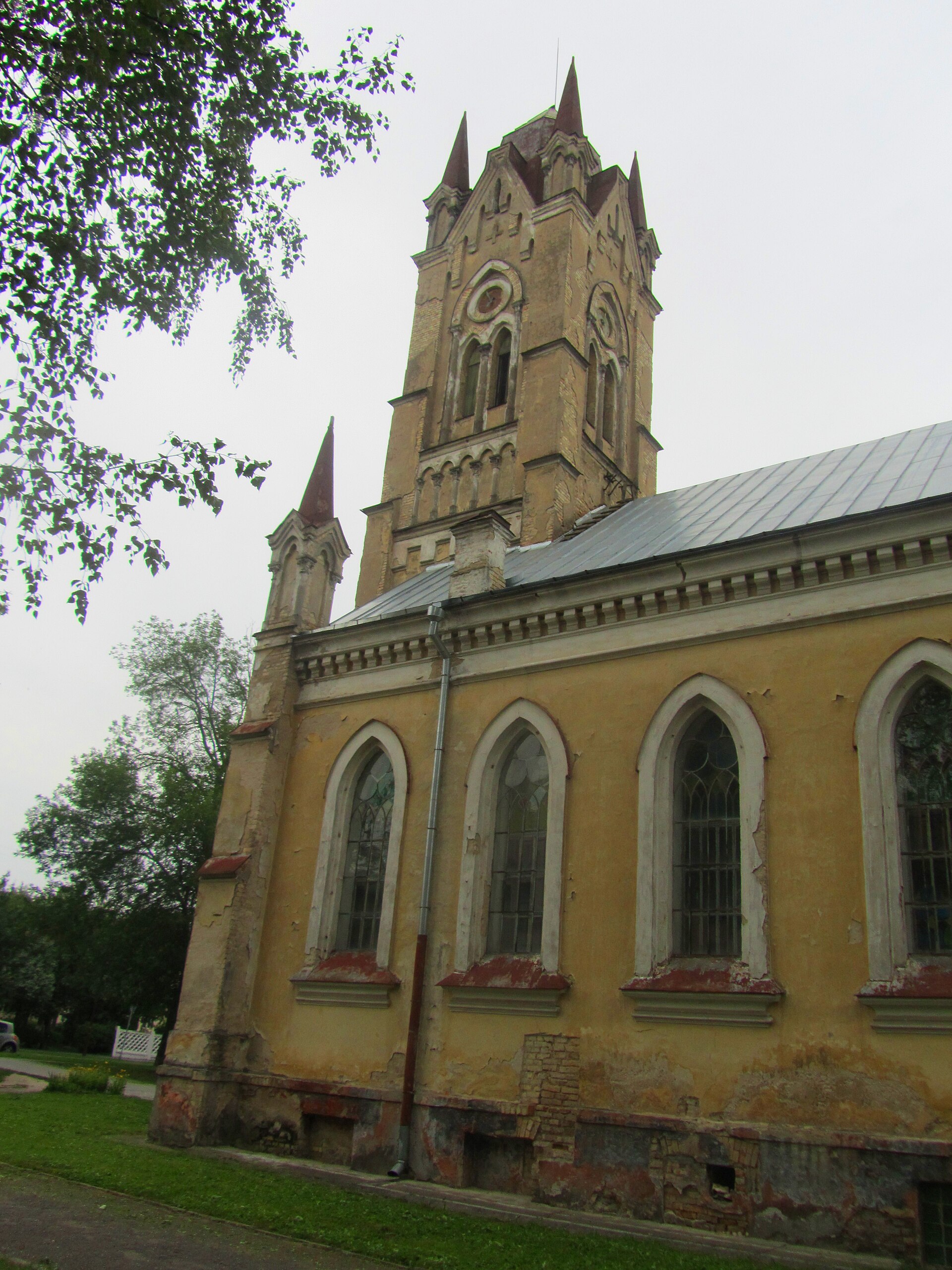
St. John’s Church in Same is one of those quiet places that rarely make it into guidebooks, yet often leave a deeper impression than the country’s famous landmarks. Tucked away on the edge of this small Tanzanian town, it stands surrounded by gentle hills and the familiar sight of acacia trees, their branches swaying in the dry season breeze. There are no crowds here, no guided tours or souvenir stalls—just the occasional rustle of leaves and the distant call of birds. For some, it’s just an old church; for others, a pocket of stillness far from the usual noise of travel.
Same itself feels worlds away from Tanzania’s better-known cities like Dar es Salaam or Arusha. Life here moves at its own unhurried pace, shaped by the land and the people who call it home. The streets are unpaved, lined with low buildings of clay and stone, their walls weathered by time. There are no skyscrapers or bustling markets, just the quiet rhythm of daily life—women carrying water, men repairing bicycles, children playing in the shade. St. John’s Church fits into this landscape as if it has always been here, a natural part of the town’s fabric rather than a tourist attraction.
The church’s history is tied to Tanzania’s colonial past, built in the early 1900s when this region was part of German East Africa. Missionaries from Germany erected similar structures across the country, aiming to spread Christianity among the local population. The architecture reflects that era: simple, functional, with thick stone walls and a wooden roof covered in terracotta tiles. Inside, the original pews remain, along with a modest altar and a few icons painted in a European style, though softened by subtle African influences. The building has seen little change over the decades, preserving the atmosphere of its early years.
Beyond its religious role, the church once served as a vital community hub. In a time when education and healthcare were scarce, missionaries often established schools and small clinics alongside their churches. St. John’s was no exception—people came here not just to pray, but to learn, to seek treatment, and to gather. Though its role as an educational and social center has faded, it remains a place where locals still meet on Sundays, sharing news and prayers. For many in Same, the church is more than just a building; it’s a link to their past, a quiet witness to generations of family histories.
What makes the church’s architecture particularly interesting is how it blends European and African elements. From the outside, it looks like a typical missionary structure—unadorned, practical, built to last. But look closer, and you’ll notice details that reveal local craftsmanship. The wooden carvings on the doors and window frames echo the traditional styles of the Chagga and Pare peoples, who have lived in these hills for centuries. The roof, though tiled, has a slight pitch, designed to handle heavy rains. Inside, the walls are decorated with murals that mix biblical scenes with images of the surrounding landscape—farmers in the fields, women carrying baskets, the familiar shapes of baobabs and mountains.
Today, St. John’s Church stands as both a religious site and a cultural landmark, a reminder of Tanzania’s complex history. It tells the story of a time when foreign influences arrived in East Africa, reshaping local traditions even as they were reshaped in turn. The missionaries brought their faith, but the people here absorbed it through their own lens, weaving Christian beliefs into their existing worldview. The church is a physical record of that exchange—neither fully European nor entirely African, but something in between.
Visiting the church is less about ticking off a sightseeing list and more about stepping into a different kind of space. There’s a stillness here that’s hard to find in busier places. The thick stone walls keep the interior cool, even when the sun beats down outside, and the light filtering through narrow windows casts shifting patterns on the floor. If you’re lucky, you might meet some of the regulars—older women in brightly patterned kangas, men who’ve attended services here for decades. They won’t try to sell you anything or give rehearsed speeches; they’ll just share what they know, as people do when a place is part of their everyday lives.
This isn’t the kind of destination you’d plan a trip around unless you’re deeply interested in history or architecture. But if you find yourself in Same or traveling through northern Tanzania, it’s worth a stop. It offers a glimpse of the country beyond the postcard images—the real, unpolished side that doesn’t always make it into brochures. There’s no grand spectacle here, no luxury or fanfare, just the quiet weight of history and the sense of a place that has quietly endured. Sometimes, that’s enough.