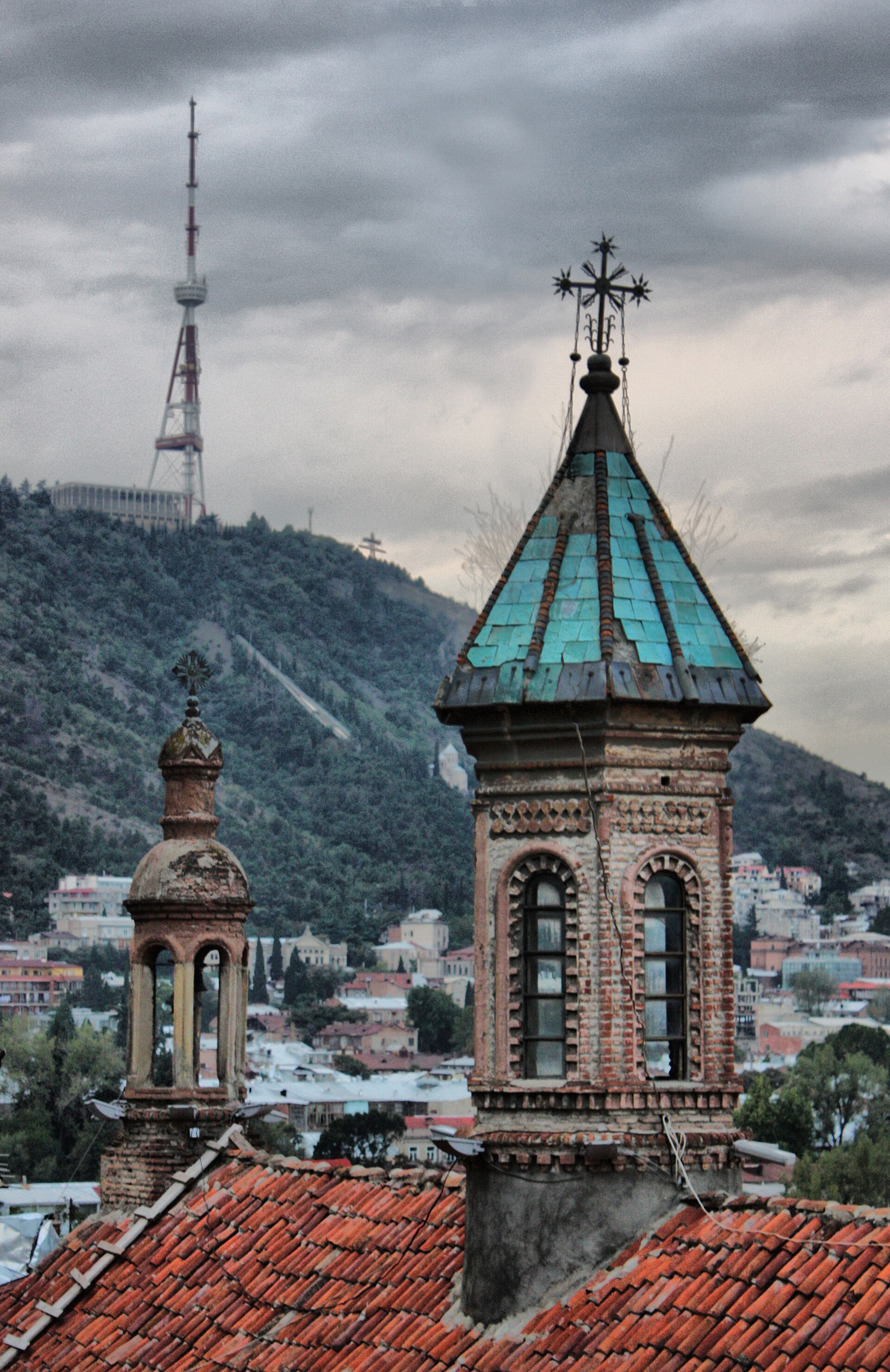
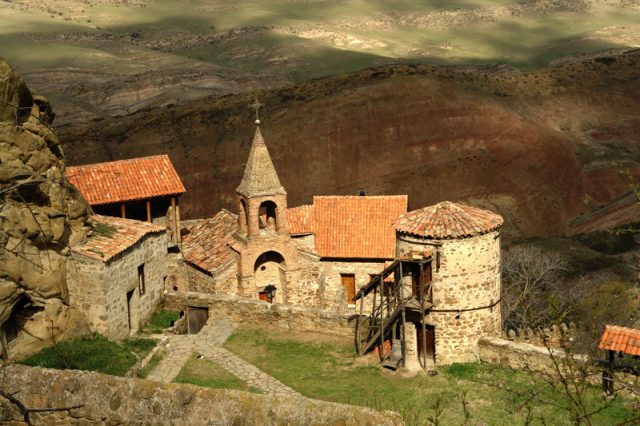
St. George’s Church in Sagarejo is one of those quiet places that doesn’t announce itself to travelers but lingers in memory long after you’ve left. Tucked away on the edge of town, it sits where the bustle of Kakheti gradually gives way to rolling vineyards and gentle hills. The building itself is modest in size, yet its weathered stone and faded frescoes carry the weight of centuries, a quiet witness to the passage of time.
Sagarejo isn’t a place that draws crowds. There are no souvenir stalls, no tour groups following guides with flags, no sense of being hurried along. Instead, there’s a stillness here, broken only by the rustle of leaves in the trees that surround the church. This part of Georgia moves at its own pace, and St. George’s reflects that—unassuming, deeply rooted, and full of meaning that reveals itself slowly.
Little is known for certain about when the church was built. Historians believe it dates to the late medieval period, a time when small parish churches were common in Kakheti. The architecture is typical of the region: a cross-domed structure with simple lines and almost no external ornamentation. Inside, fragments of frescoes remain, though time and damp have dimmed their colors, and some scenes are barely visible. Even so, they offer a glimpse into what religious art in Georgia looked like hundreds of years ago.
St. George, the saint to whom the church is dedicated, holds a special place in Georgian culture. His image appears in frescoes, icons, and the names of countless churches across the country. For many Georgians, he is more than a religious figure—he is a protector, a symbol of resilience, and a part of national identity. In Sagarejo, his feast day is observed with particular reverence. On that day, the church becomes a gathering place for the faithful, with families arriving from nearby villages, hymns filling the air, and stalls lining the streets selling traditional food.
Beyond its religious significance, St. George’s Church is woven into the fabric of daily life in Sagarejo. It’s where baptisms, weddings, and memorial services take place, where generations of families have marked the most important moments of their lives. For many in the town, the church is a link to the past, a place where traditions and memories are preserved.
The area around the church is worth exploring as well. Sagarejo is surrounded by vineyards, and if you walk beyond the church, you’ll come across old wine cellars with clay vessels known as *kvevri* buried in the ground. Winemaking here is more than an industry—it’s a way of life, passed down through generations. The church itself is tied to this tradition, standing as a silent companion to the rhythms of rural Kakheti.
A visit to St. George’s can easily be combined with a stroll through Sagarejo. The town is small enough to explore on foot in a couple of hours. In the center, there’s a monument to the poet Raphael Eristavi, who was born here. The older neighborhoods still have houses with intricately carved wooden balconies, a hallmark of 19th-century Kakhetian architecture.
If you’ve already seen the more famous sights of Kakheti and want to experience the region as it truly is—far from tourist routes—this is a place to come. There’s nothing performative about it. Just quiet, history, and the sense that time moves a little slower here.